Ayca Duran , Christoph Waibel , Valeria Piccioni , Bernd Bickel , Arno Schlueter
{"title":"人工智能在建筑立面中的应用综述","authors":"Ayca Duran , Christoph Waibel , Valeria Piccioni , Bernd Bickel , Arno Schlueter","doi":"10.1016/j.buildenv.2024.112310","DOIUrl":null,"url":null,"abstract":"<div><div>This review applies a transformer-based topic model to reveal trends and relationships in Artificial Intelligence (AI)-driven facade research, with a focus on architectural, environmental, and structural aspects. AI methods reviewed include Machine Learning (ML), Deep Learning (DL), and Computer Vision (CV). Overall, a significantly growing interest in applying AI methods can be observed across all research areas. However, noticeable differences exist between the three topics. While CV and DL techniques are applied to image data in research on the architectural design of facades, research on environmental aspects of facades often uses numerical data with relatively small datasets and classical ML models. Research on facade structure also tends to use image data but also incorporates numerical performance prediction. A major limitation remains a lack of generalizability, which could be addressed by more comprehensive datasets and novel DL techniques. These include concepts such as Physics-Informed Neural Networks, where domain knowledge is integrated into hybrid data-driven models, and multi-modal diffusion models, which offer generative modeling capabilities to support inverse and forward design tasks. The trends and directions outlined in this review suggest that AI will continue to advance facade research and, in line with other domains, has the potential to achieve a level of maturity suitable for adoption beyond academia and into practice.</div></div>","PeriodicalId":9273,"journal":{"name":"Building and Environment","volume":"269 ","pages":"Article 112310"},"PeriodicalIF":7.6000,"publicationDate":"2025-02-01","publicationTypes":"Journal Article","fieldsOfStudy":null,"isOpenAccess":false,"openAccessPdf":"","citationCount":"0","resultStr":"{\"title\":\"A review on artificial intelligence applications for facades\",\"authors\":\"Ayca Duran , Christoph Waibel , Valeria Piccioni , Bernd Bickel , Arno Schlueter\",\"doi\":\"10.1016/j.buildenv.2024.112310\",\"DOIUrl\":null,\"url\":null,\"abstract\":\"<div><div>This review applies a transformer-based topic model to reveal trends and relationships in Artificial Intelligence (AI)-driven facade research, with a focus on architectural, environmental, and structural aspects. AI methods reviewed include Machine Learning (ML), Deep Learning (DL), and Computer Vision (CV). Overall, a significantly growing interest in applying AI methods can be observed across all research areas. However, noticeable differences exist between the three topics. While CV and DL techniques are applied to image data in research on the architectural design of facades, research on environmental aspects of facades often uses numerical data with relatively small datasets and classical ML models. Research on facade structure also tends to use image data but also incorporates numerical performance prediction. A major limitation remains a lack of generalizability, which could be addressed by more comprehensive datasets and novel DL techniques. These include concepts such as Physics-Informed Neural Networks, where domain knowledge is integrated into hybrid data-driven models, and multi-modal diffusion models, which offer generative modeling capabilities to support inverse and forward design tasks. The trends and directions outlined in this review suggest that AI will continue to advance facade research and, in line with other domains, has the potential to achieve a level of maturity suitable for adoption beyond academia and into practice.</div></div>\",\"PeriodicalId\":9273,\"journal\":{\"name\":\"Building and Environment\",\"volume\":\"269 \",\"pages\":\"Article 112310\"},\"PeriodicalIF\":7.6000,\"publicationDate\":\"2025-02-01\",\"publicationTypes\":\"Journal Article\",\"fieldsOfStudy\":null,\"isOpenAccess\":false,\"openAccessPdf\":\"\",\"citationCount\":\"0\",\"resultStr\":null,\"platform\":\"Semanticscholar\",\"paperid\":null,\"PeriodicalName\":\"Building and Environment\",\"FirstCategoryId\":\"5\",\"ListUrlMain\":\"https://www.sciencedirect.com/science/article/pii/S0360132324011521\",\"RegionNum\":1,\"RegionCategory\":\"工程技术\",\"ArticlePicture\":[],\"TitleCN\":null,\"AbstractTextCN\":null,\"PMCID\":null,\"EPubDate\":\"2024/11/21 0:00:00\",\"PubModel\":\"Epub\",\"JCR\":\"Q1\",\"JCRName\":\"CONSTRUCTION & BUILDING TECHNOLOGY\",\"Score\":null,\"Total\":0}","platform":"Semanticscholar","paperid":null,"PeriodicalName":"Building and Environment","FirstCategoryId":"5","ListUrlMain":"https://www.sciencedirect.com/science/article/pii/S0360132324011521","RegionNum":1,"RegionCategory":"工程技术","ArticlePicture":[],"TitleCN":null,"AbstractTextCN":null,"PMCID":null,"EPubDate":"2024/11/21 0:00:00","PubModel":"Epub","JCR":"Q1","JCRName":"CONSTRUCTION & BUILDING TECHNOLOGY","Score":null,"Total":0}
A review on artificial intelligence applications for facades
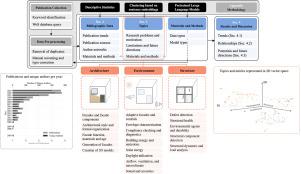
This review applies a transformer-based topic model to reveal trends and relationships in Artificial Intelligence (AI)-driven facade research, with a focus on architectural, environmental, and structural aspects. AI methods reviewed include Machine Learning (ML), Deep Learning (DL), and Computer Vision (CV). Overall, a significantly growing interest in applying AI methods can be observed across all research areas. However, noticeable differences exist between the three topics. While CV and DL techniques are applied to image data in research on the architectural design of facades, research on environmental aspects of facades often uses numerical data with relatively small datasets and classical ML models. Research on facade structure also tends to use image data but also incorporates numerical performance prediction. A major limitation remains a lack of generalizability, which could be addressed by more comprehensive datasets and novel DL techniques. These include concepts such as Physics-Informed Neural Networks, where domain knowledge is integrated into hybrid data-driven models, and multi-modal diffusion models, which offer generative modeling capabilities to support inverse and forward design tasks. The trends and directions outlined in this review suggest that AI will continue to advance facade research and, in line with other domains, has the potential to achieve a level of maturity suitable for adoption beyond academia and into practice.
期刊介绍:
Building and Environment, an international journal, is dedicated to publishing original research papers, comprehensive review articles, editorials, and short communications in the fields of building science, urban physics, and human interaction with the indoor and outdoor built environment. The journal emphasizes innovative technologies and knowledge verified through measurement and analysis. It covers environmental performance across various spatial scales, from cities and communities to buildings and systems, fostering collaborative, multi-disciplinary research with broader significance.





 京公网安备 11010802042870号
京ICP备2023020795号-1
京公网安备 11010802042870号
京ICP备2023020795号-1

 分享
分享
 求助内容:
求助内容: 应助结果提醒方式:
 扫码关注我们
