{"title":"中国的工资和脑力劳动与体力劳动的分工","authors":"Bolun Zhang , Yimang Zhou","doi":"10.1016/j.worlddev.2024.106878","DOIUrl":null,"url":null,"abstract":"<div><div>This paper analyzes the wage system in Mao-era China (1949–1976) and the early reform period, focusing on how it structured the mental-manual labor divide as a form of cultural infrastructure that embedded values of labor and worth. Key distinctions—positions, grades, wage forms, and allowances—delineated mental from manual labor in multiple ways. The paper outlines Maoist interventions, such as “politics in command” and the abolition of piecework, which aimed to reduce disparities but often inadvertently reinforced hierarchical boundaries based on position. In the post-Mao era, the concept of management labor redefined mental labor as productive, justifying higher cadre compensation and enabling a market-driven return to class distinctions. By historicizing these interventions, the paper highlights the intersection of economic policies and cultural infrastructures that shaped the evolving division between mental and manual labor, underscoring the political dimensions of valuation and classification in socialist economies. The authors argue that addressing the mental-manual labor divide requires tackling these embedded cultural boundaries and fostering democratic participation in labor valuation.</div></div>","PeriodicalId":48463,"journal":{"name":"World Development","volume":"188 ","pages":"Article 106878"},"PeriodicalIF":4.8000,"publicationDate":"2025-04-01","publicationTypes":"Journal Article","fieldsOfStudy":null,"isOpenAccess":false,"openAccessPdf":"","citationCount":"0","resultStr":"{\"title\":\"Wages and the division between mental and manual labor in China\",\"authors\":\"Bolun Zhang , Yimang Zhou\",\"doi\":\"10.1016/j.worlddev.2024.106878\",\"DOIUrl\":null,\"url\":null,\"abstract\":\"<div><div>This paper analyzes the wage system in Mao-era China (1949–1976) and the early reform period, focusing on how it structured the mental-manual labor divide as a form of cultural infrastructure that embedded values of labor and worth. Key distinctions—positions, grades, wage forms, and allowances—delineated mental from manual labor in multiple ways. The paper outlines Maoist interventions, such as “politics in command” and the abolition of piecework, which aimed to reduce disparities but often inadvertently reinforced hierarchical boundaries based on position. In the post-Mao era, the concept of management labor redefined mental labor as productive, justifying higher cadre compensation and enabling a market-driven return to class distinctions. By historicizing these interventions, the paper highlights the intersection of economic policies and cultural infrastructures that shaped the evolving division between mental and manual labor, underscoring the political dimensions of valuation and classification in socialist economies. The authors argue that addressing the mental-manual labor divide requires tackling these embedded cultural boundaries and fostering democratic participation in labor valuation.</div></div>\",\"PeriodicalId\":48463,\"journal\":{\"name\":\"World Development\",\"volume\":\"188 \",\"pages\":\"Article 106878\"},\"PeriodicalIF\":4.8000,\"publicationDate\":\"2025-04-01\",\"publicationTypes\":\"Journal Article\",\"fieldsOfStudy\":null,\"isOpenAccess\":false,\"openAccessPdf\":\"\",\"citationCount\":\"0\",\"resultStr\":null,\"platform\":\"Semanticscholar\",\"paperid\":null,\"PeriodicalName\":\"World Development\",\"FirstCategoryId\":\"96\",\"ListUrlMain\":\"https://www.sciencedirect.com/science/article/pii/S0305750X24003498\",\"RegionNum\":1,\"RegionCategory\":\"经济学\",\"ArticlePicture\":[],\"TitleCN\":null,\"AbstractTextCN\":null,\"PMCID\":null,\"EPubDate\":\"2024/12/10 0:00:00\",\"PubModel\":\"Epub\",\"JCR\":\"Q1\",\"JCRName\":\"DEVELOPMENT STUDIES\",\"Score\":null,\"Total\":0}","platform":"Semanticscholar","paperid":null,"PeriodicalName":"World Development","FirstCategoryId":"96","ListUrlMain":"https://www.sciencedirect.com/science/article/pii/S0305750X24003498","RegionNum":1,"RegionCategory":"经济学","ArticlePicture":[],"TitleCN":null,"AbstractTextCN":null,"PMCID":null,"EPubDate":"2024/12/10 0:00:00","PubModel":"Epub","JCR":"Q1","JCRName":"DEVELOPMENT STUDIES","Score":null,"Total":0}
Wages and the division between mental and manual labor in China
This paper analyzes the wage system in Mao-era China (1949–1976) and the early reform period, focusing on how it structured the mental-manual labor divide as a form of cultural infrastructure that embedded values of labor and worth. Key distinctions—positions, grades, wage forms, and allowances—delineated mental from manual labor in multiple ways. The paper outlines Maoist interventions, such as “politics in command” and the abolition of piecework, which aimed to reduce disparities but often inadvertently reinforced hierarchical boundaries based on position. In the post-Mao era, the concept of management labor redefined mental labor as productive, justifying higher cadre compensation and enabling a market-driven return to class distinctions. By historicizing these interventions, the paper highlights the intersection of economic policies and cultural infrastructures that shaped the evolving division between mental and manual labor, underscoring the political dimensions of valuation and classification in socialist economies. The authors argue that addressing the mental-manual labor divide requires tackling these embedded cultural boundaries and fostering democratic participation in labor valuation.
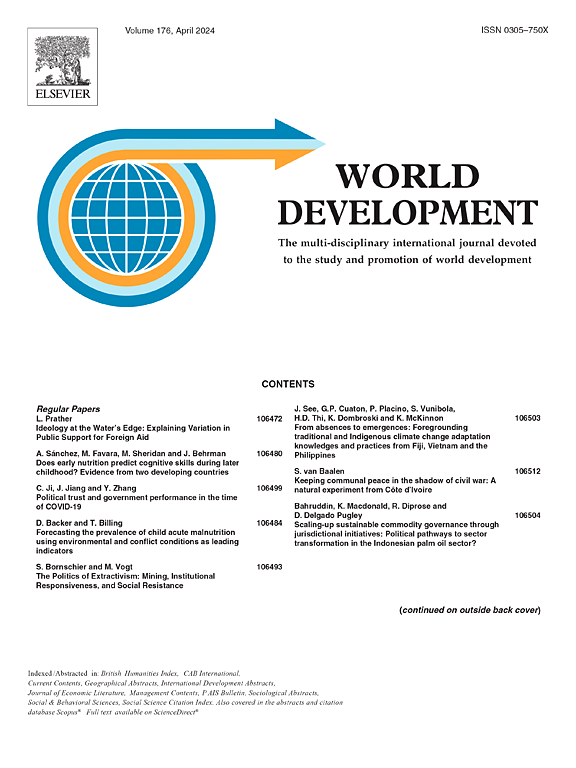
期刊介绍:
World Development is a multi-disciplinary monthly journal of development studies. It seeks to explore ways of improving standards of living, and the human condition generally, by examining potential solutions to problems such as: poverty, unemployment, malnutrition, disease, lack of shelter, environmental degradation, inadequate scientific and technological resources, trade and payments imbalances, international debt, gender and ethnic discrimination, militarism and civil conflict, and lack of popular participation in economic and political life. Contributions offer constructive ideas and analysis, and highlight the lessons to be learned from the experiences of different nations, societies, and economies.




 京公网安备 11010802042870号
京ICP备2023020795号-1
京公网安备 11010802042870号
京ICP备2023020795号-1

 分享
分享
 求助内容:
求助内容: 应助结果提醒方式:
 扫码关注我们
