{"title":"减少家庭和工业废水中的甲烷和氧化亚氮排放","authors":"Bitaisha Nakishuka Shukuru , Natalia Anatolievna Politaeva","doi":"10.1016/j.rser.2024.115203","DOIUrl":null,"url":null,"abstract":"<div><div>Methane (CH₄) and nitrous oxide (N₂O) emissions from wastewater treatment systems significantly contribute to global greenhouse gas levels, presenting challenges to climate change mitigation efforts. CH₄ emissions primarily arise from anaerobic conditions in wastewater treatment processes, such as lagoons and open sewers, which are common in both developing and developed regions. Constructed wetlands, designed to use natural processes for pollutant removal, can also generate CH₄ and N₂O under specific conditions. The variability in wastewater treatment methods, ranging from centralized anaerobic plants and lagoons to on-site septic systems, significantly affects emissions. For instance, lagoons deeper than 2–3 m typically create anaerobic conditions conducive to CH₄ production, especially in warmer climates where temperatures exceed 15 °C. The treatment of domestic and industrial wastewater using constructed wetlands shows promising pollutant removal efficiencies, often exceeding 50 %, but also presents challenges due to potential CH₄ and N₂O emissions. Emission estimation methods include using default values (Tier 1), country-specific data (Tier 2), or advanced country-specific methodologies (Tier 3). Mitigation of CH₄ involves recovery and flaring techniques, while N₂O emissions are linked to nitrogen degradation processes in wastewater. Thus, comprehending the specific treatment processes, organic load, and environmental conditions is essential for accurate emission assessments and developing strategies to minimize the climate impact of wastewater management.</div></div>","PeriodicalId":418,"journal":{"name":"Renewable and Sustainable Energy Reviews","volume":"210 ","pages":"Article 115203"},"PeriodicalIF":18.0000,"publicationDate":"2025-03-01","publicationTypes":"Journal Article","fieldsOfStudy":null,"isOpenAccess":false,"openAccessPdf":"","citationCount":"0","resultStr":"{\"title\":\"Mitigating CH4 and N2O emissions from domestic and industrial wastewater\",\"authors\":\"Bitaisha Nakishuka Shukuru , Natalia Anatolievna Politaeva\",\"doi\":\"10.1016/j.rser.2024.115203\",\"DOIUrl\":null,\"url\":null,\"abstract\":\"<div><div>Methane (CH₄) and nitrous oxide (N₂O) emissions from wastewater treatment systems significantly contribute to global greenhouse gas levels, presenting challenges to climate change mitigation efforts. CH₄ emissions primarily arise from anaerobic conditions in wastewater treatment processes, such as lagoons and open sewers, which are common in both developing and developed regions. Constructed wetlands, designed to use natural processes for pollutant removal, can also generate CH₄ and N₂O under specific conditions. The variability in wastewater treatment methods, ranging from centralized anaerobic plants and lagoons to on-site septic systems, significantly affects emissions. For instance, lagoons deeper than 2–3 m typically create anaerobic conditions conducive to CH₄ production, especially in warmer climates where temperatures exceed 15 °C. The treatment of domestic and industrial wastewater using constructed wetlands shows promising pollutant removal efficiencies, often exceeding 50 %, but also presents challenges due to potential CH₄ and N₂O emissions. Emission estimation methods include using default values (Tier 1), country-specific data (Tier 2), or advanced country-specific methodologies (Tier 3). Mitigation of CH₄ involves recovery and flaring techniques, while N₂O emissions are linked to nitrogen degradation processes in wastewater. Thus, comprehending the specific treatment processes, organic load, and environmental conditions is essential for accurate emission assessments and developing strategies to minimize the climate impact of wastewater management.</div></div>\",\"PeriodicalId\":418,\"journal\":{\"name\":\"Renewable and Sustainable Energy Reviews\",\"volume\":\"210 \",\"pages\":\"Article 115203\"},\"PeriodicalIF\":18.0000,\"publicationDate\":\"2025-03-01\",\"publicationTypes\":\"Journal Article\",\"fieldsOfStudy\":null,\"isOpenAccess\":false,\"openAccessPdf\":\"\",\"citationCount\":\"0\",\"resultStr\":null,\"platform\":\"Semanticscholar\",\"paperid\":null,\"PeriodicalName\":\"Renewable and Sustainable Energy Reviews\",\"FirstCategoryId\":\"1\",\"ListUrlMain\":\"https://www.sciencedirect.com/science/article/pii/S1364032124009298\",\"RegionNum\":1,\"RegionCategory\":\"工程技术\",\"ArticlePicture\":[],\"TitleCN\":null,\"AbstractTextCN\":null,\"PMCID\":null,\"EPubDate\":\"2024/12/14 0:00:00\",\"PubModel\":\"Epub\",\"JCR\":\"Q1\",\"JCRName\":\"ENERGY & FUELS\",\"Score\":null,\"Total\":0}","platform":"Semanticscholar","paperid":null,"PeriodicalName":"Renewable and Sustainable Energy Reviews","FirstCategoryId":"1","ListUrlMain":"https://www.sciencedirect.com/science/article/pii/S1364032124009298","RegionNum":1,"RegionCategory":"工程技术","ArticlePicture":[],"TitleCN":null,"AbstractTextCN":null,"PMCID":null,"EPubDate":"2024/12/14 0:00:00","PubModel":"Epub","JCR":"Q1","JCRName":"ENERGY & FUELS","Score":null,"Total":0}
Mitigating CH4 and N2O emissions from domestic and industrial wastewater
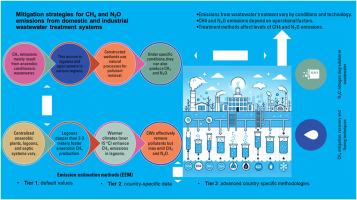
Methane (CH₄) and nitrous oxide (N₂O) emissions from wastewater treatment systems significantly contribute to global greenhouse gas levels, presenting challenges to climate change mitigation efforts. CH₄ emissions primarily arise from anaerobic conditions in wastewater treatment processes, such as lagoons and open sewers, which are common in both developing and developed regions. Constructed wetlands, designed to use natural processes for pollutant removal, can also generate CH₄ and N₂O under specific conditions. The variability in wastewater treatment methods, ranging from centralized anaerobic plants and lagoons to on-site septic systems, significantly affects emissions. For instance, lagoons deeper than 2–3 m typically create anaerobic conditions conducive to CH₄ production, especially in warmer climates where temperatures exceed 15 °C. The treatment of domestic and industrial wastewater using constructed wetlands shows promising pollutant removal efficiencies, often exceeding 50 %, but also presents challenges due to potential CH₄ and N₂O emissions. Emission estimation methods include using default values (Tier 1), country-specific data (Tier 2), or advanced country-specific methodologies (Tier 3). Mitigation of CH₄ involves recovery and flaring techniques, while N₂O emissions are linked to nitrogen degradation processes in wastewater. Thus, comprehending the specific treatment processes, organic load, and environmental conditions is essential for accurate emission assessments and developing strategies to minimize the climate impact of wastewater management.
期刊介绍:
The mission of Renewable and Sustainable Energy Reviews is to disseminate the most compelling and pertinent critical insights in renewable and sustainable energy, fostering collaboration among the research community, private sector, and policy and decision makers. The journal aims to exchange challenges, solutions, innovative concepts, and technologies, contributing to sustainable development, the transition to a low-carbon future, and the attainment of emissions targets outlined by the United Nations Framework Convention on Climate Change.
Renewable and Sustainable Energy Reviews publishes a diverse range of content, including review papers, original research, case studies, and analyses of new technologies, all featuring a substantial review component such as critique, comparison, or analysis. Introducing a distinctive paper type, Expert Insights, the journal presents commissioned mini-reviews authored by field leaders, addressing topics of significant interest. Case studies undergo consideration only if they showcase the work's applicability to other regions or contribute valuable insights to the broader field of renewable and sustainable energy. Notably, a bibliographic or literature review lacking critical analysis is deemed unsuitable for publication.




 京公网安备 11010802042870号
京ICP备2023020795号-1
京公网安备 11010802042870号
京ICP备2023020795号-1

 分享
分享
 求助内容:
求助内容: 应助结果提醒方式:
 扫码关注我们
