Seong-Ju Kim , Sung-Jin Pak , Sung-Ho Jo , Ho-Tae Im , Hookyung Lee , Sang-Jun Yoon , Ho-Won Ra , Sung-Min Yoon , Dongfang Li , Tae-Young Mun
{"title":"循环流化床系统中煤-生物质-氨共烧燃料柔韧性的燃烧特性","authors":"Seong-Ju Kim , Sung-Jin Pak , Sung-Ho Jo , Ho-Tae Im , Hookyung Lee , Sang-Jun Yoon , Ho-Won Ra , Sung-Min Yoon , Dongfang Li , Tae-Young Mun","doi":"10.1016/j.biombioe.2025.107666","DOIUrl":null,"url":null,"abstract":"<div><div>Biomass and ammonia are promising resources for reducing greenhouse gas (GHG) emissions from coal-fired power plants. Some of these plants are co-firing biomass with coal. This study examines coal–biomass–ammonia co-firing in a circulating fluidized bed system, focusing on temperature and pressure profiles in the combustor, pollutant emissions, and combustion efficiencies. GHG emissions, specifically CO<sub>2</sub> and N<sub>2</sub>O, were compared based on biomass ratio (8 % lower and 23 % higher) and the ammonia supply position in the dense bed zone (DBZ) and wind box (WB). When ammonia was supplied to the DBZ at a lower biomass co-firing ratio, CO emissions increased to 213.4 ppm due to the competition between coal and ammonia combustion. In contrast, ammonia supplied to the WB at a higher biomass ratio (22–23 % as a thermal base) resulted in the lowest CO emissions at 6.6 ppm, reducing heat losses. The N<sub>2</sub>O concentration from higher biomass co-firing with NH<sub>3</sub> and coal when injected at WB was lower than that from a lower biomass ratio (8 % as a thermal base). This study highlights the potential of coal–biomass–ammonia co-firing to reduce GHG emissions while maintaining combustion efficiency, with minimal CO impact, offering a sustainable solution for bioenergy generation in coal-fired power plants.</div></div>","PeriodicalId":253,"journal":{"name":"Biomass & Bioenergy","volume":"194 ","pages":"Article 107666"},"PeriodicalIF":5.8000,"publicationDate":"2025-03-01","publicationTypes":"Journal Article","fieldsOfStudy":null,"isOpenAccess":false,"openAccessPdf":"","citationCount":"0","resultStr":"{\"title\":\"Combustion characteristics of fuel flexibility with coal–biomass–ammonia co-firing in a circulating fluidized bed system\",\"authors\":\"Seong-Ju Kim , Sung-Jin Pak , Sung-Ho Jo , Ho-Tae Im , Hookyung Lee , Sang-Jun Yoon , Ho-Won Ra , Sung-Min Yoon , Dongfang Li , Tae-Young Mun\",\"doi\":\"10.1016/j.biombioe.2025.107666\",\"DOIUrl\":null,\"url\":null,\"abstract\":\"<div><div>Biomass and ammonia are promising resources for reducing greenhouse gas (GHG) emissions from coal-fired power plants. Some of these plants are co-firing biomass with coal. This study examines coal–biomass–ammonia co-firing in a circulating fluidized bed system, focusing on temperature and pressure profiles in the combustor, pollutant emissions, and combustion efficiencies. GHG emissions, specifically CO<sub>2</sub> and N<sub>2</sub>O, were compared based on biomass ratio (8 % lower and 23 % higher) and the ammonia supply position in the dense bed zone (DBZ) and wind box (WB). When ammonia was supplied to the DBZ at a lower biomass co-firing ratio, CO emissions increased to 213.4 ppm due to the competition between coal and ammonia combustion. In contrast, ammonia supplied to the WB at a higher biomass ratio (22–23 % as a thermal base) resulted in the lowest CO emissions at 6.6 ppm, reducing heat losses. The N<sub>2</sub>O concentration from higher biomass co-firing with NH<sub>3</sub> and coal when injected at WB was lower than that from a lower biomass ratio (8 % as a thermal base). This study highlights the potential of coal–biomass–ammonia co-firing to reduce GHG emissions while maintaining combustion efficiency, with minimal CO impact, offering a sustainable solution for bioenergy generation in coal-fired power plants.</div></div>\",\"PeriodicalId\":253,\"journal\":{\"name\":\"Biomass & Bioenergy\",\"volume\":\"194 \",\"pages\":\"Article 107666\"},\"PeriodicalIF\":5.8000,\"publicationDate\":\"2025-03-01\",\"publicationTypes\":\"Journal Article\",\"fieldsOfStudy\":null,\"isOpenAccess\":false,\"openAccessPdf\":\"\",\"citationCount\":\"0\",\"resultStr\":null,\"platform\":\"Semanticscholar\",\"paperid\":null,\"PeriodicalName\":\"Biomass & Bioenergy\",\"FirstCategoryId\":\"5\",\"ListUrlMain\":\"https://www.sciencedirect.com/science/article/pii/S0961953425000777\",\"RegionNum\":2,\"RegionCategory\":\"生物学\",\"ArticlePicture\":[],\"TitleCN\":null,\"AbstractTextCN\":null,\"PMCID\":null,\"EPubDate\":\"2025/2/1 0:00:00\",\"PubModel\":\"Epub\",\"JCR\":\"Q1\",\"JCRName\":\"AGRICULTURAL ENGINEERING\",\"Score\":null,\"Total\":0}","platform":"Semanticscholar","paperid":null,"PeriodicalName":"Biomass & Bioenergy","FirstCategoryId":"5","ListUrlMain":"https://www.sciencedirect.com/science/article/pii/S0961953425000777","RegionNum":2,"RegionCategory":"生物学","ArticlePicture":[],"TitleCN":null,"AbstractTextCN":null,"PMCID":null,"EPubDate":"2025/2/1 0:00:00","PubModel":"Epub","JCR":"Q1","JCRName":"AGRICULTURAL ENGINEERING","Score":null,"Total":0}
Combustion characteristics of fuel flexibility with coal–biomass–ammonia co-firing in a circulating fluidized bed system
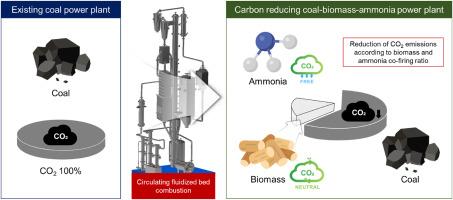
Biomass and ammonia are promising resources for reducing greenhouse gas (GHG) emissions from coal-fired power plants. Some of these plants are co-firing biomass with coal. This study examines coal–biomass–ammonia co-firing in a circulating fluidized bed system, focusing on temperature and pressure profiles in the combustor, pollutant emissions, and combustion efficiencies. GHG emissions, specifically CO2 and N2O, were compared based on biomass ratio (8 % lower and 23 % higher) and the ammonia supply position in the dense bed zone (DBZ) and wind box (WB). When ammonia was supplied to the DBZ at a lower biomass co-firing ratio, CO emissions increased to 213.4 ppm due to the competition between coal and ammonia combustion. In contrast, ammonia supplied to the WB at a higher biomass ratio (22–23 % as a thermal base) resulted in the lowest CO emissions at 6.6 ppm, reducing heat losses. The N2O concentration from higher biomass co-firing with NH3 and coal when injected at WB was lower than that from a lower biomass ratio (8 % as a thermal base). This study highlights the potential of coal–biomass–ammonia co-firing to reduce GHG emissions while maintaining combustion efficiency, with minimal CO impact, offering a sustainable solution for bioenergy generation in coal-fired power plants.
期刊介绍:
Biomass & Bioenergy is an international journal publishing original research papers and short communications, review articles and case studies on biological resources, chemical and biological processes, and biomass products for new renewable sources of energy and materials.
The scope of the journal extends to the environmental, management and economic aspects of biomass and bioenergy.
Key areas covered by the journal:
• Biomass: sources, energy crop production processes, genetic improvements, composition. Please note that research on these biomass subjects must be linked directly to bioenergy generation.
• Biological Residues: residues/rests from agricultural production, forestry and plantations (palm, sugar etc), processing industries, and municipal sources (MSW). Papers on the use of biomass residues through innovative processes/technological novelty and/or consideration of feedstock/system sustainability (or unsustainability) are welcomed. However waste treatment processes and pollution control or mitigation which are only tangentially related to bioenergy are not in the scope of the journal, as they are more suited to publications in the environmental arena. Papers that describe conventional waste streams (ie well described in existing literature) that do not empirically address ''new'' added value from the process are not suitable for submission to the journal.
• Bioenergy Processes: fermentations, thermochemical conversions, liquid and gaseous fuels, and petrochemical substitutes
• Bioenergy Utilization: direct combustion, gasification, electricity production, chemical processes, and by-product remediation
• Biomass and the Environment: carbon cycle, the net energy efficiency of bioenergy systems, assessment of sustainability, and biodiversity issues.




 京公网安备 11010802042870号
京ICP备2023020795号-1
京公网安备 11010802042870号
京ICP备2023020795号-1

 分享
分享
 求助内容:
求助内容: 应助结果提醒方式:
 扫码关注我们
