Enikő Mészáros , Attila Bodor , Kamilla Kovács , Sarolta Papp , Etelka Kovács , Katalin Perei , Kata Frei , Gábor Feigl
{"title":"乳胶和丁腈一次性手套造成的塑料污染有可能影响植物生产力和土壤健康","authors":"Enikő Mészáros , Attila Bodor , Kamilla Kovács , Sarolta Papp , Etelka Kovács , Katalin Perei , Kata Frei , Gábor Feigl","doi":"10.1016/j.hazadv.2025.100605","DOIUrl":null,"url":null,"abstract":"<div><div>The COVID-19 pandemic has led to a surge in plastic waste due to the widespread use of disposable protective gloves (DPGs), which pose a novel risk to the environment and potentially disrupt ecosystems. This study investigated the impact of latex and nitrile DPG fragments on the early growth and development of <em>Brassica napus</em> seedlings and soil microbial activity—an area not previously explored. Short-term <em>in vitro</em> experiments, which were performed under controlled conditions, revealed statistically significant inhibition of primary root length, with latex fragments at a 0.5% concentration reducing growth by up to 30%. To determine whether the surrounding environment of the plastic fragments and roots modulates the effects of DPGs, we also employed rhizotron systems that simulate realistic soil conditions. These systems, highlighting the role of the environment in plant responses, showed that while the effects on root and shoot growth were moderate compared with those in the <em>in vitro</em> setup, significant changes still occurred. The study revealed that latex fragments generally promoted leaf area, whereas nitrile fragments had mixed effects. Additionally, DPG contamination differentially altered soil enzyme activities and microbial biomass, indicating potential shifts in soil health. These findings provide compelling evidence of the complex interactions between DPGs and plant‒soil systems, underscoring the ecological risks associated with this type of pollution and the urgent need for improved plastic waste management to protect agricultural ecosystems.</div><div><strong>Statement of environmental implications</strong></div><div>The presence of disposable plastic glove (DPG) fragments in agricultural environments poses a significant environmental concern, potentially disrupting root growth dynamics, altering shoot morphology, and impacting soil microbial activity. These findings highlight the need for enhanced waste management strategies to mitigate plastic pollution in agricultural settings, safeguarding plant health, soil fertility, and ecosystem resilience.</div></div>","PeriodicalId":73763,"journal":{"name":"Journal of hazardous materials advances","volume":"17 ","pages":"Article 100605"},"PeriodicalIF":7.7000,"publicationDate":"2025-02-01","publicationTypes":"Journal Article","fieldsOfStudy":null,"isOpenAccess":false,"openAccessPdf":"","citationCount":"0","resultStr":"{\"title\":\"Plastic contamination from latex and nitrile disposable gloves has the potential to influence plant productivity and soil health\",\"authors\":\"Enikő Mészáros , Attila Bodor , Kamilla Kovács , Sarolta Papp , Etelka Kovács , Katalin Perei , Kata Frei , Gábor Feigl\",\"doi\":\"10.1016/j.hazadv.2025.100605\",\"DOIUrl\":null,\"url\":null,\"abstract\":\"<div><div>The COVID-19 pandemic has led to a surge in plastic waste due to the widespread use of disposable protective gloves (DPGs), which pose a novel risk to the environment and potentially disrupt ecosystems. This study investigated the impact of latex and nitrile DPG fragments on the early growth and development of <em>Brassica napus</em> seedlings and soil microbial activity—an area not previously explored. Short-term <em>in vitro</em> experiments, which were performed under controlled conditions, revealed statistically significant inhibition of primary root length, with latex fragments at a 0.5% concentration reducing growth by up to 30%. To determine whether the surrounding environment of the plastic fragments and roots modulates the effects of DPGs, we also employed rhizotron systems that simulate realistic soil conditions. These systems, highlighting the role of the environment in plant responses, showed that while the effects on root and shoot growth were moderate compared with those in the <em>in vitro</em> setup, significant changes still occurred. The study revealed that latex fragments generally promoted leaf area, whereas nitrile fragments had mixed effects. Additionally, DPG contamination differentially altered soil enzyme activities and microbial biomass, indicating potential shifts in soil health. These findings provide compelling evidence of the complex interactions between DPGs and plant‒soil systems, underscoring the ecological risks associated with this type of pollution and the urgent need for improved plastic waste management to protect agricultural ecosystems.</div><div><strong>Statement of environmental implications</strong></div><div>The presence of disposable plastic glove (DPG) fragments in agricultural environments poses a significant environmental concern, potentially disrupting root growth dynamics, altering shoot morphology, and impacting soil microbial activity. These findings highlight the need for enhanced waste management strategies to mitigate plastic pollution in agricultural settings, safeguarding plant health, soil fertility, and ecosystem resilience.</div></div>\",\"PeriodicalId\":73763,\"journal\":{\"name\":\"Journal of hazardous materials advances\",\"volume\":\"17 \",\"pages\":\"Article 100605\"},\"PeriodicalIF\":7.7000,\"publicationDate\":\"2025-02-01\",\"publicationTypes\":\"Journal Article\",\"fieldsOfStudy\":null,\"isOpenAccess\":false,\"openAccessPdf\":\"\",\"citationCount\":\"0\",\"resultStr\":null,\"platform\":\"Semanticscholar\",\"paperid\":null,\"PeriodicalName\":\"Journal of hazardous materials advances\",\"FirstCategoryId\":\"1085\",\"ListUrlMain\":\"https://www.sciencedirect.com/science/article/pii/S2772416625000178\",\"RegionNum\":0,\"RegionCategory\":null,\"ArticlePicture\":[],\"TitleCN\":null,\"AbstractTextCN\":null,\"PMCID\":null,\"EPubDate\":\"2025/1/16 0:00:00\",\"PubModel\":\"Epub\",\"JCR\":\"Q2\",\"JCRName\":\"ENGINEERING, ENVIRONMENTAL\",\"Score\":null,\"Total\":0}","platform":"Semanticscholar","paperid":null,"PeriodicalName":"Journal of hazardous materials advances","FirstCategoryId":"1085","ListUrlMain":"https://www.sciencedirect.com/science/article/pii/S2772416625000178","RegionNum":0,"RegionCategory":null,"ArticlePicture":[],"TitleCN":null,"AbstractTextCN":null,"PMCID":null,"EPubDate":"2025/1/16 0:00:00","PubModel":"Epub","JCR":"Q2","JCRName":"ENGINEERING, ENVIRONMENTAL","Score":null,"Total":0}
Plastic contamination from latex and nitrile disposable gloves has the potential to influence plant productivity and soil health
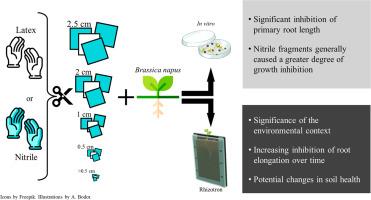
The COVID-19 pandemic has led to a surge in plastic waste due to the widespread use of disposable protective gloves (DPGs), which pose a novel risk to the environment and potentially disrupt ecosystems. This study investigated the impact of latex and nitrile DPG fragments on the early growth and development of Brassica napus seedlings and soil microbial activity—an area not previously explored. Short-term in vitro experiments, which were performed under controlled conditions, revealed statistically significant inhibition of primary root length, with latex fragments at a 0.5% concentration reducing growth by up to 30%. To determine whether the surrounding environment of the plastic fragments and roots modulates the effects of DPGs, we also employed rhizotron systems that simulate realistic soil conditions. These systems, highlighting the role of the environment in plant responses, showed that while the effects on root and shoot growth were moderate compared with those in the in vitro setup, significant changes still occurred. The study revealed that latex fragments generally promoted leaf area, whereas nitrile fragments had mixed effects. Additionally, DPG contamination differentially altered soil enzyme activities and microbial biomass, indicating potential shifts in soil health. These findings provide compelling evidence of the complex interactions between DPGs and plant‒soil systems, underscoring the ecological risks associated with this type of pollution and the urgent need for improved plastic waste management to protect agricultural ecosystems.
Statement of environmental implications
The presence of disposable plastic glove (DPG) fragments in agricultural environments poses a significant environmental concern, potentially disrupting root growth dynamics, altering shoot morphology, and impacting soil microbial activity. These findings highlight the need for enhanced waste management strategies to mitigate plastic pollution in agricultural settings, safeguarding plant health, soil fertility, and ecosystem resilience.





 京公网安备 11010802042870号
京ICP备2023020795号-1
京公网安备 11010802042870号
京ICP备2023020795号-1

 分享
分享
 求助内容:
求助内容: 应助结果提醒方式:
 扫码关注我们
