Mengyu Zhang, Yiting Song, Ya-Nan Jiang, Yuchen Ma
{"title":"多体格林函数理论揭示的CeO2电子和光学性质的缺陷诱导修饰。","authors":"Mengyu Zhang, Yiting Song, Ya-Nan Jiang, Yuchen Ma","doi":"10.1063/5.0235315","DOIUrl":null,"url":null,"abstract":"<p><p>We explore the impact of point defects, including oxygen vacancies (Ov), cerium interstitials (Ce-int), and hydroxyl groups (Hy), on the electronic and optical properties of bulk CeO2 using many-body Green's function theory (GW method and Bethe-Salpeter equation). Although these three defects all produce occupied electronic levels near the conduction band minimum, they impose quite different effects. Ov and Ce-int induce strong peaks in the low-energy region of the imaginary part of the microscopic dielectric function, indicating stronger electronic screening compared to the pristine CeO2. This causes pronounced narrowing of the bandgap, e.g., by 0.8 eV in G0W0 and 1.6 eV in the eigenvalue self-consistent GW for Ov. Comparatively, Hy affects little electronic screening and bandgap at different levels of GW calculations. For the lowest several 4f orbitals, the exchange part of the self-energy (|Σx| > 9 eV) in GW is much stronger than the correlation part (|Σc| < 5 eV) for Ov and Ce-int, while |Σc| is much stronger than |Σx| instead for the pristine CeO2 and Hy. Quasiparticle weights in Ov and Ce-int decrease by a large quantity compared to the pristine CeO2. Consideration of Ov and Ce-int might to some extent relieve the discrepancy between the GW bandgap of the pristine CeO2 and the experimental gap. Ov and Ce-int could reduce the excitonic binding energy several times and result in optical absorption, which corresponds to the experiments.</p>","PeriodicalId":15313,"journal":{"name":"Journal of Chemical Physics","volume":"162 5","pages":""},"PeriodicalIF":3.1000,"publicationDate":"2025-02-07","publicationTypes":"Journal Article","fieldsOfStudy":null,"isOpenAccess":false,"openAccessPdf":"","citationCount":"0","resultStr":"{\"title\":\"Defect-induced modification of electronic and optical properties of CeO2 unveiled by many-body Green's function theory.\",\"authors\":\"Mengyu Zhang, Yiting Song, Ya-Nan Jiang, Yuchen Ma\",\"doi\":\"10.1063/5.0235315\",\"DOIUrl\":null,\"url\":null,\"abstract\":\"<p><p>We explore the impact of point defects, including oxygen vacancies (Ov), cerium interstitials (Ce-int), and hydroxyl groups (Hy), on the electronic and optical properties of bulk CeO2 using many-body Green's function theory (GW method and Bethe-Salpeter equation). Although these three defects all produce occupied electronic levels near the conduction band minimum, they impose quite different effects. Ov and Ce-int induce strong peaks in the low-energy region of the imaginary part of the microscopic dielectric function, indicating stronger electronic screening compared to the pristine CeO2. This causes pronounced narrowing of the bandgap, e.g., by 0.8 eV in G0W0 and 1.6 eV in the eigenvalue self-consistent GW for Ov. Comparatively, Hy affects little electronic screening and bandgap at different levels of GW calculations. For the lowest several 4f orbitals, the exchange part of the self-energy (|Σx| > 9 eV) in GW is much stronger than the correlation part (|Σc| < 5 eV) for Ov and Ce-int, while |Σc| is much stronger than |Σx| instead for the pristine CeO2 and Hy. Quasiparticle weights in Ov and Ce-int decrease by a large quantity compared to the pristine CeO2. Consideration of Ov and Ce-int might to some extent relieve the discrepancy between the GW bandgap of the pristine CeO2 and the experimental gap. Ov and Ce-int could reduce the excitonic binding energy several times and result in optical absorption, which corresponds to the experiments.</p>\",\"PeriodicalId\":15313,\"journal\":{\"name\":\"Journal of Chemical Physics\",\"volume\":\"162 5\",\"pages\":\"\"},\"PeriodicalIF\":3.1000,\"publicationDate\":\"2025-02-07\",\"publicationTypes\":\"Journal Article\",\"fieldsOfStudy\":null,\"isOpenAccess\":false,\"openAccessPdf\":\"\",\"citationCount\":\"0\",\"resultStr\":null,\"platform\":\"Semanticscholar\",\"paperid\":null,\"PeriodicalName\":\"Journal of Chemical Physics\",\"FirstCategoryId\":\"92\",\"ListUrlMain\":\"https://doi.org/10.1063/5.0235315\",\"RegionNum\":2,\"RegionCategory\":\"化学\",\"ArticlePicture\":[],\"TitleCN\":null,\"AbstractTextCN\":null,\"PMCID\":null,\"EPubDate\":\"\",\"PubModel\":\"\",\"JCR\":\"Q3\",\"JCRName\":\"CHEMISTRY, PHYSICAL\",\"Score\":null,\"Total\":0}","platform":"Semanticscholar","paperid":null,"PeriodicalName":"Journal of Chemical Physics","FirstCategoryId":"92","ListUrlMain":"https://doi.org/10.1063/5.0235315","RegionNum":2,"RegionCategory":"化学","ArticlePicture":[],"TitleCN":null,"AbstractTextCN":null,"PMCID":null,"EPubDate":"","PubModel":"","JCR":"Q3","JCRName":"CHEMISTRY, PHYSICAL","Score":null,"Total":0}
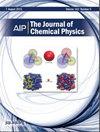
Defect-induced modification of electronic and optical properties of CeO2 unveiled by many-body Green's function theory.
We explore the impact of point defects, including oxygen vacancies (Ov), cerium interstitials (Ce-int), and hydroxyl groups (Hy), on the electronic and optical properties of bulk CeO2 using many-body Green's function theory (GW method and Bethe-Salpeter equation). Although these three defects all produce occupied electronic levels near the conduction band minimum, they impose quite different effects. Ov and Ce-int induce strong peaks in the low-energy region of the imaginary part of the microscopic dielectric function, indicating stronger electronic screening compared to the pristine CeO2. This causes pronounced narrowing of the bandgap, e.g., by 0.8 eV in G0W0 and 1.6 eV in the eigenvalue self-consistent GW for Ov. Comparatively, Hy affects little electronic screening and bandgap at different levels of GW calculations. For the lowest several 4f orbitals, the exchange part of the self-energy (|Σx| > 9 eV) in GW is much stronger than the correlation part (|Σc| < 5 eV) for Ov and Ce-int, while |Σc| is much stronger than |Σx| instead for the pristine CeO2 and Hy. Quasiparticle weights in Ov and Ce-int decrease by a large quantity compared to the pristine CeO2. Consideration of Ov and Ce-int might to some extent relieve the discrepancy between the GW bandgap of the pristine CeO2 and the experimental gap. Ov and Ce-int could reduce the excitonic binding energy several times and result in optical absorption, which corresponds to the experiments.
期刊介绍:
The Journal of Chemical Physics publishes quantitative and rigorous science of long-lasting value in methods and applications of chemical physics. The Journal also publishes brief Communications of significant new findings, Perspectives on the latest advances in the field, and Special Topic issues. The Journal focuses on innovative research in experimental and theoretical areas of chemical physics, including spectroscopy, dynamics, kinetics, statistical mechanics, and quantum mechanics. In addition, topical areas such as polymers, soft matter, materials, surfaces/interfaces, and systems of biological relevance are of increasing importance.
Topical coverage includes:
Theoretical Methods and Algorithms
Advanced Experimental Techniques
Atoms, Molecules, and Clusters
Liquids, Glasses, and Crystals
Surfaces, Interfaces, and Materials
Polymers and Soft Matter
Biological Molecules and Networks.




 京公网安备 11010802042870号
京ICP备2023020795号-1
京公网安备 11010802042870号
京ICP备2023020795号-1

 分享
分享
 求助内容:
求助内容: 应助结果提醒方式:
 扫码关注我们
