{"title":"超越SGLT2:近端小管转运蛋白作为慢性肾脏疾病的潜在药物靶点","authors":"Carsten A Wagner","doi":"10.1093/ndt/gfae211","DOIUrl":null,"url":null,"abstract":"<p><p>The kidneys produce daily about 180 liters of urine but only about 2 liters are excreted. The proximal tubule plays an important role in reabsorbing the majority of filtered urine and many metabolites such as sugars, amino acids, salts or phosphate that are contained in this large volume. Reabsorption of these important metabolites is mediated by a diverse group of highly specialized transport proteins. Another group of transport proteins in the proximal tubule is responsible for the active secretion of metabolic waste products or toxins and drugs into urine. All these transporters have in common that they are directly linked to kidney metabolism and indirectly to whole-body metabolism and functions. In recent years, it has become evident that modulation of these transporters may influence the onset, progression and consequences of kidney disease. This review summarizes recent developments in this field and discusses some examples of drugs already in clinical use or in development. The examples include inhibitors of sugar transporters (SGLT2 inhibitors) that are successfully used in patients with kidney disease, diabetes or heart failure. Likewise, indirect inhibitors (acetazolamide) of an transporter absorbing sodium in exchange for protons (NHE3) are used mostly in patients with heart failure or for prevention of high altitude disease, while direct inhibitors show promise in preclinical studies to reduce damage in episodes of acute kidney disease or high blood pressure. Modulators of transporters mediating the excretion of urate have been used in patients with gout and are also discussed to prevent kidney disease. Novel drugs in development target transporters for phosphate, amino acids, or toxin and drug excretion and may be helpful for specific conditions associated with kidney disease. The advantages and challenges associated with these (novel) drugs targeting proximal tubule transport are discussed.</p><p><strong>Abstract: </strong>The proximal tubule is responsible for reabsorbing about 60% of filtered solutes and water and is critical for the secretion of metabolic waste products, drugs and toxins. A large number of highly specialized ion channels and transport proteins belonging to the SLC and ABC transporter families are involved. Their activity is directly or indirectly linked to ATP consumption and requires large quantities of energy and oxygen supply. Moreover, the activity of these transporters is often coupled to the movement of Na+ ions thus influencing also salt and water balance, as well as transport and regulatory processes in downstream segments. Because of their relevance for systemic ion balance, for renal metabolism or for affecting regulatory processes, proximal tubule transporters are attractive targets for existing drug and for novel strategies to reduce kidney disease progression or to alleviate the consequences of decreased kidney function. In this review, the relevance of some major proximal tubule transport systems as drug targets in individuals with chronic kidney disease (CKD) is discussed. Inhibitors of the sodium-glucose cotransporter 2, SGLT2, are now part of standard therapy in patients with CKD and/or heart failure. Also, indirect inhibition of Na+/H+-exchangers by carbonic anhydrase inhibitors and uricosuric drugs have been used for decades. Inhibition of phosphate and amino acid transporters have recently been proposed as novel principles to remove excess phosphate or to protect the proximal tubule metabolically, respectively. In addition, organic cation and anion transporters involved in drug and toxin excretion may serve as targets of new drugs. The advantages and challenges associated with (novel) drugs targeting proximal tubule transport are discussed.</p>","PeriodicalId":19078,"journal":{"name":"Nephrology Dialysis Transplantation","volume":"40 Supplement_1","pages":"i18-i28"},"PeriodicalIF":5.6000,"publicationDate":"2025-02-05","publicationTypes":"Journal Article","fieldsOfStudy":null,"isOpenAccess":false,"openAccessPdf":"https://www.ncbi.nlm.nih.gov/pmc/articles/PMC11795650/pdf/","citationCount":"0","resultStr":"{\"title\":\"Beyond SGLT2: proximal tubule transporters as potential drug targets for chronic kidney disease.\",\"authors\":\"Carsten A Wagner\",\"doi\":\"10.1093/ndt/gfae211\",\"DOIUrl\":null,\"url\":null,\"abstract\":\"<p><p>The kidneys produce daily about 180 liters of urine but only about 2 liters are excreted. The proximal tubule plays an important role in reabsorbing the majority of filtered urine and many metabolites such as sugars, amino acids, salts or phosphate that are contained in this large volume. Reabsorption of these important metabolites is mediated by a diverse group of highly specialized transport proteins. Another group of transport proteins in the proximal tubule is responsible for the active secretion of metabolic waste products or toxins and drugs into urine. All these transporters have in common that they are directly linked to kidney metabolism and indirectly to whole-body metabolism and functions. In recent years, it has become evident that modulation of these transporters may influence the onset, progression and consequences of kidney disease. This review summarizes recent developments in this field and discusses some examples of drugs already in clinical use or in development. The examples include inhibitors of sugar transporters (SGLT2 inhibitors) that are successfully used in patients with kidney disease, diabetes or heart failure. Likewise, indirect inhibitors (acetazolamide) of an transporter absorbing sodium in exchange for protons (NHE3) are used mostly in patients with heart failure or for prevention of high altitude disease, while direct inhibitors show promise in preclinical studies to reduce damage in episodes of acute kidney disease or high blood pressure. Modulators of transporters mediating the excretion of urate have been used in patients with gout and are also discussed to prevent kidney disease. Novel drugs in development target transporters for phosphate, amino acids, or toxin and drug excretion and may be helpful for specific conditions associated with kidney disease. The advantages and challenges associated with these (novel) drugs targeting proximal tubule transport are discussed.</p><p><strong>Abstract: </strong>The proximal tubule is responsible for reabsorbing about 60% of filtered solutes and water and is critical for the secretion of metabolic waste products, drugs and toxins. A large number of highly specialized ion channels and transport proteins belonging to the SLC and ABC transporter families are involved. Their activity is directly or indirectly linked to ATP consumption and requires large quantities of energy and oxygen supply. Moreover, the activity of these transporters is often coupled to the movement of Na+ ions thus influencing also salt and water balance, as well as transport and regulatory processes in downstream segments. Because of their relevance for systemic ion balance, for renal metabolism or for affecting regulatory processes, proximal tubule transporters are attractive targets for existing drug and for novel strategies to reduce kidney disease progression or to alleviate the consequences of decreased kidney function. In this review, the relevance of some major proximal tubule transport systems as drug targets in individuals with chronic kidney disease (CKD) is discussed. Inhibitors of the sodium-glucose cotransporter 2, SGLT2, are now part of standard therapy in patients with CKD and/or heart failure. Also, indirect inhibition of Na+/H+-exchangers by carbonic anhydrase inhibitors and uricosuric drugs have been used for decades. Inhibition of phosphate and amino acid transporters have recently been proposed as novel principles to remove excess phosphate or to protect the proximal tubule metabolically, respectively. In addition, organic cation and anion transporters involved in drug and toxin excretion may serve as targets of new drugs. The advantages and challenges associated with (novel) drugs targeting proximal tubule transport are discussed.</p>\",\"PeriodicalId\":19078,\"journal\":{\"name\":\"Nephrology Dialysis Transplantation\",\"volume\":\"40 Supplement_1\",\"pages\":\"i18-i28\"},\"PeriodicalIF\":5.6000,\"publicationDate\":\"2025-02-05\",\"publicationTypes\":\"Journal Article\",\"fieldsOfStudy\":null,\"isOpenAccess\":false,\"openAccessPdf\":\"https://www.ncbi.nlm.nih.gov/pmc/articles/PMC11795650/pdf/\",\"citationCount\":\"0\",\"resultStr\":null,\"platform\":\"Semanticscholar\",\"paperid\":null,\"PeriodicalName\":\"Nephrology Dialysis Transplantation\",\"FirstCategoryId\":\"3\",\"ListUrlMain\":\"https://doi.org/10.1093/ndt/gfae211\",\"RegionNum\":2,\"RegionCategory\":\"医学\",\"ArticlePicture\":[],\"TitleCN\":null,\"AbstractTextCN\":null,\"PMCID\":null,\"EPubDate\":\"\",\"PubModel\":\"\",\"JCR\":\"Q1\",\"JCRName\":\"TRANSPLANTATION\",\"Score\":null,\"Total\":0}","platform":"Semanticscholar","paperid":null,"PeriodicalName":"Nephrology Dialysis Transplantation","FirstCategoryId":"3","ListUrlMain":"https://doi.org/10.1093/ndt/gfae211","RegionNum":2,"RegionCategory":"医学","ArticlePicture":[],"TitleCN":null,"AbstractTextCN":null,"PMCID":null,"EPubDate":"","PubModel":"","JCR":"Q1","JCRName":"TRANSPLANTATION","Score":null,"Total":0}
Beyond SGLT2: proximal tubule transporters as potential drug targets for chronic kidney disease.
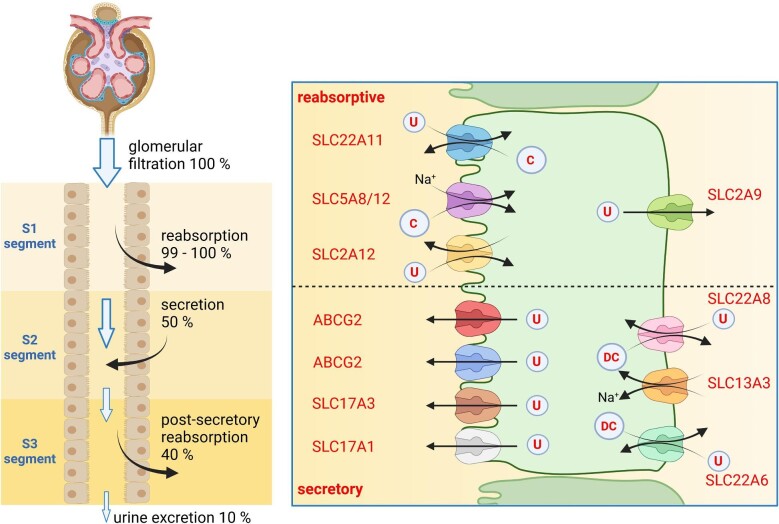
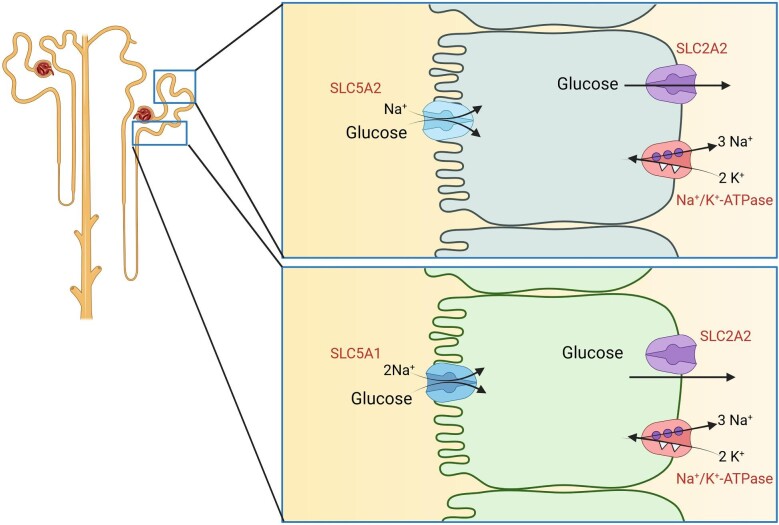
The kidneys produce daily about 180 liters of urine but only about 2 liters are excreted. The proximal tubule plays an important role in reabsorbing the majority of filtered urine and many metabolites such as sugars, amino acids, salts or phosphate that are contained in this large volume. Reabsorption of these important metabolites is mediated by a diverse group of highly specialized transport proteins. Another group of transport proteins in the proximal tubule is responsible for the active secretion of metabolic waste products or toxins and drugs into urine. All these transporters have in common that they are directly linked to kidney metabolism and indirectly to whole-body metabolism and functions. In recent years, it has become evident that modulation of these transporters may influence the onset, progression and consequences of kidney disease. This review summarizes recent developments in this field and discusses some examples of drugs already in clinical use or in development. The examples include inhibitors of sugar transporters (SGLT2 inhibitors) that are successfully used in patients with kidney disease, diabetes or heart failure. Likewise, indirect inhibitors (acetazolamide) of an transporter absorbing sodium in exchange for protons (NHE3) are used mostly in patients with heart failure or for prevention of high altitude disease, while direct inhibitors show promise in preclinical studies to reduce damage in episodes of acute kidney disease or high blood pressure. Modulators of transporters mediating the excretion of urate have been used in patients with gout and are also discussed to prevent kidney disease. Novel drugs in development target transporters for phosphate, amino acids, or toxin and drug excretion and may be helpful for specific conditions associated with kidney disease. The advantages and challenges associated with these (novel) drugs targeting proximal tubule transport are discussed.
Abstract: The proximal tubule is responsible for reabsorbing about 60% of filtered solutes and water and is critical for the secretion of metabolic waste products, drugs and toxins. A large number of highly specialized ion channels and transport proteins belonging to the SLC and ABC transporter families are involved. Their activity is directly or indirectly linked to ATP consumption and requires large quantities of energy and oxygen supply. Moreover, the activity of these transporters is often coupled to the movement of Na+ ions thus influencing also salt and water balance, as well as transport and regulatory processes in downstream segments. Because of their relevance for systemic ion balance, for renal metabolism or for affecting regulatory processes, proximal tubule transporters are attractive targets for existing drug and for novel strategies to reduce kidney disease progression or to alleviate the consequences of decreased kidney function. In this review, the relevance of some major proximal tubule transport systems as drug targets in individuals with chronic kidney disease (CKD) is discussed. Inhibitors of the sodium-glucose cotransporter 2, SGLT2, are now part of standard therapy in patients with CKD and/or heart failure. Also, indirect inhibition of Na+/H+-exchangers by carbonic anhydrase inhibitors and uricosuric drugs have been used for decades. Inhibition of phosphate and amino acid transporters have recently been proposed as novel principles to remove excess phosphate or to protect the proximal tubule metabolically, respectively. In addition, organic cation and anion transporters involved in drug and toxin excretion may serve as targets of new drugs. The advantages and challenges associated with (novel) drugs targeting proximal tubule transport are discussed.
期刊介绍:
Nephrology Dialysis Transplantation (ndt) is the leading nephrology journal in Europe and renowned worldwide, devoted to original clinical and laboratory research in nephrology, dialysis and transplantation. ndt is an official journal of the [ERA-EDTA](http://www.era-edta.org/) (European Renal Association-European Dialysis and Transplant Association). Published monthly, the journal provides an essential resource for researchers and clinicians throughout the world. All research articles in this journal have undergone peer review.
Print ISSN: 0931-0509.





 京公网安备 11010802042870号
京ICP备2023020795号-1
京公网安备 11010802042870号
京ICP备2023020795号-1

 分享
分享
 求助内容:
求助内容: 应助结果提醒方式:
 扫码关注我们
