Yi Ma , Xingliang Gao , Mabrouk Elsabagh , Yong Feng , Yong Chen , Long Cheng , Zelin Li , Huayou Chen , Fuyuan Liu
{"title":"奶牛围产期乳酸菌抗炎潜能的研究","authors":"Yi Ma , Xingliang Gao , Mabrouk Elsabagh , Yong Feng , Yong Chen , Long Cheng , Zelin Li , Huayou Chen , Fuyuan Liu","doi":"10.1016/j.anifeedsci.2025.116234","DOIUrl":null,"url":null,"abstract":"<div><div>The prevalence of inflammatory diseases in peripartum dairy cows is associated with changes in bovine immune responses. Although antibiotics can treat related inflammatory diseases, their prominent issues such as antibiotic resistance are significant reasons limiting their use. The supplementation of lactic acid bacteria (LAB) has been shown to offer anti-inflammatory benefits, yet its efficacy varies with species and strain specificity. This review delineates the common types of inflammation and their triggers in peripartum dairy cows and scrutinizes case studies involving LAB application, specifying the LAB strains, dosages, and administration methods. It then elucidates various anti-inflammatory pathways and potential mechanisms of LAB, acknowledging that many insights are derived from non-bovine models, which poses a limitation in directly extrapolating findings to dairy cattle. The review suggests future research directions, such as strain screening, genetic engineering, dosage optimization, delivery methods, and mechanistic elucidation, to enhance the understanding of LAB's role in inducing pathogen resistance, enhancing intestinal barriers, and modulating immunity in peripartum dairy cows. This comprehensive overview aims to improve health outcomes by providing a more nuanced view of how LAB can support dairy cow health, with a caveat regarding the reliance on non-bovine studies.</div></div>","PeriodicalId":7861,"journal":{"name":"Animal Feed Science and Technology","volume":"321 ","pages":"Article 116234"},"PeriodicalIF":3.2000,"publicationDate":"2025-03-01","publicationTypes":"Journal Article","fieldsOfStudy":null,"isOpenAccess":false,"openAccessPdf":"","citationCount":"0","resultStr":"{\"title\":\"Anti-Inflammatory potential of lactic acid bacteria for dairy cows during the periparturient period\",\"authors\":\"Yi Ma , Xingliang Gao , Mabrouk Elsabagh , Yong Feng , Yong Chen , Long Cheng , Zelin Li , Huayou Chen , Fuyuan Liu\",\"doi\":\"10.1016/j.anifeedsci.2025.116234\",\"DOIUrl\":null,\"url\":null,\"abstract\":\"<div><div>The prevalence of inflammatory diseases in peripartum dairy cows is associated with changes in bovine immune responses. Although antibiotics can treat related inflammatory diseases, their prominent issues such as antibiotic resistance are significant reasons limiting their use. The supplementation of lactic acid bacteria (LAB) has been shown to offer anti-inflammatory benefits, yet its efficacy varies with species and strain specificity. This review delineates the common types of inflammation and their triggers in peripartum dairy cows and scrutinizes case studies involving LAB application, specifying the LAB strains, dosages, and administration methods. It then elucidates various anti-inflammatory pathways and potential mechanisms of LAB, acknowledging that many insights are derived from non-bovine models, which poses a limitation in directly extrapolating findings to dairy cattle. The review suggests future research directions, such as strain screening, genetic engineering, dosage optimization, delivery methods, and mechanistic elucidation, to enhance the understanding of LAB's role in inducing pathogen resistance, enhancing intestinal barriers, and modulating immunity in peripartum dairy cows. This comprehensive overview aims to improve health outcomes by providing a more nuanced view of how LAB can support dairy cow health, with a caveat regarding the reliance on non-bovine studies.</div></div>\",\"PeriodicalId\":7861,\"journal\":{\"name\":\"Animal Feed Science and Technology\",\"volume\":\"321 \",\"pages\":\"Article 116234\"},\"PeriodicalIF\":3.2000,\"publicationDate\":\"2025-03-01\",\"publicationTypes\":\"Journal Article\",\"fieldsOfStudy\":null,\"isOpenAccess\":false,\"openAccessPdf\":\"\",\"citationCount\":\"0\",\"resultStr\":null,\"platform\":\"Semanticscholar\",\"paperid\":null,\"PeriodicalName\":\"Animal Feed Science and Technology\",\"FirstCategoryId\":\"97\",\"ListUrlMain\":\"https://www.sciencedirect.com/science/article/pii/S037784012500029X\",\"RegionNum\":2,\"RegionCategory\":\"农林科学\",\"ArticlePicture\":[],\"TitleCN\":null,\"AbstractTextCN\":null,\"PMCID\":null,\"EPubDate\":\"2025/1/22 0:00:00\",\"PubModel\":\"Epub\",\"JCR\":\"Q1\",\"JCRName\":\"AGRICULTURE, DAIRY & ANIMAL SCIENCE\",\"Score\":null,\"Total\":0}","platform":"Semanticscholar","paperid":null,"PeriodicalName":"Animal Feed Science and Technology","FirstCategoryId":"97","ListUrlMain":"https://www.sciencedirect.com/science/article/pii/S037784012500029X","RegionNum":2,"RegionCategory":"农林科学","ArticlePicture":[],"TitleCN":null,"AbstractTextCN":null,"PMCID":null,"EPubDate":"2025/1/22 0:00:00","PubModel":"Epub","JCR":"Q1","JCRName":"AGRICULTURE, DAIRY & ANIMAL SCIENCE","Score":null,"Total":0}
Anti-Inflammatory potential of lactic acid bacteria for dairy cows during the periparturient period
The prevalence of inflammatory diseases in peripartum dairy cows is associated with changes in bovine immune responses. Although antibiotics can treat related inflammatory diseases, their prominent issues such as antibiotic resistance are significant reasons limiting their use. The supplementation of lactic acid bacteria (LAB) has been shown to offer anti-inflammatory benefits, yet its efficacy varies with species and strain specificity. This review delineates the common types of inflammation and their triggers in peripartum dairy cows and scrutinizes case studies involving LAB application, specifying the LAB strains, dosages, and administration methods. It then elucidates various anti-inflammatory pathways and potential mechanisms of LAB, acknowledging that many insights are derived from non-bovine models, which poses a limitation in directly extrapolating findings to dairy cattle. The review suggests future research directions, such as strain screening, genetic engineering, dosage optimization, delivery methods, and mechanistic elucidation, to enhance the understanding of LAB's role in inducing pathogen resistance, enhancing intestinal barriers, and modulating immunity in peripartum dairy cows. This comprehensive overview aims to improve health outcomes by providing a more nuanced view of how LAB can support dairy cow health, with a caveat regarding the reliance on non-bovine studies.
期刊介绍:
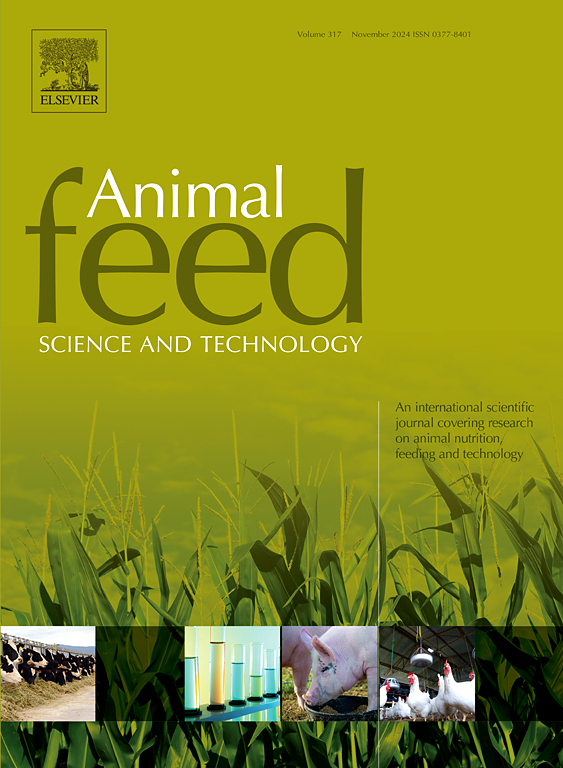
Animal Feed Science and Technology is a unique journal publishing scientific papers of international interest focusing on animal feeds and their feeding.
Papers describing research on feed for ruminants and non-ruminants, including poultry, horses, companion animals and aquatic animals, are welcome.
The journal covers the following areas:
Nutritive value of feeds (e.g., assessment, improvement)
Methods of conserving and processing feeds that affect their nutritional value
Agronomic and climatic factors influencing the nutritive value of feeds
Utilization of feeds and the improvement of such
Metabolic, production, reproduction and health responses, as well as potential environmental impacts, of diet inputs and feed technologies (e.g., feeds, feed additives, feed components, mycotoxins)
Mathematical models relating directly to animal-feed interactions
Analytical and experimental methods for feed evaluation
Environmental impacts of feed technologies in animal production.




 京公网安备 11010802042870号
京ICP备2023020795号-1
京公网安备 11010802042870号
京ICP备2023020795号-1

 分享
分享
 求助内容:
求助内容: 应助结果提醒方式:
 扫码关注我们
