Nursel Söylemez-Milli, Pelin Ertürkmen, Duygu Alp Baltakesmez
{"title":"几种芽孢杆菌对胃肠道疾病的抗性能力:新型候选益生菌克劳氏芽孢杆菌BA8和枯草芽孢杆菌BA11的全基因组测序","authors":"Nursel Söylemez-Milli, Pelin Ertürkmen, Duygu Alp Baltakesmez","doi":"10.1002/fsn3.70018","DOIUrl":null,"url":null,"abstract":"<p>This study aims to investigate the resistance of potential probiotic <i>Bacillus</i> species to various conditions in the gastrointestinal (GI) tract and their safety characteristics. MALDI-TOF MS identified all tested strains with a good safety score of ≥ 2.0; the strains demonstrated the capacity to pass through the Gl tract, exhibiting a reduction of > 6 log/CFU live cells. Furthermore, they exhibited varying survival rates in an acidic environment (pH 2.0–3.0) and the presence of Ox-Bile (1% w/v) (<i>p</i> < 0.05). Following exposure to pH 3.0 and Ox-Bile, the survival rate of <i>Bacillus</i> spp. ranged between 85.94% and 91.24% and 87.30% and 91.54%, respectively. The results of the in vitro experiments showed that the six <i>Bacillus</i> strains had comparable characteristics (e.g., tolerance to GI track enzyme, auto-aggregation ability) to the reference probiotic strain <i>Lactiplantibacillus plantarum</i> LA15. The auto-aggregation results of the <i>B. clausii</i> BA8 strain, which has demonstrated resistance to GI tract conditions, were also noteworthy. This strain showed 72.32% after 2 h and 74.55% at the end of 5 h. Most suitable for use as probiotic strains <i>B. clausii</i> BA8 and <i>B. subtilis</i> BA11, sequenced via Illumina NovaSeq, showed average nucleotide identity (ANI) values of 98.1% and 97.8%, respectively. The genome annotation of <i>B. clausii</i> and <i>B. subtilis</i> with Prokka revealed 4,498,248-4,215,606 bp genome length, 44%–43% GC content, and 110–26 contigs, respectively. <i>B. clausii</i> BA8 has been comprehensively characterized, is of low risk for human consumption, and has been recommended as a potential probiotic strain. However, further in vivo experimentation is required to confirm these findings.</p>","PeriodicalId":12418,"journal":{"name":"Food Science & Nutrition","volume":"13 2","pages":""},"PeriodicalIF":3.8000,"publicationDate":"2025-02-05","publicationTypes":"Journal Article","fieldsOfStudy":null,"isOpenAccess":false,"openAccessPdf":"https://onlinelibrary.wiley.com/doi/epdf/10.1002/fsn3.70018","citationCount":"0","resultStr":"{\"title\":\"The Resistance Abilities of Some Bacillus Species to Gastrointestinal Tract Conditions: Whole Genome Sequencing of the Novel Candidate Probiotic Strains Bacillus clausii BA8 and Bacillus subtilis BA11\",\"authors\":\"Nursel Söylemez-Milli, Pelin Ertürkmen, Duygu Alp Baltakesmez\",\"doi\":\"10.1002/fsn3.70018\",\"DOIUrl\":null,\"url\":null,\"abstract\":\"<p>This study aims to investigate the resistance of potential probiotic <i>Bacillus</i> species to various conditions in the gastrointestinal (GI) tract and their safety characteristics. MALDI-TOF MS identified all tested strains with a good safety score of ≥ 2.0; the strains demonstrated the capacity to pass through the Gl tract, exhibiting a reduction of > 6 log/CFU live cells. Furthermore, they exhibited varying survival rates in an acidic environment (pH 2.0–3.0) and the presence of Ox-Bile (1% w/v) (<i>p</i> < 0.05). Following exposure to pH 3.0 and Ox-Bile, the survival rate of <i>Bacillus</i> spp. ranged between 85.94% and 91.24% and 87.30% and 91.54%, respectively. The results of the in vitro experiments showed that the six <i>Bacillus</i> strains had comparable characteristics (e.g., tolerance to GI track enzyme, auto-aggregation ability) to the reference probiotic strain <i>Lactiplantibacillus plantarum</i> LA15. The auto-aggregation results of the <i>B. clausii</i> BA8 strain, which has demonstrated resistance to GI tract conditions, were also noteworthy. This strain showed 72.32% after 2 h and 74.55% at the end of 5 h. Most suitable for use as probiotic strains <i>B. clausii</i> BA8 and <i>B. subtilis</i> BA11, sequenced via Illumina NovaSeq, showed average nucleotide identity (ANI) values of 98.1% and 97.8%, respectively. The genome annotation of <i>B. clausii</i> and <i>B. subtilis</i> with Prokka revealed 4,498,248-4,215,606 bp genome length, 44%–43% GC content, and 110–26 contigs, respectively. <i>B. clausii</i> BA8 has been comprehensively characterized, is of low risk for human consumption, and has been recommended as a potential probiotic strain. However, further in vivo experimentation is required to confirm these findings.</p>\",\"PeriodicalId\":12418,\"journal\":{\"name\":\"Food Science & Nutrition\",\"volume\":\"13 2\",\"pages\":\"\"},\"PeriodicalIF\":3.8000,\"publicationDate\":\"2025-02-05\",\"publicationTypes\":\"Journal Article\",\"fieldsOfStudy\":null,\"isOpenAccess\":false,\"openAccessPdf\":\"https://onlinelibrary.wiley.com/doi/epdf/10.1002/fsn3.70018\",\"citationCount\":\"0\",\"resultStr\":null,\"platform\":\"Semanticscholar\",\"paperid\":null,\"PeriodicalName\":\"Food Science & Nutrition\",\"FirstCategoryId\":\"97\",\"ListUrlMain\":\"https://onlinelibrary.wiley.com/doi/10.1002/fsn3.70018\",\"RegionNum\":2,\"RegionCategory\":\"农林科学\",\"ArticlePicture\":[],\"TitleCN\":null,\"AbstractTextCN\":null,\"PMCID\":null,\"EPubDate\":\"\",\"PubModel\":\"\",\"JCR\":\"Q2\",\"JCRName\":\"FOOD SCIENCE & TECHNOLOGY\",\"Score\":null,\"Total\":0}","platform":"Semanticscholar","paperid":null,"PeriodicalName":"Food Science & Nutrition","FirstCategoryId":"97","ListUrlMain":"https://onlinelibrary.wiley.com/doi/10.1002/fsn3.70018","RegionNum":2,"RegionCategory":"农林科学","ArticlePicture":[],"TitleCN":null,"AbstractTextCN":null,"PMCID":null,"EPubDate":"","PubModel":"","JCR":"Q2","JCRName":"FOOD SCIENCE & TECHNOLOGY","Score":null,"Total":0}
The Resistance Abilities of Some Bacillus Species to Gastrointestinal Tract Conditions: Whole Genome Sequencing of the Novel Candidate Probiotic Strains Bacillus clausii BA8 and Bacillus subtilis BA11
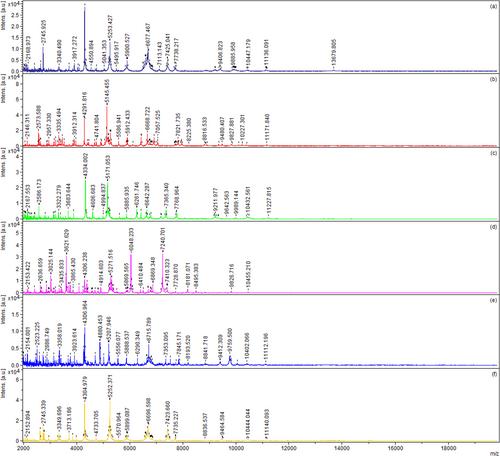
This study aims to investigate the resistance of potential probiotic Bacillus species to various conditions in the gastrointestinal (GI) tract and their safety characteristics. MALDI-TOF MS identified all tested strains with a good safety score of ≥ 2.0; the strains demonstrated the capacity to pass through the Gl tract, exhibiting a reduction of > 6 log/CFU live cells. Furthermore, they exhibited varying survival rates in an acidic environment (pH 2.0–3.0) and the presence of Ox-Bile (1% w/v) (p < 0.05). Following exposure to pH 3.0 and Ox-Bile, the survival rate of Bacillus spp. ranged between 85.94% and 91.24% and 87.30% and 91.54%, respectively. The results of the in vitro experiments showed that the six Bacillus strains had comparable characteristics (e.g., tolerance to GI track enzyme, auto-aggregation ability) to the reference probiotic strain Lactiplantibacillus plantarum LA15. The auto-aggregation results of the B. clausii BA8 strain, which has demonstrated resistance to GI tract conditions, were also noteworthy. This strain showed 72.32% after 2 h and 74.55% at the end of 5 h. Most suitable for use as probiotic strains B. clausii BA8 and B. subtilis BA11, sequenced via Illumina NovaSeq, showed average nucleotide identity (ANI) values of 98.1% and 97.8%, respectively. The genome annotation of B. clausii and B. subtilis with Prokka revealed 4,498,248-4,215,606 bp genome length, 44%–43% GC content, and 110–26 contigs, respectively. B. clausii BA8 has been comprehensively characterized, is of low risk for human consumption, and has been recommended as a potential probiotic strain. However, further in vivo experimentation is required to confirm these findings.
期刊介绍:
Food Science & Nutrition is the peer-reviewed journal for rapid dissemination of research in all areas of food science and nutrition. The Journal will consider submissions of quality papers describing the results of fundamental and applied research related to all aspects of human food and nutrition, as well as interdisciplinary research that spans these two fields.




 京公网安备 11010802042870号
京ICP备2023020795号-1
京公网安备 11010802042870号
京ICP备2023020795号-1

 分享
分享
 求助内容:
求助内容: 应助结果提醒方式:
 扫码关注我们
