Sabrina Rhode, Lisa Rogge, Marthoenis Marthoenis, Till Seuring, Hendra Zufry, Till Bärnighausen, Hizir Sofyan, Jennifer Manne-Goehler, Sebastian Vollmer
{"title":"在初级卫生保健中基于智能手机的实时诊断以监测糖尿病患者的HbA1c水平。","authors":"Sabrina Rhode, Lisa Rogge, Marthoenis Marthoenis, Till Seuring, Hendra Zufry, Till Bärnighausen, Hizir Sofyan, Jennifer Manne-Goehler, Sebastian Vollmer","doi":"10.1038/s43856-025-00743-8","DOIUrl":null,"url":null,"abstract":"<p><strong>Background: </strong>The lack of accurate and affordable monitoring of glycated hemoglobin (HbA1c) is a common issue among patients with diabetes in low- and middle-income countries. We aimed to test a tablet- and smartphone-based point-of-care (TSB POC) device against a local laboratory-based measure of HbA1c for monitoring diabetes under real-world conditions.</p><p><strong>Methods: </strong>For this cross-sectional clinical method applicability study, capillary and venous blood was collected in duplicate and analyzed at local primary health care centers. For a heterogeneity test, the tests were performed by an expert, and by a team of local nurses. The study was conducted in a multicenter design in rural and urban Aceh, Indonesia in 2019, and included a total of 533 adults. We mainly used Bland-Altman plots to assess the number of readings within the 95%-limits of agreement (LoA) and Deming regressions.</p><p><strong>Results: </strong>The results show a mean difference between capillary HbA1c on the test device and the reference method of -0.54 [CI<sub>0.95</sub> = -1.6933; 0.6048] with 5.21% of measurements outside the LoA and a Pearson's r = 0.91 in the Deming Regression. There is no significant difference in test concordance between local nurses and the expert (4.23% versus 5.13% results outside the LoA [CI<sub>0.95</sub> = -0.0331; 0.0511]).</p><p><strong>Conclusions: </strong>TSB POC for analysis of HbA1c is an acceptable alternative for accessible monitoring of diabetes patients under these conditions. This method could provide access to high-quality diagnostic decisions through regular and cost-effective HbA1c monitoring directly in healthcare facilities, thus providing better access to essential health services.</p>","PeriodicalId":72646,"journal":{"name":"Communications medicine","volume":"5 1","pages":"37"},"PeriodicalIF":7.4000,"publicationDate":"2025-02-05","publicationTypes":"Journal Article","fieldsOfStudy":null,"isOpenAccess":false,"openAccessPdf":"https://www.ncbi.nlm.nih.gov/pmc/articles/PMC11799141/pdf/","citationCount":"0","resultStr":"{\"title\":\"Real-world smartphone-based point-of-care diagnostics in primary health care to monitor HbA1c levels in people with diabetes.\",\"authors\":\"Sabrina Rhode, Lisa Rogge, Marthoenis Marthoenis, Till Seuring, Hendra Zufry, Till Bärnighausen, Hizir Sofyan, Jennifer Manne-Goehler, Sebastian Vollmer\",\"doi\":\"10.1038/s43856-025-00743-8\",\"DOIUrl\":null,\"url\":null,\"abstract\":\"<p><strong>Background: </strong>The lack of accurate and affordable monitoring of glycated hemoglobin (HbA1c) is a common issue among patients with diabetes in low- and middle-income countries. We aimed to test a tablet- and smartphone-based point-of-care (TSB POC) device against a local laboratory-based measure of HbA1c for monitoring diabetes under real-world conditions.</p><p><strong>Methods: </strong>For this cross-sectional clinical method applicability study, capillary and venous blood was collected in duplicate and analyzed at local primary health care centers. For a heterogeneity test, the tests were performed by an expert, and by a team of local nurses. The study was conducted in a multicenter design in rural and urban Aceh, Indonesia in 2019, and included a total of 533 adults. We mainly used Bland-Altman plots to assess the number of readings within the 95%-limits of agreement (LoA) and Deming regressions.</p><p><strong>Results: </strong>The results show a mean difference between capillary HbA1c on the test device and the reference method of -0.54 [CI<sub>0.95</sub> = -1.6933; 0.6048] with 5.21% of measurements outside the LoA and a Pearson's r = 0.91 in the Deming Regression. There is no significant difference in test concordance between local nurses and the expert (4.23% versus 5.13% results outside the LoA [CI<sub>0.95</sub> = -0.0331; 0.0511]).</p><p><strong>Conclusions: </strong>TSB POC for analysis of HbA1c is an acceptable alternative for accessible monitoring of diabetes patients under these conditions. This method could provide access to high-quality diagnostic decisions through regular and cost-effective HbA1c monitoring directly in healthcare facilities, thus providing better access to essential health services.</p>\",\"PeriodicalId\":72646,\"journal\":{\"name\":\"Communications medicine\",\"volume\":\"5 1\",\"pages\":\"37\"},\"PeriodicalIF\":7.4000,\"publicationDate\":\"2025-02-05\",\"publicationTypes\":\"Journal Article\",\"fieldsOfStudy\":null,\"isOpenAccess\":false,\"openAccessPdf\":\"https://www.ncbi.nlm.nih.gov/pmc/articles/PMC11799141/pdf/\",\"citationCount\":\"0\",\"resultStr\":null,\"platform\":\"Semanticscholar\",\"paperid\":null,\"PeriodicalName\":\"Communications medicine\",\"FirstCategoryId\":\"1085\",\"ListUrlMain\":\"https://doi.org/10.1038/s43856-025-00743-8\",\"RegionNum\":0,\"RegionCategory\":null,\"ArticlePicture\":[],\"TitleCN\":null,\"AbstractTextCN\":null,\"PMCID\":null,\"EPubDate\":\"\",\"PubModel\":\"\",\"JCR\":\"Q1\",\"JCRName\":\"MEDICINE, RESEARCH & EXPERIMENTAL\",\"Score\":null,\"Total\":0}","platform":"Semanticscholar","paperid":null,"PeriodicalName":"Communications medicine","FirstCategoryId":"1085","ListUrlMain":"https://doi.org/10.1038/s43856-025-00743-8","RegionNum":0,"RegionCategory":null,"ArticlePicture":[],"TitleCN":null,"AbstractTextCN":null,"PMCID":null,"EPubDate":"","PubModel":"","JCR":"Q1","JCRName":"MEDICINE, RESEARCH & EXPERIMENTAL","Score":null,"Total":0}
Real-world smartphone-based point-of-care diagnostics in primary health care to monitor HbA1c levels in people with diabetes.
Background: The lack of accurate and affordable monitoring of glycated hemoglobin (HbA1c) is a common issue among patients with diabetes in low- and middle-income countries. We aimed to test a tablet- and smartphone-based point-of-care (TSB POC) device against a local laboratory-based measure of HbA1c for monitoring diabetes under real-world conditions.
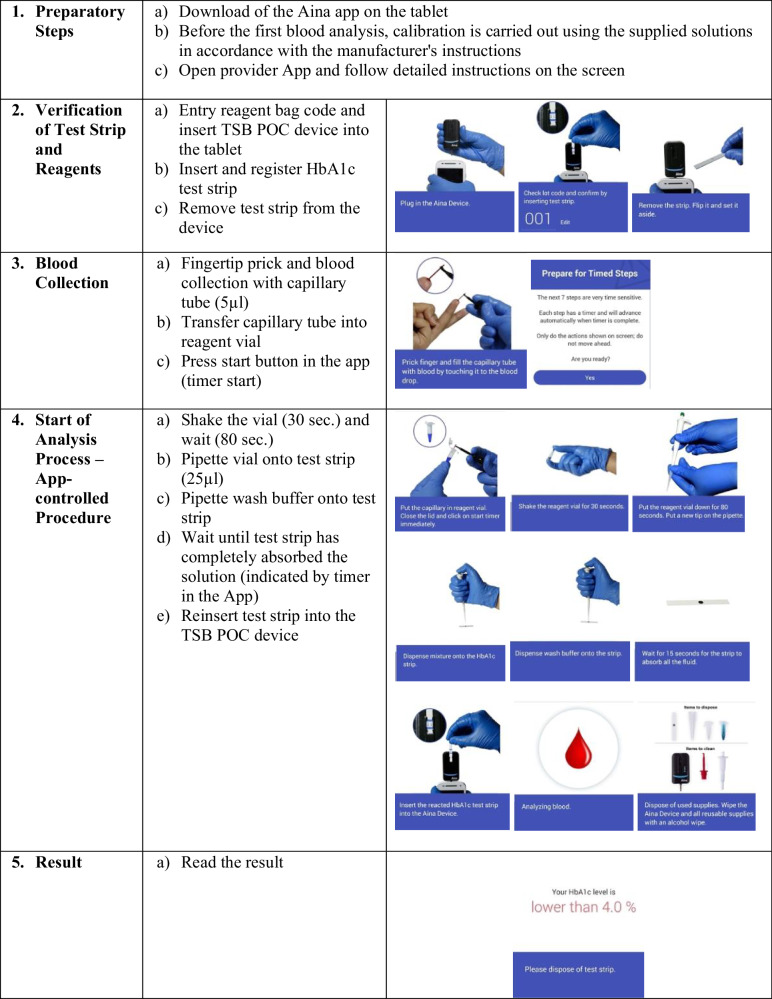
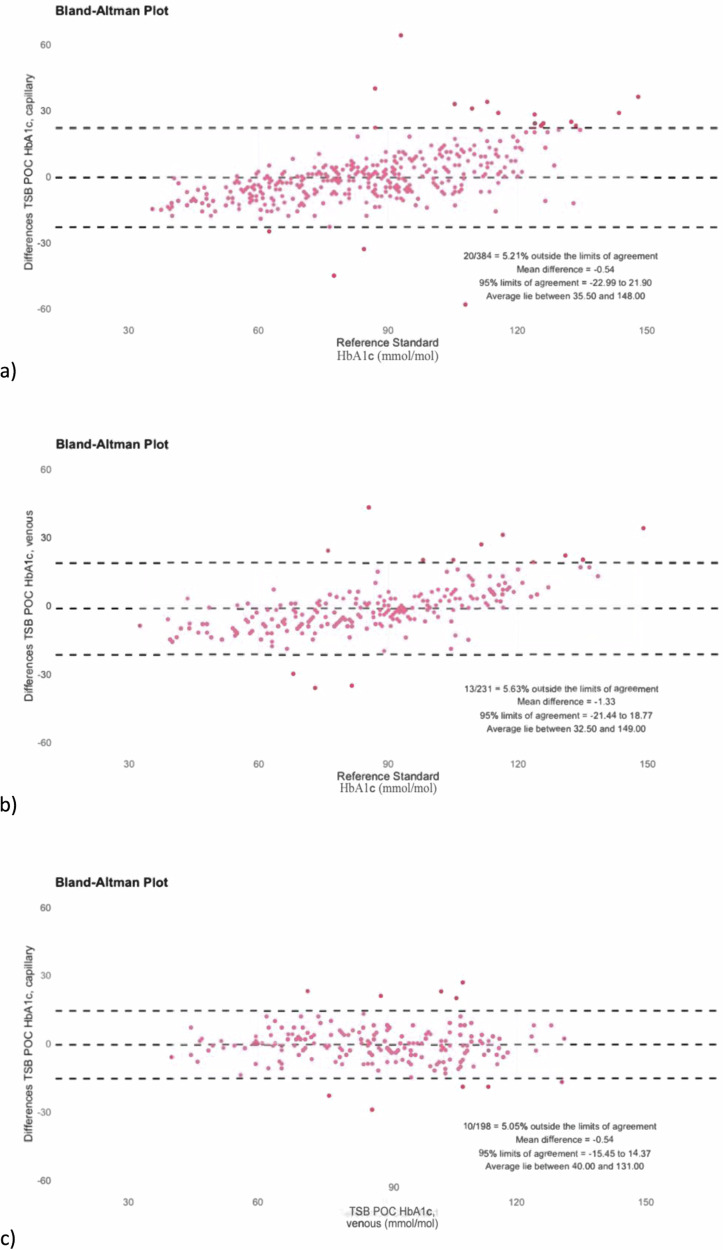
Methods: For this cross-sectional clinical method applicability study, capillary and venous blood was collected in duplicate and analyzed at local primary health care centers. For a heterogeneity test, the tests were performed by an expert, and by a team of local nurses. The study was conducted in a multicenter design in rural and urban Aceh, Indonesia in 2019, and included a total of 533 adults. We mainly used Bland-Altman plots to assess the number of readings within the 95%-limits of agreement (LoA) and Deming regressions.
Results: The results show a mean difference between capillary HbA1c on the test device and the reference method of -0.54 [CI0.95 = -1.6933; 0.6048] with 5.21% of measurements outside the LoA and a Pearson's r = 0.91 in the Deming Regression. There is no significant difference in test concordance between local nurses and the expert (4.23% versus 5.13% results outside the LoA [CI0.95 = -0.0331; 0.0511]).
Conclusions: TSB POC for analysis of HbA1c is an acceptable alternative for accessible monitoring of diabetes patients under these conditions. This method could provide access to high-quality diagnostic decisions through regular and cost-effective HbA1c monitoring directly in healthcare facilities, thus providing better access to essential health services.





 京公网安备 11010802042870号
京ICP备2023020795号-1
京公网安备 11010802042870号
京ICP备2023020795号-1

 分享
分享

 求助内容:
求助内容: 应助结果提醒方式:
 扫码关注我们
