Lucía Rivas-Iglesias , Álvaro Gutiérrez , Eduardo Dopico , Sara Fernández , Verónica Soto-López , Eva Garcia-Vazquez
{"title":"濒临灭绝的,被开采的玻璃鳗(安圭拉安圭拉)重金属和微塑料含量达到临界水平,显示了航运和塑料泄漏的威胁","authors":"Lucía Rivas-Iglesias , Álvaro Gutiérrez , Eduardo Dopico , Sara Fernández , Verónica Soto-López , Eva Garcia-Vazquez","doi":"10.1016/j.envpol.2025.125824","DOIUrl":null,"url":null,"abstract":"<div><div>In the life of the endangered but still fished <em>Anguilla anguilla</em>, glass eels are recruited through estuaries. These fragile ecosystems are among the most disturbed on the planet. Here, heavy metals and microplastics were measured in estuary water and European glass eels entering bay of Biscay rivers of different size and anthropogenic stress. Eels from all the estuaries exhibited cadmium exceeding legal European limits, as happened with lead in samples from the highly disturbed Avilés estuary. Several water samples from small rivers surpassed the estimated limit of microplastic for ecotoxicological safety. In multiple regression analysis, both eel lead and microplastic content were significantly explained from shipping activity in the estuaries. Eel cadmium content was not associated with estuary stressors, being probably acquired during the oceanic migration of eel larvae. The presence in eels of new white polyethylene particles that had not been found previously in the region could be explained from the marine plastic spill of “Toconao” cargo in December. The same spill could explain a significant increase of microplastic bioconcentration in the glass eels in comparison with previous surveys. These risks for critically endangered eels, and for the consumers, highlight the urgent need for reducing the impact of contaminants on both local and global scales.</div></div>","PeriodicalId":311,"journal":{"name":"Environmental Pollution","volume":"369 ","pages":"Article 125824"},"PeriodicalIF":7.3000,"publicationDate":"2025-03-15","publicationTypes":"Journal Article","fieldsOfStudy":null,"isOpenAccess":false,"openAccessPdf":"","citationCount":"0","resultStr":"{\"title\":\"Endangered, exploited glass eels (Anguilla anguilla) with critical levels of heavy metals and microplastics reveal both shipping and plastic spill threats\",\"authors\":\"Lucía Rivas-Iglesias , Álvaro Gutiérrez , Eduardo Dopico , Sara Fernández , Verónica Soto-López , Eva Garcia-Vazquez\",\"doi\":\"10.1016/j.envpol.2025.125824\",\"DOIUrl\":null,\"url\":null,\"abstract\":\"<div><div>In the life of the endangered but still fished <em>Anguilla anguilla</em>, glass eels are recruited through estuaries. These fragile ecosystems are among the most disturbed on the planet. Here, heavy metals and microplastics were measured in estuary water and European glass eels entering bay of Biscay rivers of different size and anthropogenic stress. Eels from all the estuaries exhibited cadmium exceeding legal European limits, as happened with lead in samples from the highly disturbed Avilés estuary. Several water samples from small rivers surpassed the estimated limit of microplastic for ecotoxicological safety. In multiple regression analysis, both eel lead and microplastic content were significantly explained from shipping activity in the estuaries. Eel cadmium content was not associated with estuary stressors, being probably acquired during the oceanic migration of eel larvae. The presence in eels of new white polyethylene particles that had not been found previously in the region could be explained from the marine plastic spill of “Toconao” cargo in December. The same spill could explain a significant increase of microplastic bioconcentration in the glass eels in comparison with previous surveys. These risks for critically endangered eels, and for the consumers, highlight the urgent need for reducing the impact of contaminants on both local and global scales.</div></div>\",\"PeriodicalId\":311,\"journal\":{\"name\":\"Environmental Pollution\",\"volume\":\"369 \",\"pages\":\"Article 125824\"},\"PeriodicalIF\":7.3000,\"publicationDate\":\"2025-03-15\",\"publicationTypes\":\"Journal Article\",\"fieldsOfStudy\":null,\"isOpenAccess\":false,\"openAccessPdf\":\"\",\"citationCount\":\"0\",\"resultStr\":null,\"platform\":\"Semanticscholar\",\"paperid\":null,\"PeriodicalName\":\"Environmental Pollution\",\"FirstCategoryId\":\"93\",\"ListUrlMain\":\"https://www.sciencedirect.com/science/article/pii/S0269749125001976\",\"RegionNum\":2,\"RegionCategory\":\"环境科学与生态学\",\"ArticlePicture\":[],\"TitleCN\":null,\"AbstractTextCN\":null,\"PMCID\":null,\"EPubDate\":\"2025/2/7 0:00:00\",\"PubModel\":\"Epub\",\"JCR\":\"Q1\",\"JCRName\":\"ENVIRONMENTAL SCIENCES\",\"Score\":null,\"Total\":0}","platform":"Semanticscholar","paperid":null,"PeriodicalName":"Environmental Pollution","FirstCategoryId":"93","ListUrlMain":"https://www.sciencedirect.com/science/article/pii/S0269749125001976","RegionNum":2,"RegionCategory":"环境科学与生态学","ArticlePicture":[],"TitleCN":null,"AbstractTextCN":null,"PMCID":null,"EPubDate":"2025/2/7 0:00:00","PubModel":"Epub","JCR":"Q1","JCRName":"ENVIRONMENTAL SCIENCES","Score":null,"Total":0}
Endangered, exploited glass eels (Anguilla anguilla) with critical levels of heavy metals and microplastics reveal both shipping and plastic spill threats
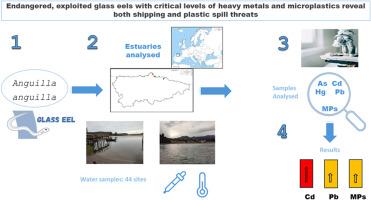
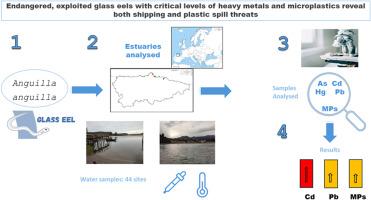
In the life of the endangered but still fished Anguilla anguilla, glass eels are recruited through estuaries. These fragile ecosystems are among the most disturbed on the planet. Here, heavy metals and microplastics were measured in estuary water and European glass eels entering bay of Biscay rivers of different size and anthropogenic stress. Eels from all the estuaries exhibited cadmium exceeding legal European limits, as happened with lead in samples from the highly disturbed Avilés estuary. Several water samples from small rivers surpassed the estimated limit of microplastic for ecotoxicological safety. In multiple regression analysis, both eel lead and microplastic content were significantly explained from shipping activity in the estuaries. Eel cadmium content was not associated with estuary stressors, being probably acquired during the oceanic migration of eel larvae. The presence in eels of new white polyethylene particles that had not been found previously in the region could be explained from the marine plastic spill of “Toconao” cargo in December. The same spill could explain a significant increase of microplastic bioconcentration in the glass eels in comparison with previous surveys. These risks for critically endangered eels, and for the consumers, highlight the urgent need for reducing the impact of contaminants on both local and global scales.
期刊介绍:
Environmental Pollution is an international peer-reviewed journal that publishes high-quality research papers and review articles covering all aspects of environmental pollution and its impacts on ecosystems and human health.
Subject areas include, but are not limited to:
• Sources and occurrences of pollutants that are clearly defined and measured in environmental compartments, food and food-related items, and human bodies;
• Interlinks between contaminant exposure and biological, ecological, and human health effects, including those of climate change;
• Contaminants of emerging concerns (including but not limited to antibiotic resistant microorganisms or genes, microplastics/nanoplastics, electronic wastes, light, and noise) and/or their biological, ecological, or human health effects;
• Laboratory and field studies on the remediation/mitigation of environmental pollution via new techniques and with clear links to biological, ecological, or human health effects;
• Modeling of pollution processes, patterns, or trends that is of clear environmental and/or human health interest;
• New techniques that measure and examine environmental occurrences, transport, behavior, and effects of pollutants within the environment or the laboratory, provided that they can be clearly used to address problems within regional or global environmental compartments.




 京公网安备 11010802042870号
京ICP备2023020795号-1
京公网安备 11010802042870号
京ICP备2023020795号-1

 分享
分享
 求助内容:
求助内容: 应助结果提醒方式:
 扫码关注我们
