Jinlong Zhang , Quan Jing , Longlong Yuan , Xianhui Zhou , Duolong Di , Jinyao Li , Dong Pei , Zhongxiong Fan , Jun Hai
{"title":"nir触发的具有H2S和NO生成的可编程纳米马达,用于三级强化ICD级联肿瘤治疗","authors":"Jinlong Zhang , Quan Jing , Longlong Yuan , Xianhui Zhou , Duolong Di , Jinyao Li , Dong Pei , Zhongxiong Fan , Jun Hai","doi":"10.1016/j.mtbio.2025.101540","DOIUrl":null,"url":null,"abstract":"<div><div>Gas therapy (GT) and/or phototherapy have been recently employed as immunogenic cell death (ICD) agents for activating immunotherapy, whereas the effective activation of sufficient immune responses remains an enormous challenge in such single therapeutic modality. In this study, a near-infrared (NIR)-triggered programmable nanomotor with hydrogen sulfide (H<sub>2</sub>S) and nitric oxide (NO) generation is well designed to achieve oncotherapy by cascading mild photothermal, gas, and reactive oxygen species (ROS)-reinforced immunogenic cell death. In brief, a gas signal molecule donor NOSH with H<sub>2</sub>S and NO capable of on-demand H<sub>2</sub>S and NO release was synthesized and then loaded into hollow mesoporous copper sulfide nanoparticles (termed as HCuSNPs) with an inherent NIR absorption and surface modification activity to obtain the programmable nanomotor (termed as NOSH@PEG-HCuSNPs). In particular, NOSH@PEG-HCuSNPs can effectively achieve the simultaneous spatiotemporal co-delivery of NOSH and HCuSNPs, thereby exerting the synergistic effects of GT and mild photothermal therapy (mPTT). It is worth noting that the anti-tumor response of mPTT is effectively enhanced by GT by disrupting the mitochondrial respiratory chain, inhibiting ATP production, and promoting tumor cell apoptosis. One by one, a large number of peroxynitrite anion (ONOO<sup>−</sup>) radicals are generated by the interactions of ROS from mPTT and NO from NOSH. Meanwhile, the unique protective mechanism of H<sub>2</sub>S is utilized to induce tumor thermal ablation by reducing the overexpression of heat shock protein 90 (HSP 90) and minimize the unnecessary damage toward normal tissues. Finally, ICD is markedly augmented by the cascading effects of mPTT, ONOO⁻radicals, and H<sub>2</sub>S. Concurrently, the immunosuppressive tumor microenvironment is reprogrammed, effectively inhibiting distant tumor tissues and preventing metastasis and tumor recurrence. Taken together, this study provides a new perspective for innovation in the field of oncotherapy.</div></div>","PeriodicalId":18310,"journal":{"name":"Materials Today Bio","volume":"31 ","pages":"Article 101540"},"PeriodicalIF":10.2000,"publicationDate":"2025-04-01","publicationTypes":"Journal Article","fieldsOfStudy":null,"isOpenAccess":false,"openAccessPdf":"","citationCount":"0","resultStr":"{\"title\":\"NIR-triggered programmable nanomotor with H2S and NO generation for cascading oncotherapy by three-pronged reinforcing ICD\",\"authors\":\"Jinlong Zhang , Quan Jing , Longlong Yuan , Xianhui Zhou , Duolong Di , Jinyao Li , Dong Pei , Zhongxiong Fan , Jun Hai\",\"doi\":\"10.1016/j.mtbio.2025.101540\",\"DOIUrl\":null,\"url\":null,\"abstract\":\"<div><div>Gas therapy (GT) and/or phototherapy have been recently employed as immunogenic cell death (ICD) agents for activating immunotherapy, whereas the effective activation of sufficient immune responses remains an enormous challenge in such single therapeutic modality. In this study, a near-infrared (NIR)-triggered programmable nanomotor with hydrogen sulfide (H<sub>2</sub>S) and nitric oxide (NO) generation is well designed to achieve oncotherapy by cascading mild photothermal, gas, and reactive oxygen species (ROS)-reinforced immunogenic cell death. In brief, a gas signal molecule donor NOSH with H<sub>2</sub>S and NO capable of on-demand H<sub>2</sub>S and NO release was synthesized and then loaded into hollow mesoporous copper sulfide nanoparticles (termed as HCuSNPs) with an inherent NIR absorption and surface modification activity to obtain the programmable nanomotor (termed as NOSH@PEG-HCuSNPs). In particular, NOSH@PEG-HCuSNPs can effectively achieve the simultaneous spatiotemporal co-delivery of NOSH and HCuSNPs, thereby exerting the synergistic effects of GT and mild photothermal therapy (mPTT). It is worth noting that the anti-tumor response of mPTT is effectively enhanced by GT by disrupting the mitochondrial respiratory chain, inhibiting ATP production, and promoting tumor cell apoptosis. One by one, a large number of peroxynitrite anion (ONOO<sup>−</sup>) radicals are generated by the interactions of ROS from mPTT and NO from NOSH. Meanwhile, the unique protective mechanism of H<sub>2</sub>S is utilized to induce tumor thermal ablation by reducing the overexpression of heat shock protein 90 (HSP 90) and minimize the unnecessary damage toward normal tissues. Finally, ICD is markedly augmented by the cascading effects of mPTT, ONOO⁻radicals, and H<sub>2</sub>S. Concurrently, the immunosuppressive tumor microenvironment is reprogrammed, effectively inhibiting distant tumor tissues and preventing metastasis and tumor recurrence. Taken together, this study provides a new perspective for innovation in the field of oncotherapy.</div></div>\",\"PeriodicalId\":18310,\"journal\":{\"name\":\"Materials Today Bio\",\"volume\":\"31 \",\"pages\":\"Article 101540\"},\"PeriodicalIF\":10.2000,\"publicationDate\":\"2025-04-01\",\"publicationTypes\":\"Journal Article\",\"fieldsOfStudy\":null,\"isOpenAccess\":false,\"openAccessPdf\":\"\",\"citationCount\":\"0\",\"resultStr\":null,\"platform\":\"Semanticscholar\",\"paperid\":null,\"PeriodicalName\":\"Materials Today Bio\",\"FirstCategoryId\":\"5\",\"ListUrlMain\":\"https://www.sciencedirect.com/science/article/pii/S2590006425000985\",\"RegionNum\":1,\"RegionCategory\":\"医学\",\"ArticlePicture\":[],\"TitleCN\":null,\"AbstractTextCN\":null,\"PMCID\":null,\"EPubDate\":\"2025/2/3 0:00:00\",\"PubModel\":\"Epub\",\"JCR\":\"Q1\",\"JCRName\":\"ENGINEERING, BIOMEDICAL\",\"Score\":null,\"Total\":0}","platform":"Semanticscholar","paperid":null,"PeriodicalName":"Materials Today Bio","FirstCategoryId":"5","ListUrlMain":"https://www.sciencedirect.com/science/article/pii/S2590006425000985","RegionNum":1,"RegionCategory":"医学","ArticlePicture":[],"TitleCN":null,"AbstractTextCN":null,"PMCID":null,"EPubDate":"2025/2/3 0:00:00","PubModel":"Epub","JCR":"Q1","JCRName":"ENGINEERING, BIOMEDICAL","Score":null,"Total":0}
NIR-triggered programmable nanomotor with H2S and NO generation for cascading oncotherapy by three-pronged reinforcing ICD
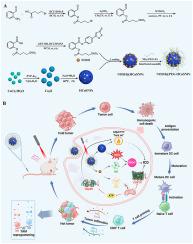
Gas therapy (GT) and/or phototherapy have been recently employed as immunogenic cell death (ICD) agents for activating immunotherapy, whereas the effective activation of sufficient immune responses remains an enormous challenge in such single therapeutic modality. In this study, a near-infrared (NIR)-triggered programmable nanomotor with hydrogen sulfide (H2S) and nitric oxide (NO) generation is well designed to achieve oncotherapy by cascading mild photothermal, gas, and reactive oxygen species (ROS)-reinforced immunogenic cell death. In brief, a gas signal molecule donor NOSH with H2S and NO capable of on-demand H2S and NO release was synthesized and then loaded into hollow mesoporous copper sulfide nanoparticles (termed as HCuSNPs) with an inherent NIR absorption and surface modification activity to obtain the programmable nanomotor (termed as NOSH@PEG-HCuSNPs). In particular, NOSH@PEG-HCuSNPs can effectively achieve the simultaneous spatiotemporal co-delivery of NOSH and HCuSNPs, thereby exerting the synergistic effects of GT and mild photothermal therapy (mPTT). It is worth noting that the anti-tumor response of mPTT is effectively enhanced by GT by disrupting the mitochondrial respiratory chain, inhibiting ATP production, and promoting tumor cell apoptosis. One by one, a large number of peroxynitrite anion (ONOO−) radicals are generated by the interactions of ROS from mPTT and NO from NOSH. Meanwhile, the unique protective mechanism of H2S is utilized to induce tumor thermal ablation by reducing the overexpression of heat shock protein 90 (HSP 90) and minimize the unnecessary damage toward normal tissues. Finally, ICD is markedly augmented by the cascading effects of mPTT, ONOO⁻radicals, and H2S. Concurrently, the immunosuppressive tumor microenvironment is reprogrammed, effectively inhibiting distant tumor tissues and preventing metastasis and tumor recurrence. Taken together, this study provides a new perspective for innovation in the field of oncotherapy.
期刊介绍:
Materials Today Bio is a multidisciplinary journal that specializes in the intersection between biology and materials science, chemistry, physics, engineering, and medicine. It covers various aspects such as the design and assembly of new structures, their interaction with biological systems, functionalization, bioimaging, therapies, and diagnostics in healthcare. The journal aims to showcase the most significant advancements and discoveries in this field. As part of the Materials Today family, Materials Today Bio provides rigorous peer review, quick decision-making, and high visibility for authors. It is indexed in Scopus, PubMed Central, Emerging Sources, Citation Index (ESCI), and Directory of Open Access Journals (DOAJ).




 京公网安备 11010802042870号
京ICP备2023020795号-1
京公网安备 11010802042870号
京ICP备2023020795号-1

 分享
分享
 求助内容:
求助内容: 应助结果提醒方式:
 扫码关注我们
