{"title":"中国可再生能源投资组合标准的奖惩设计:基于调查的进化博弈方法","authors":"Cheng Zhong, Tian-tian Feng, Yan Li","doi":"10.1016/j.renene.2025.122597","DOIUrl":null,"url":null,"abstract":"<div><div>China's Renewable Portfolio Standards, which is known as the Renewable Power Consumption Guarantee Mechanism, is the core consumption policy for renewable power in China, but the lack of penalty and incentive measures in the current regulations may not be an effective constraint on a power system with high proportion of renewable power under the Dual Carbon Goal. We analyzed the current policy and proposed integratable penalty and incentive measures and carry out a questionnaire survey on the entities that need to comply with the policy to learn about the acceptance of the proposed measures. Subsequently, an evolutionary game model involving the government, power sellers and power purchasers was constructed to simulate different combinations of penalty and incentive measures. The results show that a reasonable policy bundle should include strict penalties and attractive incentives, such as suspending business licenses and offering favourable credit services. Finally reasonable measures are selected, and policy implementations were provided for the optimization of the policy Renewable Power Consumption Guarantee Mechanism.</div></div>","PeriodicalId":419,"journal":{"name":"Renewable Energy","volume":"243 ","pages":"Article 122597"},"PeriodicalIF":9.1000,"publicationDate":"2025-04-15","publicationTypes":"Journal Article","fieldsOfStudy":null,"isOpenAccess":false,"openAccessPdf":"","citationCount":"0","resultStr":"{\"title\":\"Designing incentives and penalties for China's renewable portfolio standards: A survey-based evolutionary game approach\",\"authors\":\"Cheng Zhong, Tian-tian Feng, Yan Li\",\"doi\":\"10.1016/j.renene.2025.122597\",\"DOIUrl\":null,\"url\":null,\"abstract\":\"<div><div>China's Renewable Portfolio Standards, which is known as the Renewable Power Consumption Guarantee Mechanism, is the core consumption policy for renewable power in China, but the lack of penalty and incentive measures in the current regulations may not be an effective constraint on a power system with high proportion of renewable power under the Dual Carbon Goal. We analyzed the current policy and proposed integratable penalty and incentive measures and carry out a questionnaire survey on the entities that need to comply with the policy to learn about the acceptance of the proposed measures. Subsequently, an evolutionary game model involving the government, power sellers and power purchasers was constructed to simulate different combinations of penalty and incentive measures. The results show that a reasonable policy bundle should include strict penalties and attractive incentives, such as suspending business licenses and offering favourable credit services. Finally reasonable measures are selected, and policy implementations were provided for the optimization of the policy Renewable Power Consumption Guarantee Mechanism.</div></div>\",\"PeriodicalId\":419,\"journal\":{\"name\":\"Renewable Energy\",\"volume\":\"243 \",\"pages\":\"Article 122597\"},\"PeriodicalIF\":9.1000,\"publicationDate\":\"2025-04-15\",\"publicationTypes\":\"Journal Article\",\"fieldsOfStudy\":null,\"isOpenAccess\":false,\"openAccessPdf\":\"\",\"citationCount\":\"0\",\"resultStr\":null,\"platform\":\"Semanticscholar\",\"paperid\":null,\"PeriodicalName\":\"Renewable Energy\",\"FirstCategoryId\":\"5\",\"ListUrlMain\":\"https://www.sciencedirect.com/science/article/pii/S0960148125002599\",\"RegionNum\":1,\"RegionCategory\":\"工程技术\",\"ArticlePicture\":[],\"TitleCN\":null,\"AbstractTextCN\":null,\"PMCID\":null,\"EPubDate\":\"2025/2/4 0:00:00\",\"PubModel\":\"Epub\",\"JCR\":\"Q1\",\"JCRName\":\"ENERGY & FUELS\",\"Score\":null,\"Total\":0}","platform":"Semanticscholar","paperid":null,"PeriodicalName":"Renewable Energy","FirstCategoryId":"5","ListUrlMain":"https://www.sciencedirect.com/science/article/pii/S0960148125002599","RegionNum":1,"RegionCategory":"工程技术","ArticlePicture":[],"TitleCN":null,"AbstractTextCN":null,"PMCID":null,"EPubDate":"2025/2/4 0:00:00","PubModel":"Epub","JCR":"Q1","JCRName":"ENERGY & FUELS","Score":null,"Total":0}
Designing incentives and penalties for China's renewable portfolio standards: A survey-based evolutionary game approach
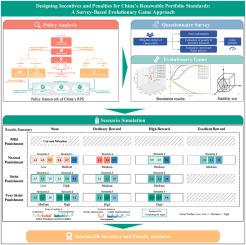
China's Renewable Portfolio Standards, which is known as the Renewable Power Consumption Guarantee Mechanism, is the core consumption policy for renewable power in China, but the lack of penalty and incentive measures in the current regulations may not be an effective constraint on a power system with high proportion of renewable power under the Dual Carbon Goal. We analyzed the current policy and proposed integratable penalty and incentive measures and carry out a questionnaire survey on the entities that need to comply with the policy to learn about the acceptance of the proposed measures. Subsequently, an evolutionary game model involving the government, power sellers and power purchasers was constructed to simulate different combinations of penalty and incentive measures. The results show that a reasonable policy bundle should include strict penalties and attractive incentives, such as suspending business licenses and offering favourable credit services. Finally reasonable measures are selected, and policy implementations were provided for the optimization of the policy Renewable Power Consumption Guarantee Mechanism.
期刊介绍:
Renewable Energy journal is dedicated to advancing knowledge and disseminating insights on various topics and technologies within renewable energy systems and components. Our mission is to support researchers, engineers, economists, manufacturers, NGOs, associations, and societies in staying updated on new developments in their respective fields and applying alternative energy solutions to current practices.
As an international, multidisciplinary journal in renewable energy engineering and research, we strive to be a premier peer-reviewed platform and a trusted source of original research and reviews in the field of renewable energy. Join us in our endeavor to drive innovation and progress in sustainable energy solutions.




 京公网安备 11010802042870号
京ICP备2023020795号-1
京公网安备 11010802042870号
京ICP备2023020795号-1

 分享
分享
 求助内容:
求助内容: 应助结果提醒方式:
 扫码关注我们
