Aman Deep Gupta , Vivek Srivastava , Neha Yadav , Santosh K. Misra , Tarun Gupta
{"title":"环境颗粒物和环境因子对印度恒河平原中部季节生物气溶胶负荷的影响","authors":"Aman Deep Gupta , Vivek Srivastava , Neha Yadav , Santosh K. Misra , Tarun Gupta","doi":"10.1016/j.atmosenv.2025.121081","DOIUrl":null,"url":null,"abstract":"<div><div>The study investigated the bioaerosol load and associated possible health risks at diverse macro-environments in the middle Indo-Gangetic Plain (IGP) region. The seasonal bioaerosol load investigations showed summer and monsoon seasons having higher concentrations than winter and post-monsoon seasons in outdoor environments. Besides meteorological factors (temperature and RH), the cytotoxic effect of PM<sub>2.5</sub> was seen on ambient bioaerosol concentrations (R = −0.97, p < 0.05). This adverse effect of PM<sub>2.5</sub> on bioaerosols was also validated in lab studies on model organism <em>Escherichia coli</em>. The results demonstrated bacteriostatic effects in used range of concentrations. Although lethal concentration (LC<sub>50</sub>) was not reached even at PM<sub>2.5</sub> treatment of 80 μg/ml, a concentration-dependent inhibition of bacterial cell viability was observed.</div><div>Furthermore, the health risk associated with bioaerosol exposure in the region was very high. The calculated hazard ratio was greater than one at all IGP locations, with very high potential of infection in polluted city center compared to pristine city outskirts. Higher hospital visits related to pulmonary infections by the people was reported in the city center compared to the city outskirts. The Gram-negative bacteria was found to be more closely associated with respiratory problems in the exposed population. The detailed investigations found pathogenic bacteria, particularly those associated with the genera <em>Streptococcus, Staphylococcus, Enterococcus, Pseudomonas,</em> and <em>Enterobacteriaceae</em>, to be prominent in the ambient air. Simultaneously, seven fungal genera were identified, with <em>Aspergillus</em> and <em>Penicillium</em> being most prevalent in the region.</div></div>","PeriodicalId":250,"journal":{"name":"Atmospheric Environment","volume":"346 ","pages":"Article 121081"},"PeriodicalIF":3.8000,"publicationDate":"2025-04-01","publicationTypes":"Journal Article","fieldsOfStudy":null,"isOpenAccess":false,"openAccessPdf":"","citationCount":"0","resultStr":"{\"title\":\"Influence of ambient particulate matter and environmental factors on the seasonal bioaerosol load in the middle Indo-Gangetic Plain\",\"authors\":\"Aman Deep Gupta , Vivek Srivastava , Neha Yadav , Santosh K. Misra , Tarun Gupta\",\"doi\":\"10.1016/j.atmosenv.2025.121081\",\"DOIUrl\":null,\"url\":null,\"abstract\":\"<div><div>The study investigated the bioaerosol load and associated possible health risks at diverse macro-environments in the middle Indo-Gangetic Plain (IGP) region. The seasonal bioaerosol load investigations showed summer and monsoon seasons having higher concentrations than winter and post-monsoon seasons in outdoor environments. Besides meteorological factors (temperature and RH), the cytotoxic effect of PM<sub>2.5</sub> was seen on ambient bioaerosol concentrations (R = −0.97, p < 0.05). This adverse effect of PM<sub>2.5</sub> on bioaerosols was also validated in lab studies on model organism <em>Escherichia coli</em>. The results demonstrated bacteriostatic effects in used range of concentrations. Although lethal concentration (LC<sub>50</sub>) was not reached even at PM<sub>2.5</sub> treatment of 80 μg/ml, a concentration-dependent inhibition of bacterial cell viability was observed.</div><div>Furthermore, the health risk associated with bioaerosol exposure in the region was very high. The calculated hazard ratio was greater than one at all IGP locations, with very high potential of infection in polluted city center compared to pristine city outskirts. Higher hospital visits related to pulmonary infections by the people was reported in the city center compared to the city outskirts. The Gram-negative bacteria was found to be more closely associated with respiratory problems in the exposed population. The detailed investigations found pathogenic bacteria, particularly those associated with the genera <em>Streptococcus, Staphylococcus, Enterococcus, Pseudomonas,</em> and <em>Enterobacteriaceae</em>, to be prominent in the ambient air. Simultaneously, seven fungal genera were identified, with <em>Aspergillus</em> and <em>Penicillium</em> being most prevalent in the region.</div></div>\",\"PeriodicalId\":250,\"journal\":{\"name\":\"Atmospheric Environment\",\"volume\":\"346 \",\"pages\":\"Article 121081\"},\"PeriodicalIF\":3.8000,\"publicationDate\":\"2025-04-01\",\"publicationTypes\":\"Journal Article\",\"fieldsOfStudy\":null,\"isOpenAccess\":false,\"openAccessPdf\":\"\",\"citationCount\":\"0\",\"resultStr\":null,\"platform\":\"Semanticscholar\",\"paperid\":null,\"PeriodicalName\":\"Atmospheric Environment\",\"FirstCategoryId\":\"93\",\"ListUrlMain\":\"https://www.sciencedirect.com/science/article/pii/S1352231025000561\",\"RegionNum\":2,\"RegionCategory\":\"环境科学与生态学\",\"ArticlePicture\":[],\"TitleCN\":null,\"AbstractTextCN\":null,\"PMCID\":null,\"EPubDate\":\"2025/1/30 0:00:00\",\"PubModel\":\"Epub\",\"JCR\":\"Q2\",\"JCRName\":\"ENVIRONMENTAL SCIENCES\",\"Score\":null,\"Total\":0}","platform":"Semanticscholar","paperid":null,"PeriodicalName":"Atmospheric Environment","FirstCategoryId":"93","ListUrlMain":"https://www.sciencedirect.com/science/article/pii/S1352231025000561","RegionNum":2,"RegionCategory":"环境科学与生态学","ArticlePicture":[],"TitleCN":null,"AbstractTextCN":null,"PMCID":null,"EPubDate":"2025/1/30 0:00:00","PubModel":"Epub","JCR":"Q2","JCRName":"ENVIRONMENTAL SCIENCES","Score":null,"Total":0}
引用次数: 0
摘要
本研究调查了印度恒河平原中部不同宏观环境下的生物气溶胶负荷及其可能的健康风险。季节性生物气溶胶负荷调查显示,夏季和季风季节的室外环境浓度高于冬季和季风后季节。除了气象因子(温度和相对湿度)外,PM2.5对环境生物气溶胶浓度也有细胞毒性作用(R = - 0.97, p <;0.05)。PM2.5对生物气溶胶的这种不利影响也在对模式生物大肠杆菌的实验室研究中得到证实。结果表明,在使用浓度范围内具有抑菌效果。虽然PM2.5浓度为80 μg/ml也未达到致死浓度(LC50),但对细菌细胞活力有浓度依赖性的抑制作用。此外,该地区与生物气溶胶接触有关的健康风险非常高。计算的风险比在所有IGP点均大于1,与原始城市郊区相比,污染城市中心的感染潜力非常高。据报道,与城市郊区相比,市中心与肺部感染相关的医院就诊率更高。革兰氏阴性菌被发现与接触人群的呼吸问题有更密切的关系。详细的调查发现,致病菌,特别是与链球菌、葡萄球菌、肠球菌、假单胞菌和肠杆菌科有关的细菌,在环境空气中非常突出。同时,鉴定出7种真菌属,其中曲霉属和青霉属在该地区最为普遍。
Influence of ambient particulate matter and environmental factors on the seasonal bioaerosol load in the middle Indo-Gangetic Plain
The study investigated the bioaerosol load and associated possible health risks at diverse macro-environments in the middle Indo-Gangetic Plain (IGP) region. The seasonal bioaerosol load investigations showed summer and monsoon seasons having higher concentrations than winter and post-monsoon seasons in outdoor environments. Besides meteorological factors (temperature and RH), the cytotoxic effect of PM2.5 was seen on ambient bioaerosol concentrations (R = −0.97, p < 0.05). This adverse effect of PM2.5 on bioaerosols was also validated in lab studies on model organism Escherichia coli. The results demonstrated bacteriostatic effects in used range of concentrations. Although lethal concentration (LC50) was not reached even at PM2.5 treatment of 80 μg/ml, a concentration-dependent inhibition of bacterial cell viability was observed.
Furthermore, the health risk associated with bioaerosol exposure in the region was very high. The calculated hazard ratio was greater than one at all IGP locations, with very high potential of infection in polluted city center compared to pristine city outskirts. Higher hospital visits related to pulmonary infections by the people was reported in the city center compared to the city outskirts. The Gram-negative bacteria was found to be more closely associated with respiratory problems in the exposed population. The detailed investigations found pathogenic bacteria, particularly those associated with the genera Streptococcus, Staphylococcus, Enterococcus, Pseudomonas, and Enterobacteriaceae, to be prominent in the ambient air. Simultaneously, seven fungal genera were identified, with Aspergillus and Penicillium being most prevalent in the region.
期刊介绍:
Atmospheric Environment has an open access mirror journal Atmospheric Environment: X, sharing the same aims and scope, editorial team, submission system and rigorous peer review.
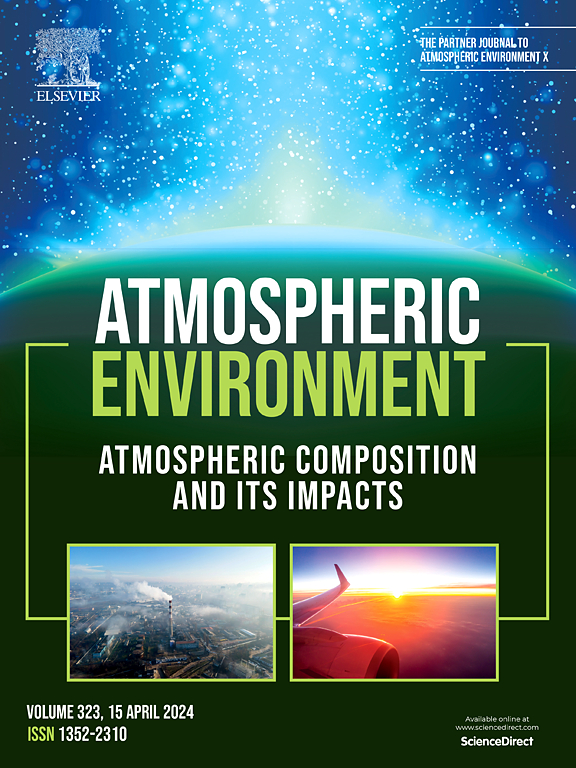
Atmospheric Environment is the international journal for scientists in different disciplines related to atmospheric composition and its impacts. The journal publishes scientific articles with atmospheric relevance of emissions and depositions of gaseous and particulate compounds, chemical processes and physical effects in the atmosphere, as well as impacts of the changing atmospheric composition on human health, air quality, climate change, and ecosystems.





 京公网安备 11010802042870号
京ICP备2023020795号-1
京公网安备 11010802042870号
京ICP备2023020795号-1

 分享
分享
 求助内容:
求助内容: 应助结果提醒方式:
 扫码关注我们
