Mohammad Rahmat Ullah , Katrin Wegend , Harald Kellner , Derek Peršoh , Werner Borken
{"title":"真菌菌丝生长对枯木向凋落物碳转移机制的中观研究","authors":"Mohammad Rahmat Ullah , Katrin Wegend , Harald Kellner , Derek Peršoh , Werner Borken","doi":"10.1016/j.apsoil.2025.105939","DOIUrl":null,"url":null,"abstract":"<div><div>Hyphae-forming fungi play a critical role in decomposing deadwood and plant litter, utilizing a variety of resources in forest ecosystems. While the redistribution of nitrogen and phosphorus by fungal hyphae between deadwood and soil has been established, the translocation of carbon (C) and its subsequent utilization remains unexplored. This study examines the fungal-mediated transfer of <sup>13</sup>C-cellulose from deadwood of European beech and Norway spruce to Norway spruce litter from an Oi/Oe horizon. We used a mesocosm double-chamber controlled system with a perforated intersection, including beech and spruce deadwoods (chamber I) and spruce litter (chamber II). After fungal hyphae growth in the intersection between the two chambers, mesocosms were incubated for 8–10 weeks at 20 °C in the dark. Following a pre-treatment phase, <sup>13</sup>C-cellulose was added to half of the deadwood chambers while the other half served as control without cellulose addition. The transfer of <sup>13</sup>C-cellulose from deadwood to spruce litter was assessed by measuring the abundance of <sup>13</sup>C in respiration and microbial biomass within the spruce litter. After incubation, the <sup>13</sup>C-cellulose recovered in spruce litter was higher for both respiration (7.75 ± 0.98 %) and microbial biomass (1.66 ± 1.01 %) for beech compared to the spruce deadwood (3.88 ± 1.07 % in respiration and 1.55 ± 1.37 % in microbial biomass). This indicates that, in both deadwood setups, more <sup>13</sup>C was recovered in respiration than in microbial biomass. Molecular analysis of the fungal hyphae at the intersection between the deadwood and spruce litter chambers identified <em>Clitopilus baronii</em> and <em>Kuehneromyces mutabilis</em> as the common and active deadwood-decaying fungi facilitating significant <sup>13</sup>C transfer (240–270 δ‰ in respiration, and 100–160 δ‰ in MBC), while the baseline without <sup>13</sup>C was −25 δ‰. This research provides new insights into the mechanisms of C transfer from deadwood to litter, suggesting an enhanced decomposition of litter by deadwood decaying fungi.</div></div>","PeriodicalId":8099,"journal":{"name":"Applied Soil Ecology","volume":"207 ","pages":"Article 105939"},"PeriodicalIF":5.0000,"publicationDate":"2025-03-01","publicationTypes":"Journal Article","fieldsOfStudy":null,"isOpenAccess":false,"openAccessPdf":"","citationCount":"0","resultStr":"{\"title\":\"A mesocosm study on carbon transfer mechanisms from deadwood to litter through fungal hyphal growth\",\"authors\":\"Mohammad Rahmat Ullah , Katrin Wegend , Harald Kellner , Derek Peršoh , Werner Borken\",\"doi\":\"10.1016/j.apsoil.2025.105939\",\"DOIUrl\":null,\"url\":null,\"abstract\":\"<div><div>Hyphae-forming fungi play a critical role in decomposing deadwood and plant litter, utilizing a variety of resources in forest ecosystems. While the redistribution of nitrogen and phosphorus by fungal hyphae between deadwood and soil has been established, the translocation of carbon (C) and its subsequent utilization remains unexplored. This study examines the fungal-mediated transfer of <sup>13</sup>C-cellulose from deadwood of European beech and Norway spruce to Norway spruce litter from an Oi/Oe horizon. We used a mesocosm double-chamber controlled system with a perforated intersection, including beech and spruce deadwoods (chamber I) and spruce litter (chamber II). After fungal hyphae growth in the intersection between the two chambers, mesocosms were incubated for 8–10 weeks at 20 °C in the dark. Following a pre-treatment phase, <sup>13</sup>C-cellulose was added to half of the deadwood chambers while the other half served as control without cellulose addition. The transfer of <sup>13</sup>C-cellulose from deadwood to spruce litter was assessed by measuring the abundance of <sup>13</sup>C in respiration and microbial biomass within the spruce litter. After incubation, the <sup>13</sup>C-cellulose recovered in spruce litter was higher for both respiration (7.75 ± 0.98 %) and microbial biomass (1.66 ± 1.01 %) for beech compared to the spruce deadwood (3.88 ± 1.07 % in respiration and 1.55 ± 1.37 % in microbial biomass). This indicates that, in both deadwood setups, more <sup>13</sup>C was recovered in respiration than in microbial biomass. Molecular analysis of the fungal hyphae at the intersection between the deadwood and spruce litter chambers identified <em>Clitopilus baronii</em> and <em>Kuehneromyces mutabilis</em> as the common and active deadwood-decaying fungi facilitating significant <sup>13</sup>C transfer (240–270 δ‰ in respiration, and 100–160 δ‰ in MBC), while the baseline without <sup>13</sup>C was −25 δ‰. This research provides new insights into the mechanisms of C transfer from deadwood to litter, suggesting an enhanced decomposition of litter by deadwood decaying fungi.</div></div>\",\"PeriodicalId\":8099,\"journal\":{\"name\":\"Applied Soil Ecology\",\"volume\":\"207 \",\"pages\":\"Article 105939\"},\"PeriodicalIF\":5.0000,\"publicationDate\":\"2025-03-01\",\"publicationTypes\":\"Journal Article\",\"fieldsOfStudy\":null,\"isOpenAccess\":false,\"openAccessPdf\":\"\",\"citationCount\":\"0\",\"resultStr\":null,\"platform\":\"Semanticscholar\",\"paperid\":null,\"PeriodicalName\":\"Applied Soil Ecology\",\"FirstCategoryId\":\"97\",\"ListUrlMain\":\"https://www.sciencedirect.com/science/article/pii/S0929139325000770\",\"RegionNum\":2,\"RegionCategory\":\"农林科学\",\"ArticlePicture\":[],\"TitleCN\":null,\"AbstractTextCN\":null,\"PMCID\":null,\"EPubDate\":\"2025/2/8 0:00:00\",\"PubModel\":\"Epub\",\"JCR\":\"Q1\",\"JCRName\":\"SOIL SCIENCE\",\"Score\":null,\"Total\":0}","platform":"Semanticscholar","paperid":null,"PeriodicalName":"Applied Soil Ecology","FirstCategoryId":"97","ListUrlMain":"https://www.sciencedirect.com/science/article/pii/S0929139325000770","RegionNum":2,"RegionCategory":"农林科学","ArticlePicture":[],"TitleCN":null,"AbstractTextCN":null,"PMCID":null,"EPubDate":"2025/2/8 0:00:00","PubModel":"Epub","JCR":"Q1","JCRName":"SOIL SCIENCE","Score":null,"Total":0}
A mesocosm study on carbon transfer mechanisms from deadwood to litter through fungal hyphal growth
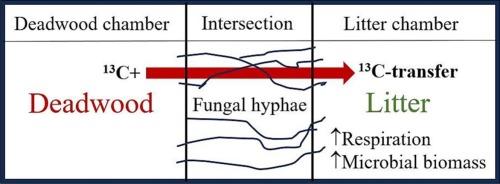
Hyphae-forming fungi play a critical role in decomposing deadwood and plant litter, utilizing a variety of resources in forest ecosystems. While the redistribution of nitrogen and phosphorus by fungal hyphae between deadwood and soil has been established, the translocation of carbon (C) and its subsequent utilization remains unexplored. This study examines the fungal-mediated transfer of 13C-cellulose from deadwood of European beech and Norway spruce to Norway spruce litter from an Oi/Oe horizon. We used a mesocosm double-chamber controlled system with a perforated intersection, including beech and spruce deadwoods (chamber I) and spruce litter (chamber II). After fungal hyphae growth in the intersection between the two chambers, mesocosms were incubated for 8–10 weeks at 20 °C in the dark. Following a pre-treatment phase, 13C-cellulose was added to half of the deadwood chambers while the other half served as control without cellulose addition. The transfer of 13C-cellulose from deadwood to spruce litter was assessed by measuring the abundance of 13C in respiration and microbial biomass within the spruce litter. After incubation, the 13C-cellulose recovered in spruce litter was higher for both respiration (7.75 ± 0.98 %) and microbial biomass (1.66 ± 1.01 %) for beech compared to the spruce deadwood (3.88 ± 1.07 % in respiration and 1.55 ± 1.37 % in microbial biomass). This indicates that, in both deadwood setups, more 13C was recovered in respiration than in microbial biomass. Molecular analysis of the fungal hyphae at the intersection between the deadwood and spruce litter chambers identified Clitopilus baronii and Kuehneromyces mutabilis as the common and active deadwood-decaying fungi facilitating significant 13C transfer (240–270 δ‰ in respiration, and 100–160 δ‰ in MBC), while the baseline without 13C was −25 δ‰. This research provides new insights into the mechanisms of C transfer from deadwood to litter, suggesting an enhanced decomposition of litter by deadwood decaying fungi.
期刊介绍:
Applied Soil Ecology addresses the role of soil organisms and their interactions in relation to: sustainability and productivity, nutrient cycling and other soil processes, the maintenance of soil functions, the impact of human activities on soil ecosystems and bio(techno)logical control of soil-inhabiting pests, diseases and weeds.




 京公网安备 11010802042870号
京ICP备2023020795号-1
京公网安备 11010802042870号
京ICP备2023020795号-1

 分享
分享
 求助内容:
求助内容: 应助结果提醒方式:
 扫码关注我们
