{"title":"实现单光子雪崩二极管增强主动猝灭的光探测器电容补偿技术","authors":"Sundo Kim;Jinseok Oh;Dongsuk Jeon;Inyong Kwon","doi":"10.1109/TIM.2025.3533651","DOIUrl":null,"url":null,"abstract":"The detector capacitance compensation (DCC) technique, which enables double active quenching of single-photon avalanche diode (SPAD), is presented in this article. A well-defined active quenching circuit offers advantages, such as a higher maximum photon-counting rate and lower afterpulsing probability. Also, the adjustable hold-off time caters to various demands in SPAD applications. The fast rise time, contributing to higher jitter performance, enables better resolutions when applied to medical imaging applications, such as positron emission tomography (PET). Meanwhile, the compact design of the active quenching circuit is essential for seamless integration with SPADs. The proposed light active quenching circuit incorporates the conventional active quenching scheme with a light unity-gain amplifier for DCC. The employment of the DCC technique in quenching time simulation demonstrates almost three times better results compared to the conventional approach, with a mere 23% increase in area and lower power consumption. The DCC technique is also effectively applied to a passive quenching circuit. Hold-off time is controlled by only using a current-starved inverter. The simulation results and measured data are shown in this article. Designed circuits are fabricated using 0.18-<inline-formula> <tex-math>$\\mu $ </tex-math></inline-formula>m complementary metal-oxide–semiconductor (CMOS) technology.","PeriodicalId":13341,"journal":{"name":"IEEE Transactions on Instrumentation and Measurement","volume":"74 ","pages":"1-8"},"PeriodicalIF":7.0000,"publicationDate":"2025-01-24","publicationTypes":"Journal Article","fieldsOfStudy":null,"isOpenAccess":false,"openAccessPdf":"","citationCount":"0","resultStr":"{\"title\":\"A Light Detector Capacitance Compensation Technique Achieving Boosted Active Quenching for Single-Photon Avalanche Diodes\",\"authors\":\"Sundo Kim;Jinseok Oh;Dongsuk Jeon;Inyong Kwon\",\"doi\":\"10.1109/TIM.2025.3533651\",\"DOIUrl\":null,\"url\":null,\"abstract\":\"The detector capacitance compensation (DCC) technique, which enables double active quenching of single-photon avalanche diode (SPAD), is presented in this article. A well-defined active quenching circuit offers advantages, such as a higher maximum photon-counting rate and lower afterpulsing probability. Also, the adjustable hold-off time caters to various demands in SPAD applications. The fast rise time, contributing to higher jitter performance, enables better resolutions when applied to medical imaging applications, such as positron emission tomography (PET). Meanwhile, the compact design of the active quenching circuit is essential for seamless integration with SPADs. The proposed light active quenching circuit incorporates the conventional active quenching scheme with a light unity-gain amplifier for DCC. The employment of the DCC technique in quenching time simulation demonstrates almost three times better results compared to the conventional approach, with a mere 23% increase in area and lower power consumption. The DCC technique is also effectively applied to a passive quenching circuit. Hold-off time is controlled by only using a current-starved inverter. The simulation results and measured data are shown in this article. Designed circuits are fabricated using 0.18-<inline-formula> <tex-math>$\\\\mu $ </tex-math></inline-formula>m complementary metal-oxide–semiconductor (CMOS) technology.\",\"PeriodicalId\":13341,\"journal\":{\"name\":\"IEEE Transactions on Instrumentation and Measurement\",\"volume\":\"74 \",\"pages\":\"1-8\"},\"PeriodicalIF\":7.0000,\"publicationDate\":\"2025-01-24\",\"publicationTypes\":\"Journal Article\",\"fieldsOfStudy\":null,\"isOpenAccess\":false,\"openAccessPdf\":\"\",\"citationCount\":\"0\",\"resultStr\":null,\"platform\":\"Semanticscholar\",\"paperid\":null,\"PeriodicalName\":\"IEEE Transactions on Instrumentation and Measurement\",\"FirstCategoryId\":\"5\",\"ListUrlMain\":\"https://ieeexplore.ieee.org/document/10852557/\",\"RegionNum\":2,\"RegionCategory\":\"工程技术\",\"ArticlePicture\":[],\"TitleCN\":null,\"AbstractTextCN\":null,\"PMCID\":null,\"EPubDate\":\"\",\"PubModel\":\"\",\"JCR\":\"Q1\",\"JCRName\":\"ENGINEERING, ELECTRICAL & ELECTRONIC\",\"Score\":null,\"Total\":0}","platform":"Semanticscholar","paperid":null,"PeriodicalName":"IEEE Transactions on Instrumentation and Measurement","FirstCategoryId":"5","ListUrlMain":"https://ieeexplore.ieee.org/document/10852557/","RegionNum":2,"RegionCategory":"工程技术","ArticlePicture":[],"TitleCN":null,"AbstractTextCN":null,"PMCID":null,"EPubDate":"","PubModel":"","JCR":"Q1","JCRName":"ENGINEERING, ELECTRICAL & ELECTRONIC","Score":null,"Total":0}
A Light Detector Capacitance Compensation Technique Achieving Boosted Active Quenching for Single-Photon Avalanche Diodes
The detector capacitance compensation (DCC) technique, which enables double active quenching of single-photon avalanche diode (SPAD), is presented in this article. A well-defined active quenching circuit offers advantages, such as a higher maximum photon-counting rate and lower afterpulsing probability. Also, the adjustable hold-off time caters to various demands in SPAD applications. The fast rise time, contributing to higher jitter performance, enables better resolutions when applied to medical imaging applications, such as positron emission tomography (PET). Meanwhile, the compact design of the active quenching circuit is essential for seamless integration with SPADs. The proposed light active quenching circuit incorporates the conventional active quenching scheme with a light unity-gain amplifier for DCC. The employment of the DCC technique in quenching time simulation demonstrates almost three times better results compared to the conventional approach, with a mere 23% increase in area and lower power consumption. The DCC technique is also effectively applied to a passive quenching circuit. Hold-off time is controlled by only using a current-starved inverter. The simulation results and measured data are shown in this article. Designed circuits are fabricated using 0.18-$\mu $ m complementary metal-oxide–semiconductor (CMOS) technology.
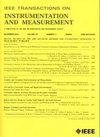
期刊介绍:
Papers are sought that address innovative solutions to the development and use of electrical and electronic instruments and equipment to measure, monitor and/or record physical phenomena for the purpose of advancing measurement science, methods, functionality and applications. The scope of these papers may encompass: (1) theory, methodology, and practice of measurement; (2) design, development and evaluation of instrumentation and measurement systems and components used in generating, acquiring, conditioning and processing signals; (3) analysis, representation, display, and preservation of the information obtained from a set of measurements; and (4) scientific and technical support to establishment and maintenance of technical standards in the field of Instrumentation and Measurement.




 京公网安备 11010802042870号
京ICP备2023020795号-1
京公网安备 11010802042870号
京ICP备2023020795号-1

 分享
分享
 求助内容:
求助内容: 应助结果提醒方式:
 扫码关注我们
