Abraham A. Rosenberg, Juncheng Li, Yiren Zhang, Joseph T. Doane, William Rice, Dr. Ting Wang, Michael T. Yeung
{"title":"用于抗毒催化的高熵稳定二硼化铂","authors":"Abraham A. Rosenberg, Juncheng Li, Yiren Zhang, Joseph T. Doane, William Rice, Dr. Ting Wang, Michael T. Yeung","doi":"10.1002/cctc.202401460","DOIUrl":null,"url":null,"abstract":"<p>Alloying and solid-solution formation is a powerful technique that enhances and adds properties through elemental mixing, but unfortunately, some elements simply cannot mix as their chemical nature prevents a thermodynamically stable structure. For example, the inherent nobility of platinum group metals does not favor bond formation and precludes their incorporation into higher (boron-rich) metal borides. However, we demonstrate that when using five or more constituents, the higher mixing entropy will overcome these chemical limitations and form a stable high-entropy alloy, demonstrating the formation of new compounds with substituents that are seemingly impossible with a traditional metal alloying approach. The high-entropy boride (HEB) Al<sub>0.2</sub>Nb<sub>0.2</sub>Pt<sub>0.2</sub>Ta<sub>0.2</sub>Ti<sub>0.2</sub>B<sub>2</sub> was synthesized, where platinum was forced to occupy a 12-coordinate site, sandwiched between honeycomb borophene sheets. In addition to the unusual coordination, the boron serves as a poison panacea. Pure platinum is strongly susceptible to sulfur poisoning by adsorption, rendering a platinum catalyst ineffective. Boron is known to be resistant to sulfur poisoning. The boron sheets present in the HEB shield the platinum from sulfur while maintaining high catalytic activity. This is confirmed with the facile hydrogenation of thiol-containing nitro compounds, where the HEB resists sulfur poisoning while retaining its high catalytic activity.</p>","PeriodicalId":141,"journal":{"name":"ChemCatChem","volume":"17 3","pages":""},"PeriodicalIF":3.9000,"publicationDate":"2024-10-21","publicationTypes":"Journal Article","fieldsOfStudy":null,"isOpenAccess":false,"openAccessPdf":"","citationCount":"0","resultStr":"{\"title\":\"High-Entropy-Stabilized Platinum Diborides for Poison-Resistant Catalysis\",\"authors\":\"Abraham A. Rosenberg, Juncheng Li, Yiren Zhang, Joseph T. Doane, William Rice, Dr. Ting Wang, Michael T. Yeung\",\"doi\":\"10.1002/cctc.202401460\",\"DOIUrl\":null,\"url\":null,\"abstract\":\"<p>Alloying and solid-solution formation is a powerful technique that enhances and adds properties through elemental mixing, but unfortunately, some elements simply cannot mix as their chemical nature prevents a thermodynamically stable structure. For example, the inherent nobility of platinum group metals does not favor bond formation and precludes their incorporation into higher (boron-rich) metal borides. However, we demonstrate that when using five or more constituents, the higher mixing entropy will overcome these chemical limitations and form a stable high-entropy alloy, demonstrating the formation of new compounds with substituents that are seemingly impossible with a traditional metal alloying approach. The high-entropy boride (HEB) Al<sub>0.2</sub>Nb<sub>0.2</sub>Pt<sub>0.2</sub>Ta<sub>0.2</sub>Ti<sub>0.2</sub>B<sub>2</sub> was synthesized, where platinum was forced to occupy a 12-coordinate site, sandwiched between honeycomb borophene sheets. In addition to the unusual coordination, the boron serves as a poison panacea. Pure platinum is strongly susceptible to sulfur poisoning by adsorption, rendering a platinum catalyst ineffective. Boron is known to be resistant to sulfur poisoning. The boron sheets present in the HEB shield the platinum from sulfur while maintaining high catalytic activity. This is confirmed with the facile hydrogenation of thiol-containing nitro compounds, where the HEB resists sulfur poisoning while retaining its high catalytic activity.</p>\",\"PeriodicalId\":141,\"journal\":{\"name\":\"ChemCatChem\",\"volume\":\"17 3\",\"pages\":\"\"},\"PeriodicalIF\":3.9000,\"publicationDate\":\"2024-10-21\",\"publicationTypes\":\"Journal Article\",\"fieldsOfStudy\":null,\"isOpenAccess\":false,\"openAccessPdf\":\"\",\"citationCount\":\"0\",\"resultStr\":null,\"platform\":\"Semanticscholar\",\"paperid\":null,\"PeriodicalName\":\"ChemCatChem\",\"FirstCategoryId\":\"92\",\"ListUrlMain\":\"https://chemistry-europe.onlinelibrary.wiley.com/doi/10.1002/cctc.202401460\",\"RegionNum\":3,\"RegionCategory\":\"化学\",\"ArticlePicture\":[],\"TitleCN\":null,\"AbstractTextCN\":null,\"PMCID\":null,\"EPubDate\":\"\",\"PubModel\":\"\",\"JCR\":\"Q2\",\"JCRName\":\"CHEMISTRY, PHYSICAL\",\"Score\":null,\"Total\":0}","platform":"Semanticscholar","paperid":null,"PeriodicalName":"ChemCatChem","FirstCategoryId":"92","ListUrlMain":"https://chemistry-europe.onlinelibrary.wiley.com/doi/10.1002/cctc.202401460","RegionNum":3,"RegionCategory":"化学","ArticlePicture":[],"TitleCN":null,"AbstractTextCN":null,"PMCID":null,"EPubDate":"","PubModel":"","JCR":"Q2","JCRName":"CHEMISTRY, PHYSICAL","Score":null,"Total":0}
High-Entropy-Stabilized Platinum Diborides for Poison-Resistant Catalysis
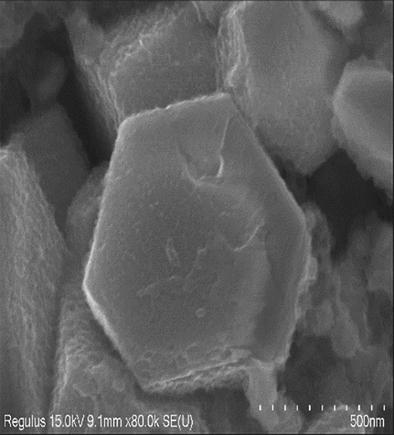
Alloying and solid-solution formation is a powerful technique that enhances and adds properties through elemental mixing, but unfortunately, some elements simply cannot mix as their chemical nature prevents a thermodynamically stable structure. For example, the inherent nobility of platinum group metals does not favor bond formation and precludes their incorporation into higher (boron-rich) metal borides. However, we demonstrate that when using five or more constituents, the higher mixing entropy will overcome these chemical limitations and form a stable high-entropy alloy, demonstrating the formation of new compounds with substituents that are seemingly impossible with a traditional metal alloying approach. The high-entropy boride (HEB) Al0.2Nb0.2Pt0.2Ta0.2Ti0.2B2 was synthesized, where platinum was forced to occupy a 12-coordinate site, sandwiched between honeycomb borophene sheets. In addition to the unusual coordination, the boron serves as a poison panacea. Pure platinum is strongly susceptible to sulfur poisoning by adsorption, rendering a platinum catalyst ineffective. Boron is known to be resistant to sulfur poisoning. The boron sheets present in the HEB shield the platinum from sulfur while maintaining high catalytic activity. This is confirmed with the facile hydrogenation of thiol-containing nitro compounds, where the HEB resists sulfur poisoning while retaining its high catalytic activity.
期刊介绍:
With an impact factor of 4.495 (2018), ChemCatChem is one of the premier journals in the field of catalysis. The journal provides primary research papers and critical secondary information on heterogeneous, homogeneous and bio- and nanocatalysis. The journal is well placed to strengthen cross-communication within between these communities. Its authors and readers come from academia, the chemical industry, and government laboratories across the world. It is published on behalf of Chemistry Europe, an association of 16 European chemical societies, and is supported by the German Catalysis Society.





 京公网安备 11010802042870号
京ICP备2023020795号-1
京公网安备 11010802042870号
京ICP备2023020795号-1

 分享
分享
 求助内容:
求助内容: 应助结果提醒方式:
 扫码关注我们
