{"title":"不同根管冲洗剂对两种封闭系统根管粘结强度的影响。","authors":"Hardik Kumar Babulal Patel, Vaishali Jitendra Kalburge, Nimisha Chaudhary, Payal Patel, Ekta Chaudhari Desai, Priyal V Shah, Sindhu Soumya Dash","doi":"10.6026/9732063002001169","DOIUrl":null,"url":null,"abstract":"<p><p>Three-dimensional obturation and careful chemo-mechanical preparation of the root canal system are essential for successful endodontic therapy. The marginal adaption and bond strength of root canal sealers to dentin are critical for the effectiveness of various endodontic operations. Hence, bond strength of Thermo-plasticized Gutta-Percha/ AH Plus sealer and ActiV GP root canal obturation system was compared following EDTA, MTAD, CHX, and Distilled Water used as a final irrigation rinse. The sample consisted of forty extracted teeth which were divided into four groups based on the final irrigation rinse (<i>i.e.</i>,) Group A 3% NaOCl followed by saline and 17% EDTA irrigation as a final rinse, Group B - 3% NaOCl solution followed by saline and MTAD irrigation as a final rinse, Group C - 3% NaOCl solution followed by saline and 2% CHX irrigation as a final rinse, Group D - 3% NaOCl solution followed by saline and distilled water irrigation as a final rinse. Each group was further subdivided based on the obturation system as; thermo-plasticized Gutta-Percha and AH Plus sealer (subgroup 1) and ActiV GP obturation system (subgroup 2). Middle and coronal thirds of every root was cut horizontally with two milli-metres thickness. After that, each slice was examined under a stereomicroscope to measure the diameter of each obturation site and snap photos of each slice's was taken at two sides using a digital camera. Later, an Instron Universal Testing Machine was used to analyze the bond strength of each specimen. CHX- Thermo-plasticized Gutta-Percha /AH Plus (3.654 + 0.056MPa) yielded the maximum average bond strength value. The minimal mean bond strength was noted for distilled water/ActiVGP (1.313 + 0.014 MPa). The other subgroups yielded intermediate bond strength values. Statistically considerable variation was found between subgroup A1 EDTA- Thermo-plasticized Gutta-Percha /AH Plus and subgroup B1 MTAD- Thermo-plasticized Gutta-Percha/AH Plus respectively. It can be found that use of 2% CHX as a final rinse considerably increases the bond strength of both Thermo-plasticized Gutta-Percha/AH Plus and ActiV GP obturation systems.</p>","PeriodicalId":8962,"journal":{"name":"Bioinformation","volume":"20 9","pages":"1169-1174"},"PeriodicalIF":1.9000,"publicationDate":"2024-09-30","publicationTypes":"Journal Article","fieldsOfStudy":null,"isOpenAccess":false,"openAccessPdf":"https://www.ncbi.nlm.nih.gov/pmc/articles/PMC11795477/pdf/","citationCount":"0","resultStr":"{\"title\":\"Effect of various root canal irrigants on bond strength with two obturating systems.\",\"authors\":\"Hardik Kumar Babulal Patel, Vaishali Jitendra Kalburge, Nimisha Chaudhary, Payal Patel, Ekta Chaudhari Desai, Priyal V Shah, Sindhu Soumya Dash\",\"doi\":\"10.6026/9732063002001169\",\"DOIUrl\":null,\"url\":null,\"abstract\":\"<p><p>Three-dimensional obturation and careful chemo-mechanical preparation of the root canal system are essential for successful endodontic therapy. The marginal adaption and bond strength of root canal sealers to dentin are critical for the effectiveness of various endodontic operations. Hence, bond strength of Thermo-plasticized Gutta-Percha/ AH Plus sealer and ActiV GP root canal obturation system was compared following EDTA, MTAD, CHX, and Distilled Water used as a final irrigation rinse. The sample consisted of forty extracted teeth which were divided into four groups based on the final irrigation rinse (<i>i.e.</i>,) Group A 3% NaOCl followed by saline and 17% EDTA irrigation as a final rinse, Group B - 3% NaOCl solution followed by saline and MTAD irrigation as a final rinse, Group C - 3% NaOCl solution followed by saline and 2% CHX irrigation as a final rinse, Group D - 3% NaOCl solution followed by saline and distilled water irrigation as a final rinse. Each group was further subdivided based on the obturation system as; thermo-plasticized Gutta-Percha and AH Plus sealer (subgroup 1) and ActiV GP obturation system (subgroup 2). Middle and coronal thirds of every root was cut horizontally with two milli-metres thickness. After that, each slice was examined under a stereomicroscope to measure the diameter of each obturation site and snap photos of each slice's was taken at two sides using a digital camera. Later, an Instron Universal Testing Machine was used to analyze the bond strength of each specimen. CHX- Thermo-plasticized Gutta-Percha /AH Plus (3.654 + 0.056MPa) yielded the maximum average bond strength value. The minimal mean bond strength was noted for distilled water/ActiVGP (1.313 + 0.014 MPa). The other subgroups yielded intermediate bond strength values. Statistically considerable variation was found between subgroup A1 EDTA- Thermo-plasticized Gutta-Percha /AH Plus and subgroup B1 MTAD- Thermo-plasticized Gutta-Percha/AH Plus respectively. It can be found that use of 2% CHX as a final rinse considerably increases the bond strength of both Thermo-plasticized Gutta-Percha/AH Plus and ActiV GP obturation systems.</p>\",\"PeriodicalId\":8962,\"journal\":{\"name\":\"Bioinformation\",\"volume\":\"20 9\",\"pages\":\"1169-1174\"},\"PeriodicalIF\":1.9000,\"publicationDate\":\"2024-09-30\",\"publicationTypes\":\"Journal Article\",\"fieldsOfStudy\":null,\"isOpenAccess\":false,\"openAccessPdf\":\"https://www.ncbi.nlm.nih.gov/pmc/articles/PMC11795477/pdf/\",\"citationCount\":\"0\",\"resultStr\":null,\"platform\":\"Semanticscholar\",\"paperid\":null,\"PeriodicalName\":\"Bioinformation\",\"FirstCategoryId\":\"1085\",\"ListUrlMain\":\"https://doi.org/10.6026/9732063002001169\",\"RegionNum\":0,\"RegionCategory\":null,\"ArticlePicture\":[],\"TitleCN\":null,\"AbstractTextCN\":null,\"PMCID\":null,\"EPubDate\":\"2024/1/1 0:00:00\",\"PubModel\":\"eCollection\",\"JCR\":\"\",\"JCRName\":\"\",\"Score\":null,\"Total\":0}","platform":"Semanticscholar","paperid":null,"PeriodicalName":"Bioinformation","FirstCategoryId":"1085","ListUrlMain":"https://doi.org/10.6026/9732063002001169","RegionNum":0,"RegionCategory":null,"ArticlePicture":[],"TitleCN":null,"AbstractTextCN":null,"PMCID":null,"EPubDate":"2024/1/1 0:00:00","PubModel":"eCollection","JCR":"","JCRName":"","Score":null,"Total":0}
Effect of various root canal irrigants on bond strength with two obturating systems.
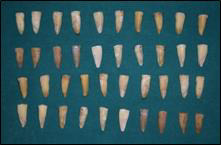
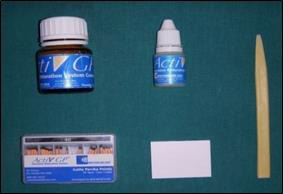
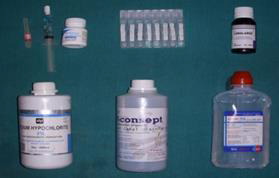
Three-dimensional obturation and careful chemo-mechanical preparation of the root canal system are essential for successful endodontic therapy. The marginal adaption and bond strength of root canal sealers to dentin are critical for the effectiveness of various endodontic operations. Hence, bond strength of Thermo-plasticized Gutta-Percha/ AH Plus sealer and ActiV GP root canal obturation system was compared following EDTA, MTAD, CHX, and Distilled Water used as a final irrigation rinse. The sample consisted of forty extracted teeth which were divided into four groups based on the final irrigation rinse (i.e.,) Group A 3% NaOCl followed by saline and 17% EDTA irrigation as a final rinse, Group B - 3% NaOCl solution followed by saline and MTAD irrigation as a final rinse, Group C - 3% NaOCl solution followed by saline and 2% CHX irrigation as a final rinse, Group D - 3% NaOCl solution followed by saline and distilled water irrigation as a final rinse. Each group was further subdivided based on the obturation system as; thermo-plasticized Gutta-Percha and AH Plus sealer (subgroup 1) and ActiV GP obturation system (subgroup 2). Middle and coronal thirds of every root was cut horizontally with two milli-metres thickness. After that, each slice was examined under a stereomicroscope to measure the diameter of each obturation site and snap photos of each slice's was taken at two sides using a digital camera. Later, an Instron Universal Testing Machine was used to analyze the bond strength of each specimen. CHX- Thermo-plasticized Gutta-Percha /AH Plus (3.654 + 0.056MPa) yielded the maximum average bond strength value. The minimal mean bond strength was noted for distilled water/ActiVGP (1.313 + 0.014 MPa). The other subgroups yielded intermediate bond strength values. Statistically considerable variation was found between subgroup A1 EDTA- Thermo-plasticized Gutta-Percha /AH Plus and subgroup B1 MTAD- Thermo-plasticized Gutta-Percha/AH Plus respectively. It can be found that use of 2% CHX as a final rinse considerably increases the bond strength of both Thermo-plasticized Gutta-Percha/AH Plus and ActiV GP obturation systems.





 京公网安备 11010802042870号
京ICP备2023020795号-1
京公网安备 11010802042870号
京ICP备2023020795号-1

 分享
分享
 求助内容:
求助内容: 应助结果提醒方式:
 扫码关注我们
