Reda Ben Mrid, Sara El Guendouzi, Marco Mineo, Rachid El Fatimy
{"title":"异常选择性剪接在胶质瘤中的新作用。","authors":"Reda Ben Mrid, Sara El Guendouzi, Marco Mineo, Rachid El Fatimy","doi":"10.1038/s41420-025-02323-0","DOIUrl":null,"url":null,"abstract":"<p><p>Gliomas represent a heterogeneous group of uniformly fatal brain tumors. Low and high-grade gliomas have diverse molecular signatures. Despite successful advances in understanding glioma, several genetic, epigenetic, and post-transcriptional alterations leave various targeted therapies ineffective, leading to a poor prognosis for high-grade glioma. Recent advances have revealed the implication of dysregulated alternative splicing (AS) events in glioma development. AS is a process that produces, from a single genomic sequence, several mature messenger RNAs. Splicing of pre-messenger RNAs concerns at least 95% of transcripts and constitutes an important mechanism in gene expression regulation. Dysregulation of this process, through variations in spliceosome components, aberrant splicing factors and RNA-binding protein activity, disproportionate regulation of non-coding RNAs, and abnormal mRNA methylation, can contribute to the disruption of AS. Such disruptions are usually associated with the development of several cancers, including glioma. Consequently, AS constitutes a key regulatory mechanism that could serve as a target for future therapies. In this review, we explore how AS events, spliceosome components, and their regulatory mechanisms play a critical role in glioma development, highlighting their potential as targets for innovative therapeutic strategies against this challenging cancer.</p>","PeriodicalId":9735,"journal":{"name":"Cell Death Discovery","volume":"11 1","pages":"50"},"PeriodicalIF":10.4000,"publicationDate":"2025-02-06","publicationTypes":"Journal Article","fieldsOfStudy":null,"isOpenAccess":false,"openAccessPdf":"https://www.ncbi.nlm.nih.gov/pmc/articles/PMC11802826/pdf/","citationCount":"0","resultStr":"{\"title\":\"The emerging roles of aberrant alternative splicing in glioma.\",\"authors\":\"Reda Ben Mrid, Sara El Guendouzi, Marco Mineo, Rachid El Fatimy\",\"doi\":\"10.1038/s41420-025-02323-0\",\"DOIUrl\":null,\"url\":null,\"abstract\":\"<p><p>Gliomas represent a heterogeneous group of uniformly fatal brain tumors. Low and high-grade gliomas have diverse molecular signatures. Despite successful advances in understanding glioma, several genetic, epigenetic, and post-transcriptional alterations leave various targeted therapies ineffective, leading to a poor prognosis for high-grade glioma. Recent advances have revealed the implication of dysregulated alternative splicing (AS) events in glioma development. AS is a process that produces, from a single genomic sequence, several mature messenger RNAs. Splicing of pre-messenger RNAs concerns at least 95% of transcripts and constitutes an important mechanism in gene expression regulation. Dysregulation of this process, through variations in spliceosome components, aberrant splicing factors and RNA-binding protein activity, disproportionate regulation of non-coding RNAs, and abnormal mRNA methylation, can contribute to the disruption of AS. Such disruptions are usually associated with the development of several cancers, including glioma. Consequently, AS constitutes a key regulatory mechanism that could serve as a target for future therapies. In this review, we explore how AS events, spliceosome components, and their regulatory mechanisms play a critical role in glioma development, highlighting their potential as targets for innovative therapeutic strategies against this challenging cancer.</p>\",\"PeriodicalId\":9735,\"journal\":{\"name\":\"Cell Death Discovery\",\"volume\":\"11 1\",\"pages\":\"50\"},\"PeriodicalIF\":10.4000,\"publicationDate\":\"2025-02-06\",\"publicationTypes\":\"Journal Article\",\"fieldsOfStudy\":null,\"isOpenAccess\":false,\"openAccessPdf\":\"https://www.ncbi.nlm.nih.gov/pmc/articles/PMC11802826/pdf/\",\"citationCount\":\"0\",\"resultStr\":null,\"platform\":\"Semanticscholar\",\"paperid\":null,\"PeriodicalName\":\"Cell Death Discovery\",\"FirstCategoryId\":\"3\",\"ListUrlMain\":\"https://doi.org/10.1038/s41420-025-02323-0\",\"RegionNum\":2,\"RegionCategory\":\"生物学\",\"ArticlePicture\":[],\"TitleCN\":null,\"AbstractTextCN\":null,\"PMCID\":null,\"EPubDate\":\"\",\"PubModel\":\"\",\"JCR\":\"Q1\",\"JCRName\":\"CELL BIOLOGY\",\"Score\":null,\"Total\":0}","platform":"Semanticscholar","paperid":null,"PeriodicalName":"Cell Death Discovery","FirstCategoryId":"3","ListUrlMain":"https://doi.org/10.1038/s41420-025-02323-0","RegionNum":2,"RegionCategory":"生物学","ArticlePicture":[],"TitleCN":null,"AbstractTextCN":null,"PMCID":null,"EPubDate":"","PubModel":"","JCR":"Q1","JCRName":"CELL BIOLOGY","Score":null,"Total":0}
The emerging roles of aberrant alternative splicing in glioma.
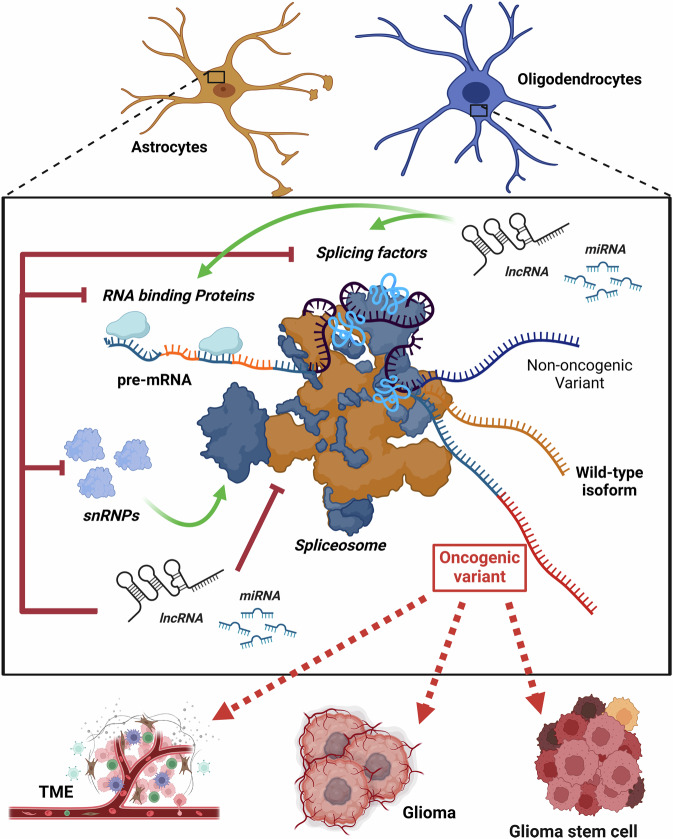
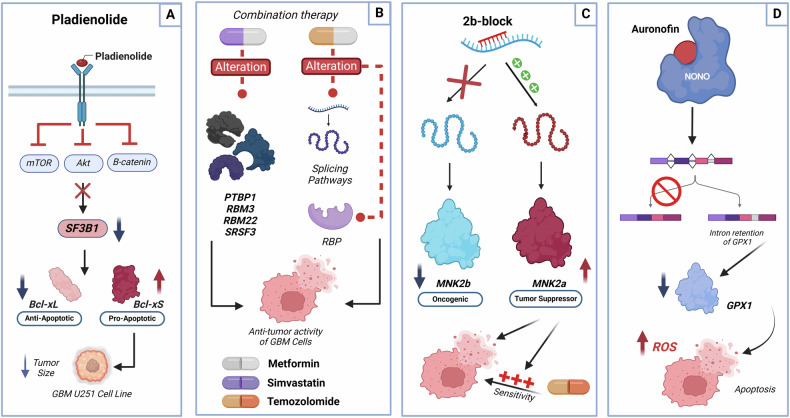
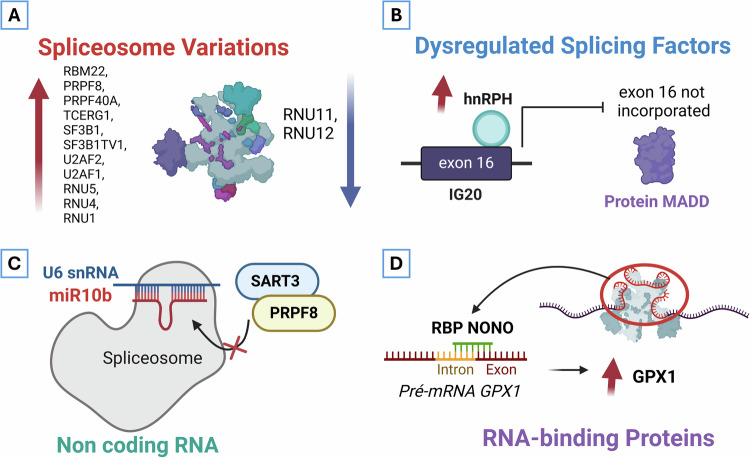
Gliomas represent a heterogeneous group of uniformly fatal brain tumors. Low and high-grade gliomas have diverse molecular signatures. Despite successful advances in understanding glioma, several genetic, epigenetic, and post-transcriptional alterations leave various targeted therapies ineffective, leading to a poor prognosis for high-grade glioma. Recent advances have revealed the implication of dysregulated alternative splicing (AS) events in glioma development. AS is a process that produces, from a single genomic sequence, several mature messenger RNAs. Splicing of pre-messenger RNAs concerns at least 95% of transcripts and constitutes an important mechanism in gene expression regulation. Dysregulation of this process, through variations in spliceosome components, aberrant splicing factors and RNA-binding protein activity, disproportionate regulation of non-coding RNAs, and abnormal mRNA methylation, can contribute to the disruption of AS. Such disruptions are usually associated with the development of several cancers, including glioma. Consequently, AS constitutes a key regulatory mechanism that could serve as a target for future therapies. In this review, we explore how AS events, spliceosome components, and their regulatory mechanisms play a critical role in glioma development, highlighting their potential as targets for innovative therapeutic strategies against this challenging cancer.
期刊介绍:
Cell Death Discovery is a multidisciplinary, international, online-only, open access journal, dedicated to publishing research at the intersection of medicine with biochemistry, pharmacology, immunology, cell biology and cell death, provided it is scientifically sound. The unrestricted access to research findings in Cell Death Discovery will foster a dynamic and highly productive dialogue between basic scientists and clinicians, as well as researchers in industry with a focus on cancer, neurobiology and inflammation research. As an official journal of the Cell Death Differentiation Association (ADMC), Cell Death Discovery will build upon the success of Cell Death & Differentiation and Cell Death & Disease in publishing important peer-reviewed original research, timely reviews and editorial commentary.
Cell Death Discovery is committed to increasing the reproducibility of research. To this end, in conjunction with its sister journals Cell Death & Differentiation and Cell Death & Disease, Cell Death Discovery provides a unique forum for scientists as well as clinicians and members of the pharmaceutical and biotechnical industry. It is committed to the rapid publication of high quality original papers that relate to these subjects, together with topical, usually solicited, reviews, editorial correspondence and occasional commentaries on controversial and scientifically informative issues.




 京公网安备 11010802042870号
京ICP备2023020795号-1
京公网安备 11010802042870号
京ICP备2023020795号-1

 分享
分享
 求助内容:
求助内容: 应助结果提醒方式:
 扫码关注我们
