{"title":"多高危因素妊娠:系统回顾和荟萃分析。","authors":"Yue Zhang, Weijie Ding, Tingting Wu, Songtao Wu, Hui Wang, Muhammad Fawad, Akilew Awoke Adane, Xiaochen Dai, Xiaoqin Zhu, Xiaolin Xu","doi":"10.7189/jogh.15.04027","DOIUrl":null,"url":null,"abstract":"<p><strong>Background: </strong>A wide spectrum of high-risk factors in pregnancy can lead to adverse pregnancy outcomes or short- or long-term health effects. Despite this, there has been no synthesis of findings on the measurement, potential causes, and health outcomes of multiple high-risk factors in pregnancy (MHFP). We aimed to address this gap by summarising the existing research on this topic.</p><p><strong>Methods: </strong>We retrieved studies published up to 3 June 2024 through systematic database searches and used a narrative synthesis approach to summarise the measurement, patterns, causes, and outcomes of MHFP. We also estimated the pooled MHFP prevalence through meta-analysis with a random effects model and performed subgroup analyses and meta-regression to examine potential sources of between-study heterogeneity.</p><p><strong>Results: </strong>We included 83 observational studies published between 2010 and 2024, of which 72% were from high-income countries. These studied factors can be grouped into four categories: physical conditions, mental conditions, sociobehavioural problems, and pregnancy history. We identified 16 MHFP patterns, among which co-existing multiple physical conditions were the most common pattern. The overall pooled prevalence of MHFP was 12% (95% confidence interval (CI) = 12-13), with an increasing trend and relatively higher levels in low- and middle-income countries (LMICs). We observed heterogeneity in the measurement of MHFP across the studies, possibly due to the number of risk factors in the definition of MHFP. About 78% of included studies investigated MHFP-associated health outcomes for women and offspring, with only two studies examining long-term maternal or offspring outcomes later in life.</p><p><strong>Conclusions: </strong>Research into MHFP has been emerging over the past decade, but is far from complete. The burden of MHFP is increasing worldwide, particularly LMICs. Maternal healthcare systems must shift to a multidisciplinary and integrated framework so as to better design and implement prevention and intervention programmes and sustain the healthy development of the next generation.</p><p><strong>Registration: </strong>PROSPERO: CRD42022358889.</p>","PeriodicalId":48734,"journal":{"name":"Journal of Global Health","volume":"15 ","pages":"04027"},"PeriodicalIF":4.3000,"publicationDate":"2025-02-07","publicationTypes":"Journal Article","fieldsOfStudy":null,"isOpenAccess":false,"openAccessPdf":"https://www.ncbi.nlm.nih.gov/pmc/articles/PMC11893144/pdf/","citationCount":"0","resultStr":"{\"title\":\"Pregnancy with multiple high-risk factors: a systematic review and meta-analysis.\",\"authors\":\"Yue Zhang, Weijie Ding, Tingting Wu, Songtao Wu, Hui Wang, Muhammad Fawad, Akilew Awoke Adane, Xiaochen Dai, Xiaoqin Zhu, Xiaolin Xu\",\"doi\":\"10.7189/jogh.15.04027\",\"DOIUrl\":null,\"url\":null,\"abstract\":\"<p><strong>Background: </strong>A wide spectrum of high-risk factors in pregnancy can lead to adverse pregnancy outcomes or short- or long-term health effects. Despite this, there has been no synthesis of findings on the measurement, potential causes, and health outcomes of multiple high-risk factors in pregnancy (MHFP). We aimed to address this gap by summarising the existing research on this topic.</p><p><strong>Methods: </strong>We retrieved studies published up to 3 June 2024 through systematic database searches and used a narrative synthesis approach to summarise the measurement, patterns, causes, and outcomes of MHFP. We also estimated the pooled MHFP prevalence through meta-analysis with a random effects model and performed subgroup analyses and meta-regression to examine potential sources of between-study heterogeneity.</p><p><strong>Results: </strong>We included 83 observational studies published between 2010 and 2024, of which 72% were from high-income countries. These studied factors can be grouped into four categories: physical conditions, mental conditions, sociobehavioural problems, and pregnancy history. We identified 16 MHFP patterns, among which co-existing multiple physical conditions were the most common pattern. The overall pooled prevalence of MHFP was 12% (95% confidence interval (CI) = 12-13), with an increasing trend and relatively higher levels in low- and middle-income countries (LMICs). We observed heterogeneity in the measurement of MHFP across the studies, possibly due to the number of risk factors in the definition of MHFP. About 78% of included studies investigated MHFP-associated health outcomes for women and offspring, with only two studies examining long-term maternal or offspring outcomes later in life.</p><p><strong>Conclusions: </strong>Research into MHFP has been emerging over the past decade, but is far from complete. The burden of MHFP is increasing worldwide, particularly LMICs. Maternal healthcare systems must shift to a multidisciplinary and integrated framework so as to better design and implement prevention and intervention programmes and sustain the healthy development of the next generation.</p><p><strong>Registration: </strong>PROSPERO: CRD42022358889.</p>\",\"PeriodicalId\":48734,\"journal\":{\"name\":\"Journal of Global Health\",\"volume\":\"15 \",\"pages\":\"04027\"},\"PeriodicalIF\":4.3000,\"publicationDate\":\"2025-02-07\",\"publicationTypes\":\"Journal Article\",\"fieldsOfStudy\":null,\"isOpenAccess\":false,\"openAccessPdf\":\"https://www.ncbi.nlm.nih.gov/pmc/articles/PMC11893144/pdf/\",\"citationCount\":\"0\",\"resultStr\":null,\"platform\":\"Semanticscholar\",\"paperid\":null,\"PeriodicalName\":\"Journal of Global Health\",\"FirstCategoryId\":\"3\",\"ListUrlMain\":\"https://doi.org/10.7189/jogh.15.04027\",\"RegionNum\":3,\"RegionCategory\":\"医学\",\"ArticlePicture\":[],\"TitleCN\":null,\"AbstractTextCN\":null,\"PMCID\":null,\"EPubDate\":\"\",\"PubModel\":\"\",\"JCR\":\"Q1\",\"JCRName\":\"PUBLIC, ENVIRONMENTAL & OCCUPATIONAL HEALTH\",\"Score\":null,\"Total\":0}","platform":"Semanticscholar","paperid":null,"PeriodicalName":"Journal of Global Health","FirstCategoryId":"3","ListUrlMain":"https://doi.org/10.7189/jogh.15.04027","RegionNum":3,"RegionCategory":"医学","ArticlePicture":[],"TitleCN":null,"AbstractTextCN":null,"PMCID":null,"EPubDate":"","PubModel":"","JCR":"Q1","JCRName":"PUBLIC, ENVIRONMENTAL & OCCUPATIONAL HEALTH","Score":null,"Total":0}
Pregnancy with multiple high-risk factors: a systematic review and meta-analysis.
Background: A wide spectrum of high-risk factors in pregnancy can lead to adverse pregnancy outcomes or short- or long-term health effects. Despite this, there has been no synthesis of findings on the measurement, potential causes, and health outcomes of multiple high-risk factors in pregnancy (MHFP). We aimed to address this gap by summarising the existing research on this topic.
Methods: We retrieved studies published up to 3 June 2024 through systematic database searches and used a narrative synthesis approach to summarise the measurement, patterns, causes, and outcomes of MHFP. We also estimated the pooled MHFP prevalence through meta-analysis with a random effects model and performed subgroup analyses and meta-regression to examine potential sources of between-study heterogeneity.
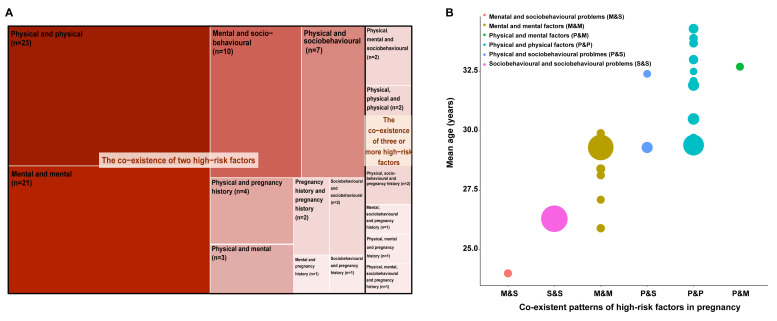
Results: We included 83 observational studies published between 2010 and 2024, of which 72% were from high-income countries. These studied factors can be grouped into four categories: physical conditions, mental conditions, sociobehavioural problems, and pregnancy history. We identified 16 MHFP patterns, among which co-existing multiple physical conditions were the most common pattern. The overall pooled prevalence of MHFP was 12% (95% confidence interval (CI) = 12-13), with an increasing trend and relatively higher levels in low- and middle-income countries (LMICs). We observed heterogeneity in the measurement of MHFP across the studies, possibly due to the number of risk factors in the definition of MHFP. About 78% of included studies investigated MHFP-associated health outcomes for women and offspring, with only two studies examining long-term maternal or offspring outcomes later in life.
Conclusions: Research into MHFP has been emerging over the past decade, but is far from complete. The burden of MHFP is increasing worldwide, particularly LMICs. Maternal healthcare systems must shift to a multidisciplinary and integrated framework so as to better design and implement prevention and intervention programmes and sustain the healthy development of the next generation.
期刊介绍:
Journal of Global Health is a peer-reviewed journal published by the Edinburgh University Global Health Society, a not-for-profit organization registered in the UK. We publish editorials, news, viewpoints, original research and review articles in two issues per year.






 京公网安备 11010802042870号
京ICP备2023020795号-1
京公网安备 11010802042870号
京ICP备2023020795号-1

 分享
分享
 求助内容:
求助内容: 应助结果提醒方式:
 扫码关注我们
