Shaoju Fu , Tiantian Li , Linghui Zhou , Zhining Huang , Mengfan Hu , Yuen Hu , Peixin Tang , Yang Si
{"title":"基于PSBMA-IA-PPy/Fe3+复合材料的高导电性,低检测限和耐用的水凝胶传感器","authors":"Shaoju Fu , Tiantian Li , Linghui Zhou , Zhining Huang , Mengfan Hu , Yuen Hu , Peixin Tang , Yang Si","doi":"10.1016/j.eurpolymj.2025.113813","DOIUrl":null,"url":null,"abstract":"<div><div>Hydrogels are hydrophilic polymeric materials that are typically distinguished by their excellent biocompatibility, flexibility, and environmental friendliness. However, most hydrogels exhibit high swelling rates, poor mechanical stability, and low durability, which restrict their utilization in sensor applications. Herein, conductive hydrogels with a low swelling rate were fabricated by incorporating polypyrrole (PPy)/ ferric ion (Fe<sup>3+</sup>) into poly(sulfobetaine methacrylate)/itaconic acid (PSBMA-IA) based hydrogels. The abundance of unsaturated bonds on SBMA and IA macromolecules enables them to undergo addition polymerization and form their respective long chains. The carbon–carbon double bonds at both ends of Methylenebisacrylamide (MBA) can also undergo addition reactions with the double bonds of SBMA and IA, resulting in the formation of a three-dimensional interconnective network. This ultimately improves the mechanical properties of the composite hydrogel (maximum compressive stress of 66.7 kPa). Furthermore, Fe<sup>3+</sup> ions and pyrrole monomers facilitate the formation of an additional conductive macromolecular network on the hydrogel skeleton through in situ polymerization. This dual network structure confers enhanced anti-swelling properties (minimum swelling rate of 33 %), and excellent electrical conductivity (>0.2 S/m). As a result, the PSBMA-IA-PPy/Fe<sup>3+</sup> based hydrogel sensors exhibit low detection (0.543 ∼ 2.717 kPa), high sensitivity (1.4853 ∼ 1.8316), and excellent response and recovery times (<106 ms).</div></div>","PeriodicalId":315,"journal":{"name":"European Polymer Journal","volume":"228 ","pages":"Article 113813"},"PeriodicalIF":6.3000,"publicationDate":"2025-03-19","publicationTypes":"Journal Article","fieldsOfStudy":null,"isOpenAccess":false,"openAccessPdf":"","citationCount":"0","resultStr":"{\"title\":\"Highly conductive, low detection limit and durable hydrogel sensors based on PSBMA-IA-PPy/Fe3+ composite materials for mechanosensing\",\"authors\":\"Shaoju Fu , Tiantian Li , Linghui Zhou , Zhining Huang , Mengfan Hu , Yuen Hu , Peixin Tang , Yang Si\",\"doi\":\"10.1016/j.eurpolymj.2025.113813\",\"DOIUrl\":null,\"url\":null,\"abstract\":\"<div><div>Hydrogels are hydrophilic polymeric materials that are typically distinguished by their excellent biocompatibility, flexibility, and environmental friendliness. However, most hydrogels exhibit high swelling rates, poor mechanical stability, and low durability, which restrict their utilization in sensor applications. Herein, conductive hydrogels with a low swelling rate were fabricated by incorporating polypyrrole (PPy)/ ferric ion (Fe<sup>3+</sup>) into poly(sulfobetaine methacrylate)/itaconic acid (PSBMA-IA) based hydrogels. The abundance of unsaturated bonds on SBMA and IA macromolecules enables them to undergo addition polymerization and form their respective long chains. The carbon–carbon double bonds at both ends of Methylenebisacrylamide (MBA) can also undergo addition reactions with the double bonds of SBMA and IA, resulting in the formation of a three-dimensional interconnective network. This ultimately improves the mechanical properties of the composite hydrogel (maximum compressive stress of 66.7 kPa). Furthermore, Fe<sup>3+</sup> ions and pyrrole monomers facilitate the formation of an additional conductive macromolecular network on the hydrogel skeleton through in situ polymerization. This dual network structure confers enhanced anti-swelling properties (minimum swelling rate of 33 %), and excellent electrical conductivity (>0.2 S/m). As a result, the PSBMA-IA-PPy/Fe<sup>3+</sup> based hydrogel sensors exhibit low detection (0.543 ∼ 2.717 kPa), high sensitivity (1.4853 ∼ 1.8316), and excellent response and recovery times (<106 ms).</div></div>\",\"PeriodicalId\":315,\"journal\":{\"name\":\"European Polymer Journal\",\"volume\":\"228 \",\"pages\":\"Article 113813\"},\"PeriodicalIF\":6.3000,\"publicationDate\":\"2025-03-19\",\"publicationTypes\":\"Journal Article\",\"fieldsOfStudy\":null,\"isOpenAccess\":false,\"openAccessPdf\":\"\",\"citationCount\":\"0\",\"resultStr\":null,\"platform\":\"Semanticscholar\",\"paperid\":null,\"PeriodicalName\":\"European Polymer Journal\",\"FirstCategoryId\":\"92\",\"ListUrlMain\":\"https://www.sciencedirect.com/science/article/pii/S0014305725001016\",\"RegionNum\":2,\"RegionCategory\":\"化学\",\"ArticlePicture\":[],\"TitleCN\":null,\"AbstractTextCN\":null,\"PMCID\":null,\"EPubDate\":\"2025/2/7 0:00:00\",\"PubModel\":\"Epub\",\"JCR\":\"Q1\",\"JCRName\":\"POLYMER SCIENCE\",\"Score\":null,\"Total\":0}","platform":"Semanticscholar","paperid":null,"PeriodicalName":"European Polymer Journal","FirstCategoryId":"92","ListUrlMain":"https://www.sciencedirect.com/science/article/pii/S0014305725001016","RegionNum":2,"RegionCategory":"化学","ArticlePicture":[],"TitleCN":null,"AbstractTextCN":null,"PMCID":null,"EPubDate":"2025/2/7 0:00:00","PubModel":"Epub","JCR":"Q1","JCRName":"POLYMER SCIENCE","Score":null,"Total":0}
Highly conductive, low detection limit and durable hydrogel sensors based on PSBMA-IA-PPy/Fe3+ composite materials for mechanosensing
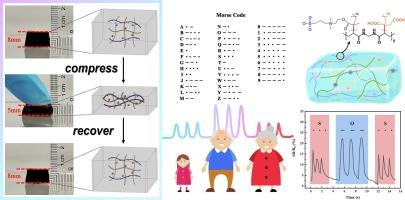
Hydrogels are hydrophilic polymeric materials that are typically distinguished by their excellent biocompatibility, flexibility, and environmental friendliness. However, most hydrogels exhibit high swelling rates, poor mechanical stability, and low durability, which restrict their utilization in sensor applications. Herein, conductive hydrogels with a low swelling rate were fabricated by incorporating polypyrrole (PPy)/ ferric ion (Fe3+) into poly(sulfobetaine methacrylate)/itaconic acid (PSBMA-IA) based hydrogels. The abundance of unsaturated bonds on SBMA and IA macromolecules enables them to undergo addition polymerization and form their respective long chains. The carbon–carbon double bonds at both ends of Methylenebisacrylamide (MBA) can also undergo addition reactions with the double bonds of SBMA and IA, resulting in the formation of a three-dimensional interconnective network. This ultimately improves the mechanical properties of the composite hydrogel (maximum compressive stress of 66.7 kPa). Furthermore, Fe3+ ions and pyrrole monomers facilitate the formation of an additional conductive macromolecular network on the hydrogel skeleton through in situ polymerization. This dual network structure confers enhanced anti-swelling properties (minimum swelling rate of 33 %), and excellent electrical conductivity (>0.2 S/m). As a result, the PSBMA-IA-PPy/Fe3+ based hydrogel sensors exhibit low detection (0.543 ∼ 2.717 kPa), high sensitivity (1.4853 ∼ 1.8316), and excellent response and recovery times (<106 ms).
期刊介绍:
European Polymer Journal is dedicated to publishing work on fundamental and applied polymer chemistry and macromolecular materials. The journal covers all aspects of polymer synthesis, including polymerization mechanisms and chemical functional transformations, with a focus on novel polymers and the relationships between molecular structure and polymer properties. In addition, we welcome submissions on bio-based or renewable polymers, stimuli-responsive systems and polymer bio-hybrids. European Polymer Journal also publishes research on the biomedical application of polymers, including drug delivery and regenerative medicine. The main scope is covered but not limited to the following core research areas:
Polymer synthesis and functionalization
• Novel synthetic routes for polymerization, functional modification, controlled/living polymerization and precision polymers.
Stimuli-responsive polymers
• Including shape memory and self-healing polymers.
Supramolecular polymers and self-assembly
• Molecular recognition and higher order polymer structures.
Renewable and sustainable polymers
• Bio-based, biodegradable and anti-microbial polymers and polymeric bio-nanocomposites.
Polymers at interfaces and surfaces
• Chemistry and engineering of surfaces with biological relevance, including patterning, antifouling polymers and polymers for membrane applications.
Biomedical applications and nanomedicine
• Polymers for regenerative medicine, drug delivery molecular release and gene therapy
The scope of European Polymer Journal no longer includes Polymer Physics.




 京公网安备 11010802042870号
京ICP备2023020795号-1
京公网安备 11010802042870号
京ICP备2023020795号-1

 分享
分享
 求助内容:
求助内容: 应助结果提醒方式:
 扫码关注我们
