Antoine Fournier, Jean-Moïse Suisse, Pierre de Frémont and Jacques Andrieu
{"title":"生物基n -异丁基-5-甲基氧恶唑烷酮的无溶剂合成:一种环保溶剂","authors":"Antoine Fournier, Jean-Moïse Suisse, Pierre de Frémont and Jacques Andrieu","doi":"10.1039/D4RA08386E","DOIUrl":null,"url":null,"abstract":"<p >Oxazolidinones are five-membered N-heterocycle rings containing a carbamate moiety and are known for their industrial applications as antibiotics, herbicides and electrolytes in Li batteries. Considering the projected ecological transition, they have the potential to be recognized as a green solvent according to the European standards for bio-based solvents, if they can be synthesized <em>via</em> an eco-friendly synthetic route. Herein, a strategy is proposed for the kilogram scale synthesis of <em>N</em>-isobutyl-5-methyloxazolidinone (BMOX) in two steps, starting from the renewable resources from sugar industry and without using any organic solvent. The first step was the addition of bio-based isobutylamine to chloropropanol in basic aqueous solution to afford an amino-alcohol. In the second step, to this amino-alcohol, diethyl carbonate was added in the presence of a bio-based imidazolium salt catalyst to afford the desired oxazolidinone containing more than 62% bio-based carbon atoms. This study elucidates the physicochemical properties of this new bio-sourced oxazolidinone.</p>","PeriodicalId":102,"journal":{"name":"RSC Advances","volume":" 6","pages":" 4431-4442"},"PeriodicalIF":4.6000,"publicationDate":"2025-02-10","publicationTypes":"Journal Article","fieldsOfStudy":null,"isOpenAccess":false,"openAccessPdf":"https://pubs.rsc.org/en/content/articlepdf/2025/ra/d4ra08386e?page=search","citationCount":"0","resultStr":"{\"title\":\"Solvent-free synthesis of bio-based N-isobutyl-5-methyloxazolidinone: an eco-friendly solvent\",\"authors\":\"Antoine Fournier, Jean-Moïse Suisse, Pierre de Frémont and Jacques Andrieu\",\"doi\":\"10.1039/D4RA08386E\",\"DOIUrl\":null,\"url\":null,\"abstract\":\"<p >Oxazolidinones are five-membered N-heterocycle rings containing a carbamate moiety and are known for their industrial applications as antibiotics, herbicides and electrolytes in Li batteries. Considering the projected ecological transition, they have the potential to be recognized as a green solvent according to the European standards for bio-based solvents, if they can be synthesized <em>via</em> an eco-friendly synthetic route. Herein, a strategy is proposed for the kilogram scale synthesis of <em>N</em>-isobutyl-5-methyloxazolidinone (BMOX) in two steps, starting from the renewable resources from sugar industry and without using any organic solvent. The first step was the addition of bio-based isobutylamine to chloropropanol in basic aqueous solution to afford an amino-alcohol. In the second step, to this amino-alcohol, diethyl carbonate was added in the presence of a bio-based imidazolium salt catalyst to afford the desired oxazolidinone containing more than 62% bio-based carbon atoms. This study elucidates the physicochemical properties of this new bio-sourced oxazolidinone.</p>\",\"PeriodicalId\":102,\"journal\":{\"name\":\"RSC Advances\",\"volume\":\" 6\",\"pages\":\" 4431-4442\"},\"PeriodicalIF\":4.6000,\"publicationDate\":\"2025-02-10\",\"publicationTypes\":\"Journal Article\",\"fieldsOfStudy\":null,\"isOpenAccess\":false,\"openAccessPdf\":\"https://pubs.rsc.org/en/content/articlepdf/2025/ra/d4ra08386e?page=search\",\"citationCount\":\"0\",\"resultStr\":null,\"platform\":\"Semanticscholar\",\"paperid\":null,\"PeriodicalName\":\"RSC Advances\",\"FirstCategoryId\":\"92\",\"ListUrlMain\":\"https://pubs.rsc.org/en/content/articlelanding/2025/ra/d4ra08386e\",\"RegionNum\":3,\"RegionCategory\":\"化学\",\"ArticlePicture\":[],\"TitleCN\":null,\"AbstractTextCN\":null,\"PMCID\":null,\"EPubDate\":\"\",\"PubModel\":\"\",\"JCR\":\"Q2\",\"JCRName\":\"CHEMISTRY, MULTIDISCIPLINARY\",\"Score\":null,\"Total\":0}","platform":"Semanticscholar","paperid":null,"PeriodicalName":"RSC Advances","FirstCategoryId":"92","ListUrlMain":"https://pubs.rsc.org/en/content/articlelanding/2025/ra/d4ra08386e","RegionNum":3,"RegionCategory":"化学","ArticlePicture":[],"TitleCN":null,"AbstractTextCN":null,"PMCID":null,"EPubDate":"","PubModel":"","JCR":"Q2","JCRName":"CHEMISTRY, MULTIDISCIPLINARY","Score":null,"Total":0}
Solvent-free synthesis of bio-based N-isobutyl-5-methyloxazolidinone: an eco-friendly solvent
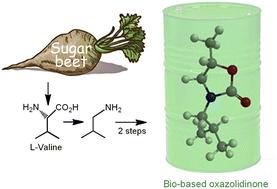
Oxazolidinones are five-membered N-heterocycle rings containing a carbamate moiety and are known for their industrial applications as antibiotics, herbicides and electrolytes in Li batteries. Considering the projected ecological transition, they have the potential to be recognized as a green solvent according to the European standards for bio-based solvents, if they can be synthesized via an eco-friendly synthetic route. Herein, a strategy is proposed for the kilogram scale synthesis of N-isobutyl-5-methyloxazolidinone (BMOX) in two steps, starting from the renewable resources from sugar industry and without using any organic solvent. The first step was the addition of bio-based isobutylamine to chloropropanol in basic aqueous solution to afford an amino-alcohol. In the second step, to this amino-alcohol, diethyl carbonate was added in the presence of a bio-based imidazolium salt catalyst to afford the desired oxazolidinone containing more than 62% bio-based carbon atoms. This study elucidates the physicochemical properties of this new bio-sourced oxazolidinone.
期刊介绍:
An international, peer-reviewed journal covering all of the chemical sciences, including multidisciplinary and emerging areas. RSC Advances is a gold open access journal allowing researchers free access to research articles, and offering an affordable open access publishing option for authors around the world.




 京公网安备 11010802042870号
京ICP备2023020795号-1
京公网安备 11010802042870号
京ICP备2023020795号-1

 分享
分享
 求助内容:
求助内容: 应助结果提醒方式:
 扫码关注我们
