Diana Peixoto , João M. Ravasco , Barbara Blanco-Fernandez , Francisco Veiga , Angel Concheiro , João Conde , Ana Cláudia Paiva-Santos , Carmen Alvarez-Lorenzo
{"title":"酶反应性维生素d胶束用于紫杉醇控制的输送和协同胰腺癌治疗","authors":"Diana Peixoto , João M. Ravasco , Barbara Blanco-Fernandez , Francisco Veiga , Angel Concheiro , João Conde , Ana Cláudia Paiva-Santos , Carmen Alvarez-Lorenzo","doi":"10.1016/j.mtbio.2025.101555","DOIUrl":null,"url":null,"abstract":"<div><div>Pancreatic ductal adenocarcinoma (PDAC) remains one of the most feared diseases worldwide owing to its poor prognosis, negligible therapeutic advances, and high mortality. Herein, multifunctional enzyme-responsive micelles for the controlled delivery of paclitaxel (PTX) were prepared to circumvent its current clinical challenges. Accordingly, two enzyme-responsive structural units composed of Vitamin D<sub>3</sub> (VD<sub>3</sub>) conjugated with polyethylene glycol of different molecular weights (600 Da and 2000 Da) were synthesized and characterized using different analytical methods. By applying the solvent evaporation method, these bioactive structural units self-assembled into sub-100 nm VD<sub>3</sub> micelles with minimal batch-to-batch variation, monomodal particle size distribution, and high encapsulation efficiency. The enzyme-triggered disassembly of PTX-loaded VD<sub>3</sub> micelles was demonstrated by release studies in the presence of a high esterase content typically featured by PDAC cells. PTX-loaded VD<sub>3</sub> micelles also exhibited prominent cell internalization and induced a considerable cytotoxic synergistic effect against human PDAC cells (BxPC-3 cells) in 2D and 3D cell culture models compared with free PTX. The PTX-loaded VD<sub>3</sub> micelles were hemocompatible and stable after long-term storage in the presence of biorelevant media, and showed higher efficiency to inhibit the tumor growth compared to the approved clinical nanoformulation (Abraxane®) in an <em>in ovo</em> tumor model. The findings reported here indicate that VD<sub>3</sub>S-PEG micelles may have a promising role in PDAC therapy, since VD<sub>3</sub> could act not only as a hydrophobic core of the micelles but also as a therapeutic agent that provides synergetic therapeutic effects with the encapsulated PTX.</div></div>","PeriodicalId":18310,"journal":{"name":"Materials Today Bio","volume":"31 ","pages":"Article 101555"},"PeriodicalIF":11.0000,"publicationDate":"2025-04-01","publicationTypes":"Journal Article","fieldsOfStudy":null,"isOpenAccess":false,"openAccessPdf":"","citationCount":"0","resultStr":"{\"title\":\"Enzyme-responsive vitamin D-based micelles for paclitaxel-controlled delivery and synergistic pancreatic cancer therapy\",\"authors\":\"Diana Peixoto , João M. Ravasco , Barbara Blanco-Fernandez , Francisco Veiga , Angel Concheiro , João Conde , Ana Cláudia Paiva-Santos , Carmen Alvarez-Lorenzo\",\"doi\":\"10.1016/j.mtbio.2025.101555\",\"DOIUrl\":null,\"url\":null,\"abstract\":\"<div><div>Pancreatic ductal adenocarcinoma (PDAC) remains one of the most feared diseases worldwide owing to its poor prognosis, negligible therapeutic advances, and high mortality. Herein, multifunctional enzyme-responsive micelles for the controlled delivery of paclitaxel (PTX) were prepared to circumvent its current clinical challenges. Accordingly, two enzyme-responsive structural units composed of Vitamin D<sub>3</sub> (VD<sub>3</sub>) conjugated with polyethylene glycol of different molecular weights (600 Da and 2000 Da) were synthesized and characterized using different analytical methods. By applying the solvent evaporation method, these bioactive structural units self-assembled into sub-100 nm VD<sub>3</sub> micelles with minimal batch-to-batch variation, monomodal particle size distribution, and high encapsulation efficiency. The enzyme-triggered disassembly of PTX-loaded VD<sub>3</sub> micelles was demonstrated by release studies in the presence of a high esterase content typically featured by PDAC cells. PTX-loaded VD<sub>3</sub> micelles also exhibited prominent cell internalization and induced a considerable cytotoxic synergistic effect against human PDAC cells (BxPC-3 cells) in 2D and 3D cell culture models compared with free PTX. The PTX-loaded VD<sub>3</sub> micelles were hemocompatible and stable after long-term storage in the presence of biorelevant media, and showed higher efficiency to inhibit the tumor growth compared to the approved clinical nanoformulation (Abraxane®) in an <em>in ovo</em> tumor model. The findings reported here indicate that VD<sub>3</sub>S-PEG micelles may have a promising role in PDAC therapy, since VD<sub>3</sub> could act not only as a hydrophobic core of the micelles but also as a therapeutic agent that provides synergetic therapeutic effects with the encapsulated PTX.</div></div>\",\"PeriodicalId\":18310,\"journal\":{\"name\":\"Materials Today Bio\",\"volume\":\"31 \",\"pages\":\"Article 101555\"},\"PeriodicalIF\":11.0000,\"publicationDate\":\"2025-04-01\",\"publicationTypes\":\"Journal Article\",\"fieldsOfStudy\":null,\"isOpenAccess\":false,\"openAccessPdf\":\"\",\"citationCount\":\"0\",\"resultStr\":null,\"platform\":\"Semanticscholar\",\"paperid\":null,\"PeriodicalName\":\"Materials Today Bio\",\"FirstCategoryId\":\"5\",\"ListUrlMain\":\"https://www.sciencedirect.com/science/article/pii/S2590006425001139\",\"RegionNum\":1,\"RegionCategory\":\"医学\",\"ArticlePicture\":[],\"TitleCN\":null,\"AbstractTextCN\":null,\"PMCID\":null,\"EPubDate\":\"2025/2/4 0:00:00\",\"PubModel\":\"Epub\",\"JCR\":\"Q1\",\"JCRName\":\"ENGINEERING, BIOMEDICAL\",\"Score\":null,\"Total\":0}","platform":"Semanticscholar","paperid":null,"PeriodicalName":"Materials Today Bio","FirstCategoryId":"5","ListUrlMain":"https://www.sciencedirect.com/science/article/pii/S2590006425001139","RegionNum":1,"RegionCategory":"医学","ArticlePicture":[],"TitleCN":null,"AbstractTextCN":null,"PMCID":null,"EPubDate":"2025/2/4 0:00:00","PubModel":"Epub","JCR":"Q1","JCRName":"ENGINEERING, BIOMEDICAL","Score":null,"Total":0}
Enzyme-responsive vitamin D-based micelles for paclitaxel-controlled delivery and synergistic pancreatic cancer therapy
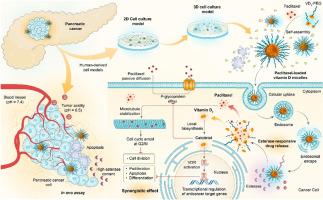
Pancreatic ductal adenocarcinoma (PDAC) remains one of the most feared diseases worldwide owing to its poor prognosis, negligible therapeutic advances, and high mortality. Herein, multifunctional enzyme-responsive micelles for the controlled delivery of paclitaxel (PTX) were prepared to circumvent its current clinical challenges. Accordingly, two enzyme-responsive structural units composed of Vitamin D3 (VD3) conjugated with polyethylene glycol of different molecular weights (600 Da and 2000 Da) were synthesized and characterized using different analytical methods. By applying the solvent evaporation method, these bioactive structural units self-assembled into sub-100 nm VD3 micelles with minimal batch-to-batch variation, monomodal particle size distribution, and high encapsulation efficiency. The enzyme-triggered disassembly of PTX-loaded VD3 micelles was demonstrated by release studies in the presence of a high esterase content typically featured by PDAC cells. PTX-loaded VD3 micelles also exhibited prominent cell internalization and induced a considerable cytotoxic synergistic effect against human PDAC cells (BxPC-3 cells) in 2D and 3D cell culture models compared with free PTX. The PTX-loaded VD3 micelles were hemocompatible and stable after long-term storage in the presence of biorelevant media, and showed higher efficiency to inhibit the tumor growth compared to the approved clinical nanoformulation (Abraxane®) in an in ovo tumor model. The findings reported here indicate that VD3S-PEG micelles may have a promising role in PDAC therapy, since VD3 could act not only as a hydrophobic core of the micelles but also as a therapeutic agent that provides synergetic therapeutic effects with the encapsulated PTX.
期刊介绍:
Materials Today Bio is a multidisciplinary journal that specializes in the intersection between biology and materials science, chemistry, physics, engineering, and medicine. It covers various aspects such as the design and assembly of new structures, their interaction with biological systems, functionalization, bioimaging, therapies, and diagnostics in healthcare. The journal aims to showcase the most significant advancements and discoveries in this field. As part of the Materials Today family, Materials Today Bio provides rigorous peer review, quick decision-making, and high visibility for authors. It is indexed in Scopus, PubMed Central, Emerging Sources, Citation Index (ESCI), and Directory of Open Access Journals (DOAJ).




 京公网安备 11010802042870号
京ICP备2023020795号-1
京公网安备 11010802042870号
京ICP备2023020795号-1

 分享
分享
 求助内容:
求助内容: 应助结果提醒方式:
 扫码关注我们
