{"title":"在扩张型心肌病患者的活检中,粘附的巨噬细胞作为心肌细胞损伤的额外标记。","authors":"Oliwia Warmusz, Arkadiusz Badziński, Edyta Reichman-Warmusz, Damian Dudek, Romuald Wojnicz","doi":"10.1515/med-2024-1099","DOIUrl":null,"url":null,"abstract":"<p><strong>Background: </strong>Macrophage accumulation found in biopsy specimens of patients with dilated cardiomyopathy (DCM) has been thought to reflect chronic myocarditis. However, it is unsettled whether they are responsible for the active or persistent phase of the disease.</p><p><strong>Objective: </strong>The aim of this study was to count the number of macrophages in relation to plasma concentrations of cardiac troponin T (cTnT).</p><p><strong>Methods: </strong>We studied the biopsies of 181 patients with DCM by immunohistochemistry using anti-CD68(+) antibodies. The total number of CD68(+) and the number of CD68(+) cells attached to injured cardiomyocytes were counted and presented as the number of cells/mm<sup>2</sup>.</p><p><strong>Results: </strong>Two expression patterns of CD68(+) macrophages were observed: those localized freely in the interstitial space only, and the cells attached to injured cardiomyocytes. As regards macrophages adhered to injured cardiomyocytes, 72 out of 181 (39.8%) patients presented these cells in the biopsy sections. Both the total number of CD68(+) macrophages and the number of CD68(+) cells directly adhered correlated negatively with cTnT in the serum of DCM patients (Spearman's rho, <i>r</i> = -0.45, <i>P</i> < 0.001 and <i>r</i> = -0.31, <i>P</i> = 0.009, respectively).</p><p><strong>Conclusion: </strong>Macrophages attached to injured cardiomyocytes may reflect chronic (ongoing) inflammation in the myocardium.</p>","PeriodicalId":19715,"journal":{"name":"Open Medicine","volume":"20 1","pages":"20241099"},"PeriodicalIF":1.6000,"publicationDate":"2025-02-04","publicationTypes":"Journal Article","fieldsOfStudy":null,"isOpenAccess":false,"openAccessPdf":"https://www.ncbi.nlm.nih.gov/pmc/articles/PMC11806233/pdf/","citationCount":"0","resultStr":"{\"title\":\"Adhered macrophages as an additional marker of cardiomyocyte injury in biopsies of patients with dilated cardiomyopathy.\",\"authors\":\"Oliwia Warmusz, Arkadiusz Badziński, Edyta Reichman-Warmusz, Damian Dudek, Romuald Wojnicz\",\"doi\":\"10.1515/med-2024-1099\",\"DOIUrl\":null,\"url\":null,\"abstract\":\"<p><strong>Background: </strong>Macrophage accumulation found in biopsy specimens of patients with dilated cardiomyopathy (DCM) has been thought to reflect chronic myocarditis. However, it is unsettled whether they are responsible for the active or persistent phase of the disease.</p><p><strong>Objective: </strong>The aim of this study was to count the number of macrophages in relation to plasma concentrations of cardiac troponin T (cTnT).</p><p><strong>Methods: </strong>We studied the biopsies of 181 patients with DCM by immunohistochemistry using anti-CD68(+) antibodies. The total number of CD68(+) and the number of CD68(+) cells attached to injured cardiomyocytes were counted and presented as the number of cells/mm<sup>2</sup>.</p><p><strong>Results: </strong>Two expression patterns of CD68(+) macrophages were observed: those localized freely in the interstitial space only, and the cells attached to injured cardiomyocytes. As regards macrophages adhered to injured cardiomyocytes, 72 out of 181 (39.8%) patients presented these cells in the biopsy sections. Both the total number of CD68(+) macrophages and the number of CD68(+) cells directly adhered correlated negatively with cTnT in the serum of DCM patients (Spearman's rho, <i>r</i> = -0.45, <i>P</i> < 0.001 and <i>r</i> = -0.31, <i>P</i> = 0.009, respectively).</p><p><strong>Conclusion: </strong>Macrophages attached to injured cardiomyocytes may reflect chronic (ongoing) inflammation in the myocardium.</p>\",\"PeriodicalId\":19715,\"journal\":{\"name\":\"Open Medicine\",\"volume\":\"20 1\",\"pages\":\"20241099\"},\"PeriodicalIF\":1.6000,\"publicationDate\":\"2025-02-04\",\"publicationTypes\":\"Journal Article\",\"fieldsOfStudy\":null,\"isOpenAccess\":false,\"openAccessPdf\":\"https://www.ncbi.nlm.nih.gov/pmc/articles/PMC11806233/pdf/\",\"citationCount\":\"0\",\"resultStr\":null,\"platform\":\"Semanticscholar\",\"paperid\":null,\"PeriodicalName\":\"Open Medicine\",\"FirstCategoryId\":\"3\",\"ListUrlMain\":\"https://doi.org/10.1515/med-2024-1099\",\"RegionNum\":4,\"RegionCategory\":\"医学\",\"ArticlePicture\":[],\"TitleCN\":null,\"AbstractTextCN\":null,\"PMCID\":null,\"EPubDate\":\"2025/1/1 0:00:00\",\"PubModel\":\"eCollection\",\"JCR\":\"Q2\",\"JCRName\":\"MEDICINE, GENERAL & INTERNAL\",\"Score\":null,\"Total\":0}","platform":"Semanticscholar","paperid":null,"PeriodicalName":"Open Medicine","FirstCategoryId":"3","ListUrlMain":"https://doi.org/10.1515/med-2024-1099","RegionNum":4,"RegionCategory":"医学","ArticlePicture":[],"TitleCN":null,"AbstractTextCN":null,"PMCID":null,"EPubDate":"2025/1/1 0:00:00","PubModel":"eCollection","JCR":"Q2","JCRName":"MEDICINE, GENERAL & INTERNAL","Score":null,"Total":0}
引用次数: 0
摘要
背景:在扩张型心肌病(DCM)患者的活检标本中发现巨噬细胞积累被认为是慢性心肌炎的反映。然而,尚不清楚它们是否与疾病的活动性或持续性有关。目的:本研究的目的是计算巨噬细胞数量与心肌肌钙蛋白T (cTnT)血浆浓度的关系。方法:采用抗cd68(+)抗体免疫组化方法对181例DCM患者的活检组织进行研究。计数损伤心肌细胞附着CD68(+)细胞总数和CD68(+)细胞数量,以细胞数/mm2表示。结果:观察到CD68(+)巨噬细胞的两种表达模式:一种是仅在间质中自由定位的细胞,另一种是附着在损伤心肌细胞上的细胞。181例患者中有72例(39.8%)在活检切片中发现巨噬细胞粘附在损伤心肌细胞上。DCM患者血清中CD68(+)巨噬细胞总数和CD68(+)直接粘附细胞数量与cTnT呈负相关(Spearman’s rho, r = -0.45, P < 0.001和r = -0.31, P = 0.009)。结论:附着在损伤心肌细胞上的巨噬细胞可能反映了心肌的慢性(持续)炎症。
Adhered macrophages as an additional marker of cardiomyocyte injury in biopsies of patients with dilated cardiomyopathy.
Background: Macrophage accumulation found in biopsy specimens of patients with dilated cardiomyopathy (DCM) has been thought to reflect chronic myocarditis. However, it is unsettled whether they are responsible for the active or persistent phase of the disease.
Objective: The aim of this study was to count the number of macrophages in relation to plasma concentrations of cardiac troponin T (cTnT).
Methods: We studied the biopsies of 181 patients with DCM by immunohistochemistry using anti-CD68(+) antibodies. The total number of CD68(+) and the number of CD68(+) cells attached to injured cardiomyocytes were counted and presented as the number of cells/mm2.
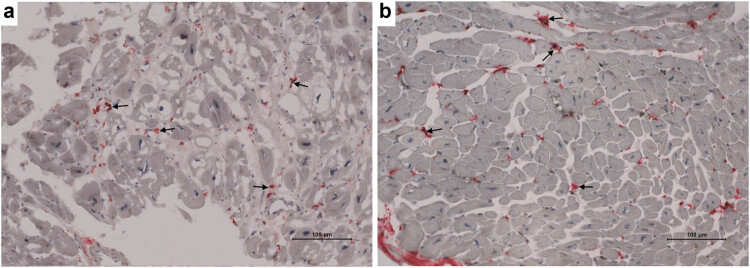
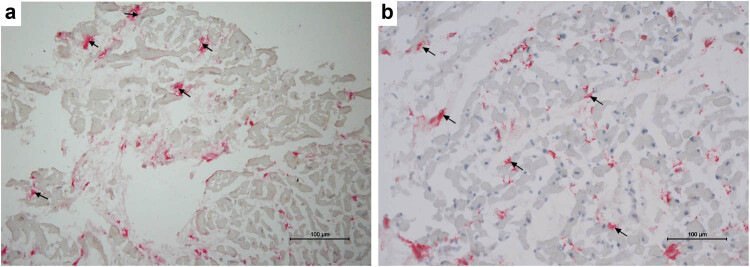
Results: Two expression patterns of CD68(+) macrophages were observed: those localized freely in the interstitial space only, and the cells attached to injured cardiomyocytes. As regards macrophages adhered to injured cardiomyocytes, 72 out of 181 (39.8%) patients presented these cells in the biopsy sections. Both the total number of CD68(+) macrophages and the number of CD68(+) cells directly adhered correlated negatively with cTnT in the serum of DCM patients (Spearman's rho, r = -0.45, P < 0.001 and r = -0.31, P = 0.009, respectively).
Conclusion: Macrophages attached to injured cardiomyocytes may reflect chronic (ongoing) inflammation in the myocardium.
期刊介绍:
Open Medicine is an open access journal that provides users with free, instant, and continued access to all content worldwide. The primary goal of the journal has always been a focus on maintaining the high quality of its published content. Its mission is to facilitate the exchange of ideas between medical science researchers from different countries. Papers connected to all fields of medicine and public health are welcomed. Open Medicine accepts submissions of research articles, reviews, case reports, letters to editor and book reviews.




 京公网安备 11010802042870号
京ICP备2023020795号-1
京公网安备 11010802042870号
京ICP备2023020795号-1

 分享
分享
 求助内容:
求助内容: 应助结果提醒方式:
 扫码关注我们
