Nivedya T., Rishav Das, Selva Kumar R., Shanooja Shanavas, Bhaskar Rangaswamy, Mujthaba Aatif A, Chandrapaul Mukherjee, Riona Roy, Jhimli Sengupta, Bipasha Bose, Ashok Kumar S. K. and Priyankar Paira
{"title":"基于苯并二吡啶吩嗪的Ru(II)/Ir(III)配合物对TNBC细胞暗、光毒性的辅助配体作用[j]","authors":"Nivedya T., Rishav Das, Selva Kumar R., Shanooja Shanavas, Bhaskar Rangaswamy, Mujthaba Aatif A, Chandrapaul Mukherjee, Riona Roy, Jhimli Sengupta, Bipasha Bose, Ashok Kumar S. K. and Priyankar Paira","doi":"10.1039/D4DT03456B","DOIUrl":null,"url":null,"abstract":"<p >In this study, we investigated the impact of ancillary ligands on the anticancer activity of benzodipyridophenazine-based Ru(<small>II</small>) and Ir(<small>III</small>) complexes (<strong>Ru1</strong>, <strong>Ru2</strong>, <strong>Ir1</strong>, and <strong>Ir2</strong>). These metal complexes displayed three significant absorption bands attributed to the ligand-centered (LC) transitions, ligand-to-ligand charge transfer (LLCT), and metal-to-ligand charge transfer (MLCT). Binding studies of biomolecules were performed with the complexes along with the ligand, and it was found that after binding with Ru(<small>II</small>)/Ir(<small>III</small>), the properties of the ligands were enhanced. <em>In vitro</em> screening revealed that complex [(η<small><sup>5</sup></small>-Cp*)IrIIICl(κ<small><sup>2</sup></small>-<em>N</em>,<em>N</em>-benzo[<em>i</em>]dipyrido[3,2-<em>a</em>:2′,3′-<em>c</em>])phenazine] (<strong>Ir1</strong>) exhibited the highest potency and selectivity (IC<small><sub>50</sub></small> ∼ 2.14 μM, PI > 13) under yellow light irradiation. The photo-toxicity trend was <strong>Ir1</strong> > <strong>Ru1</strong> > <strong>Ir2</strong> ≫ <strong>Ru2</strong>, which was found to be directly correlated with the singlet oxygen quantum yield (<small><sup>1</sup></small>O<small><sub>2</sub></small>). Chloro-substituted complexes (<strong>Ir1</strong> and <strong>Ru1</strong>) were effective for hypoxic tumor treatment, particularly <strong>Ir1</strong>, which could generate high amounts of reactive oxygen species (ROS, type I PDT) in cells under photo irradiation. The high value of fluorescence quantum yield (<em>f</em><small><sub>φ</sub></small> = 0.26) and significant emission at <em>λ</em> = 571 nm of <strong>Ir1</strong> were certainly useful for bio-imaging applications. Colocalisation and DCFDA studies of <strong>Ir1</strong> revealed that it can accumulate in the mitochondria, leading to depolarization of the mitochondrial membrane. These studies confirm that the complex <strong>Ir1</strong> is a promising candidate for TNBC treatment in hypoxic tumors, with efficacy comparable to the current PDT drug Photofrin.</p>","PeriodicalId":71,"journal":{"name":"Dalton Transactions","volume":" 12","pages":" 4888-4902"},"PeriodicalIF":3.3000,"publicationDate":"2025-02-11","publicationTypes":"Journal Article","fieldsOfStudy":null,"isOpenAccess":false,"openAccessPdf":"","citationCount":"0","resultStr":"{\"title\":\"The role of ancillary ligands on benzodipyridophenazine-based Ru(ii)/Ir(iii) complexes in dark and light toxicity against TNBC cells†‡\",\"authors\":\"Nivedya T., Rishav Das, Selva Kumar R., Shanooja Shanavas, Bhaskar Rangaswamy, Mujthaba Aatif A, Chandrapaul Mukherjee, Riona Roy, Jhimli Sengupta, Bipasha Bose, Ashok Kumar S. K. and Priyankar Paira\",\"doi\":\"10.1039/D4DT03456B\",\"DOIUrl\":null,\"url\":null,\"abstract\":\"<p >In this study, we investigated the impact of ancillary ligands on the anticancer activity of benzodipyridophenazine-based Ru(<small>II</small>) and Ir(<small>III</small>) complexes (<strong>Ru1</strong>, <strong>Ru2</strong>, <strong>Ir1</strong>, and <strong>Ir2</strong>). These metal complexes displayed three significant absorption bands attributed to the ligand-centered (LC) transitions, ligand-to-ligand charge transfer (LLCT), and metal-to-ligand charge transfer (MLCT). Binding studies of biomolecules were performed with the complexes along with the ligand, and it was found that after binding with Ru(<small>II</small>)/Ir(<small>III</small>), the properties of the ligands were enhanced. <em>In vitro</em> screening revealed that complex [(η<small><sup>5</sup></small>-Cp*)IrIIICl(κ<small><sup>2</sup></small>-<em>N</em>,<em>N</em>-benzo[<em>i</em>]dipyrido[3,2-<em>a</em>:2′,3′-<em>c</em>])phenazine] (<strong>Ir1</strong>) exhibited the highest potency and selectivity (IC<small><sub>50</sub></small> ∼ 2.14 μM, PI > 13) under yellow light irradiation. The photo-toxicity trend was <strong>Ir1</strong> > <strong>Ru1</strong> > <strong>Ir2</strong> ≫ <strong>Ru2</strong>, which was found to be directly correlated with the singlet oxygen quantum yield (<small><sup>1</sup></small>O<small><sub>2</sub></small>). Chloro-substituted complexes (<strong>Ir1</strong> and <strong>Ru1</strong>) were effective for hypoxic tumor treatment, particularly <strong>Ir1</strong>, which could generate high amounts of reactive oxygen species (ROS, type I PDT) in cells under photo irradiation. The high value of fluorescence quantum yield (<em>f</em><small><sub>φ</sub></small> = 0.26) and significant emission at <em>λ</em> = 571 nm of <strong>Ir1</strong> were certainly useful for bio-imaging applications. Colocalisation and DCFDA studies of <strong>Ir1</strong> revealed that it can accumulate in the mitochondria, leading to depolarization of the mitochondrial membrane. These studies confirm that the complex <strong>Ir1</strong> is a promising candidate for TNBC treatment in hypoxic tumors, with efficacy comparable to the current PDT drug Photofrin.</p>\",\"PeriodicalId\":71,\"journal\":{\"name\":\"Dalton Transactions\",\"volume\":\" 12\",\"pages\":\" 4888-4902\"},\"PeriodicalIF\":3.3000,\"publicationDate\":\"2025-02-11\",\"publicationTypes\":\"Journal Article\",\"fieldsOfStudy\":null,\"isOpenAccess\":false,\"openAccessPdf\":\"\",\"citationCount\":\"0\",\"resultStr\":null,\"platform\":\"Semanticscholar\",\"paperid\":null,\"PeriodicalName\":\"Dalton Transactions\",\"FirstCategoryId\":\"92\",\"ListUrlMain\":\"https://pubs.rsc.org/en/content/articlelanding/2025/dt/d4dt03456b\",\"RegionNum\":3,\"RegionCategory\":\"化学\",\"ArticlePicture\":[],\"TitleCN\":null,\"AbstractTextCN\":null,\"PMCID\":null,\"EPubDate\":\"\",\"PubModel\":\"\",\"JCR\":\"Q2\",\"JCRName\":\"CHEMISTRY, INORGANIC & NUCLEAR\",\"Score\":null,\"Total\":0}","platform":"Semanticscholar","paperid":null,"PeriodicalName":"Dalton Transactions","FirstCategoryId":"92","ListUrlMain":"https://pubs.rsc.org/en/content/articlelanding/2025/dt/d4dt03456b","RegionNum":3,"RegionCategory":"化学","ArticlePicture":[],"TitleCN":null,"AbstractTextCN":null,"PMCID":null,"EPubDate":"","PubModel":"","JCR":"Q2","JCRName":"CHEMISTRY, INORGANIC & NUCLEAR","Score":null,"Total":0}
引用次数: 0
摘要
本研究考察了基于苯并二吡啶吩嗪的Ru(II)和Ir(III)配合物(Ru1、Ru2、Ir1和Ir2)对其抗癌活性的影响。金属配合物由于配体内部电荷转移(ILCT)、配体到配体的电荷转移(LLCT)和金属到配体的电荷转移(MLCT)表现出三条显著的吸收带。配合物与配体一起与生物分子结合研究,发现与Ru(II)/Ir(III)结合后,配体的性能得到增强。体外筛选发现,配合物[(η5-Cp*)IrIIICl(κ2-N, n -苯并[i]双吡啶[3,2-a:2′,3′-c])吩那嗪(Ir1)的效价和选择性最高(IC50 ~ 2.14µM, PI >;13)在黄光照射下。光毒性趋势为Ir1>;Ru1>Ir2>>Ru2,发现其与单线态氧量子产率(1O2)的释放直接相关。氯取代配合物(Ir1, Ru1)对低氧肿瘤治疗有效,特别是Ir1可以在光照射下的细胞中产生大量的活性氧(ROS, I型PDT)。Ir1的高荧光量子产率(fφ = 0.26)和λ = 571 nm处的显著发射无疑有助于生物成像应用。Ir1的共定位研究和DCFDA研究表明,它可以在线粒体中积累,导致线粒体膜的去极化。这些研究证实,复合体Ir1是治疗缺氧肿瘤TNBC的一个有希望的候选者,其疗效与目前的PDT药物photofrin相当。
The role of ancillary ligands on benzodipyridophenazine-based Ru(ii)/Ir(iii) complexes in dark and light toxicity against TNBC cells†‡
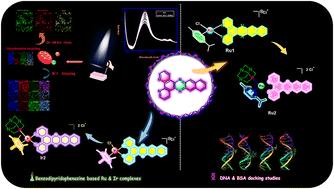
In this study, we investigated the impact of ancillary ligands on the anticancer activity of benzodipyridophenazine-based Ru(II) and Ir(III) complexes (Ru1, Ru2, Ir1, and Ir2). These metal complexes displayed three significant absorption bands attributed to the ligand-centered (LC) transitions, ligand-to-ligand charge transfer (LLCT), and metal-to-ligand charge transfer (MLCT). Binding studies of biomolecules were performed with the complexes along with the ligand, and it was found that after binding with Ru(II)/Ir(III), the properties of the ligands were enhanced. In vitro screening revealed that complex [(η5-Cp*)IrIIICl(κ2-N,N-benzo[i]dipyrido[3,2-a:2′,3′-c])phenazine] (Ir1) exhibited the highest potency and selectivity (IC50 ∼ 2.14 μM, PI > 13) under yellow light irradiation. The photo-toxicity trend was Ir1 > Ru1 > Ir2 ≫ Ru2, which was found to be directly correlated with the singlet oxygen quantum yield (1O2). Chloro-substituted complexes (Ir1 and Ru1) were effective for hypoxic tumor treatment, particularly Ir1, which could generate high amounts of reactive oxygen species (ROS, type I PDT) in cells under photo irradiation. The high value of fluorescence quantum yield (fφ = 0.26) and significant emission at λ = 571 nm of Ir1 were certainly useful for bio-imaging applications. Colocalisation and DCFDA studies of Ir1 revealed that it can accumulate in the mitochondria, leading to depolarization of the mitochondrial membrane. These studies confirm that the complex Ir1 is a promising candidate for TNBC treatment in hypoxic tumors, with efficacy comparable to the current PDT drug Photofrin.
期刊介绍:
Dalton Transactions is a journal for all areas of inorganic chemistry, which encompasses the organometallic, bioinorganic and materials chemistry of the elements, with applications including synthesis, catalysis, energy conversion/storage, electrical devices and medicine. Dalton Transactions welcomes high-quality, original submissions in all of these areas and more, where the advancement of knowledge in inorganic chemistry is significant.




 京公网安备 11010802042870号
京ICP备2023020795号-1
京公网安备 11010802042870号
京ICP备2023020795号-1

 分享
分享
 求助内容:
求助内容: 应助结果提醒方式:
 扫码关注我们
