Nicola Cotugno , Marco Sanna , Donato Amodio , Elena Morrocchi , Chiara Pighi , Chiara Medri , Giuseppe Rubens Pascucci , Veronica Santilli , Emma Concetta Manno , Paola Zangari , Chiara Rossetti , Nicole Colantoni , Giulio Olivieri , Elena Emili , Alessia Neri , Arianna Rotili , Paolo Rossi , Ofer Levy , Lorenza Putignani , Paolo Palma , Gioacchino Andrea Rotulo
{"title":"接种前免疫标记物预测易感人群对BNT162b2 mRNA疫苗的反应——CONVERS项目,来自儿科三级医院的报告","authors":"Nicola Cotugno , Marco Sanna , Donato Amodio , Elena Morrocchi , Chiara Pighi , Chiara Medri , Giuseppe Rubens Pascucci , Veronica Santilli , Emma Concetta Manno , Paola Zangari , Chiara Rossetti , Nicole Colantoni , Giulio Olivieri , Elena Emili , Alessia Neri , Arianna Rotili , Paolo Rossi , Ofer Levy , Lorenza Putignani , Paolo Palma , Gioacchino Andrea Rotulo","doi":"10.1016/j.vaccine.2025.126778","DOIUrl":null,"url":null,"abstract":"<div><h3>Background</h3><div>Whereas several studies have demonstrated the long-term immunogenicity of BNT162b2 vaccine in healthy adults, little evidence was provided in vulnerable populations (VPs) with generally low ability to respond to immunizations. We aimed to identify pre-vaccination immune phenotype and transcriptional signatures in B and T-cell subsets associated with immune response and long-term maintenance upon SARS-CoV-2 vaccination in VPs.</div></div><div><h3>Methods</h3><div>A cohort of VPs (<em>N</em> = 169) including solid organ transplant recipients (SOT; <em>N</em> = 35), Inflammatory Bowel Disease (<em>N</em> = 31), Down Syndrome (<em>N</em> = 42), people living with HIV (<em>N</em> = 36), primary immune deficiencies (<em>N</em> = 25) and healthy controls (<em>N</em> = 37) were enrolled in the CONVERS Study. SARS-CoV-2 Vaccine responsiveness was evaluated by SARS-CoV-2–specific Ab and SARS-CoV-2–specific CD4+ T cells in VPs naive to infection or vaccination. Based on the humoral response at T28, individuals were classified as Protected (P: anti-spike antibody [anti-S] titer ≥0.8) and Not-Protected (NP: anti-S titer <0.8). Peripheral blood mononuclear cells, after SARS-CoV-2 Prot-S peptides stimulation were sort-purified in four cell subsets and analyzed by multiplexed RT-PCR (Fluidigm, Biomark).</div></div><div><h3>Results</h3><div>SOT presented a significantly lower serological immunogenicity with 31 % of individuals being NP at T28 whereas only 1 out of the remaining 119 resulted Ab negative at T28. At T0, NP individuals showed a lower increase of Ag specific CD40L+ T cells and lower switched memory B cells compared to P patients. Gene-expression analysis revealed distinct signatures at baseline between P and NP individuals with 63 and 49 DEGs identified in two experimental conditions, respectively unstimulated and stimulated.</div></div><div><h3>Conclusions</h3><div>Pre-vaccination B and T-cell characteristics at both phenotypic and gene- expression level correlate with short- and long- term memory maintenance in VPs with lower immunogenicity upon BNT162b2 vaccine. Such signatures need to be validated in larger cohorts and may provide a predictive score to inform personalized and more effective vaccine interventions.</div></div>","PeriodicalId":23491,"journal":{"name":"Vaccine","volume":"49 ","pages":"Article 126778"},"PeriodicalIF":3.4000,"publicationDate":"2025-03-07","publicationTypes":"Journal Article","fieldsOfStudy":null,"isOpenAccess":false,"openAccessPdf":"","citationCount":"0","resultStr":"{\"title\":\"Pre-vaccination immune markers predict response to BNT162b2 mRNA vaccine in vulnerable groups – The CONVERS project, report from a pediatric tertiary hospital\",\"authors\":\"Nicola Cotugno , Marco Sanna , Donato Amodio , Elena Morrocchi , Chiara Pighi , Chiara Medri , Giuseppe Rubens Pascucci , Veronica Santilli , Emma Concetta Manno , Paola Zangari , Chiara Rossetti , Nicole Colantoni , Giulio Olivieri , Elena Emili , Alessia Neri , Arianna Rotili , Paolo Rossi , Ofer Levy , Lorenza Putignani , Paolo Palma , Gioacchino Andrea Rotulo\",\"doi\":\"10.1016/j.vaccine.2025.126778\",\"DOIUrl\":null,\"url\":null,\"abstract\":\"<div><h3>Background</h3><div>Whereas several studies have demonstrated the long-term immunogenicity of BNT162b2 vaccine in healthy adults, little evidence was provided in vulnerable populations (VPs) with generally low ability to respond to immunizations. We aimed to identify pre-vaccination immune phenotype and transcriptional signatures in B and T-cell subsets associated with immune response and long-term maintenance upon SARS-CoV-2 vaccination in VPs.</div></div><div><h3>Methods</h3><div>A cohort of VPs (<em>N</em> = 169) including solid organ transplant recipients (SOT; <em>N</em> = 35), Inflammatory Bowel Disease (<em>N</em> = 31), Down Syndrome (<em>N</em> = 42), people living with HIV (<em>N</em> = 36), primary immune deficiencies (<em>N</em> = 25) and healthy controls (<em>N</em> = 37) were enrolled in the CONVERS Study. SARS-CoV-2 Vaccine responsiveness was evaluated by SARS-CoV-2–specific Ab and SARS-CoV-2–specific CD4+ T cells in VPs naive to infection or vaccination. Based on the humoral response at T28, individuals were classified as Protected (P: anti-spike antibody [anti-S] titer ≥0.8) and Not-Protected (NP: anti-S titer <0.8). Peripheral blood mononuclear cells, after SARS-CoV-2 Prot-S peptides stimulation were sort-purified in four cell subsets and analyzed by multiplexed RT-PCR (Fluidigm, Biomark).</div></div><div><h3>Results</h3><div>SOT presented a significantly lower serological immunogenicity with 31 % of individuals being NP at T28 whereas only 1 out of the remaining 119 resulted Ab negative at T28. At T0, NP individuals showed a lower increase of Ag specific CD40L+ T cells and lower switched memory B cells compared to P patients. Gene-expression analysis revealed distinct signatures at baseline between P and NP individuals with 63 and 49 DEGs identified in two experimental conditions, respectively unstimulated and stimulated.</div></div><div><h3>Conclusions</h3><div>Pre-vaccination B and T-cell characteristics at both phenotypic and gene- expression level correlate with short- and long- term memory maintenance in VPs with lower immunogenicity upon BNT162b2 vaccine. Such signatures need to be validated in larger cohorts and may provide a predictive score to inform personalized and more effective vaccine interventions.</div></div>\",\"PeriodicalId\":23491,\"journal\":{\"name\":\"Vaccine\",\"volume\":\"49 \",\"pages\":\"Article 126778\"},\"PeriodicalIF\":3.4000,\"publicationDate\":\"2025-03-07\",\"publicationTypes\":\"Journal Article\",\"fieldsOfStudy\":null,\"isOpenAccess\":false,\"openAccessPdf\":\"\",\"citationCount\":\"0\",\"resultStr\":null,\"platform\":\"Semanticscholar\",\"paperid\":null,\"PeriodicalName\":\"Vaccine\",\"FirstCategoryId\":\"3\",\"ListUrlMain\":\"https://www.sciencedirect.com/science/article/pii/S0264410X25000751\",\"RegionNum\":3,\"RegionCategory\":\"医学\",\"ArticlePicture\":[],\"TitleCN\":null,\"AbstractTextCN\":null,\"PMCID\":null,\"EPubDate\":\"2025/2/12 0:00:00\",\"PubModel\":\"Epub\",\"JCR\":\"Q2\",\"JCRName\":\"IMMUNOLOGY\",\"Score\":null,\"Total\":0}","platform":"Semanticscholar","paperid":null,"PeriodicalName":"Vaccine","FirstCategoryId":"3","ListUrlMain":"https://www.sciencedirect.com/science/article/pii/S0264410X25000751","RegionNum":3,"RegionCategory":"医学","ArticlePicture":[],"TitleCN":null,"AbstractTextCN":null,"PMCID":null,"EPubDate":"2025/2/12 0:00:00","PubModel":"Epub","JCR":"Q2","JCRName":"IMMUNOLOGY","Score":null,"Total":0}
Pre-vaccination immune markers predict response to BNT162b2 mRNA vaccine in vulnerable groups – The CONVERS project, report from a pediatric tertiary hospital
Background
Whereas several studies have demonstrated the long-term immunogenicity of BNT162b2 vaccine in healthy adults, little evidence was provided in vulnerable populations (VPs) with generally low ability to respond to immunizations. We aimed to identify pre-vaccination immune phenotype and transcriptional signatures in B and T-cell subsets associated with immune response and long-term maintenance upon SARS-CoV-2 vaccination in VPs.
Methods
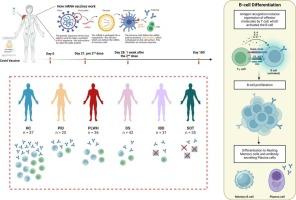
A cohort of VPs (N = 169) including solid organ transplant recipients (SOT; N = 35), Inflammatory Bowel Disease (N = 31), Down Syndrome (N = 42), people living with HIV (N = 36), primary immune deficiencies (N = 25) and healthy controls (N = 37) were enrolled in the CONVERS Study. SARS-CoV-2 Vaccine responsiveness was evaluated by SARS-CoV-2–specific Ab and SARS-CoV-2–specific CD4+ T cells in VPs naive to infection or vaccination. Based on the humoral response at T28, individuals were classified as Protected (P: anti-spike antibody [anti-S] titer ≥0.8) and Not-Protected (NP: anti-S titer <0.8). Peripheral blood mononuclear cells, after SARS-CoV-2 Prot-S peptides stimulation were sort-purified in four cell subsets and analyzed by multiplexed RT-PCR (Fluidigm, Biomark).
Results
SOT presented a significantly lower serological immunogenicity with 31 % of individuals being NP at T28 whereas only 1 out of the remaining 119 resulted Ab negative at T28. At T0, NP individuals showed a lower increase of Ag specific CD40L+ T cells and lower switched memory B cells compared to P patients. Gene-expression analysis revealed distinct signatures at baseline between P and NP individuals with 63 and 49 DEGs identified in two experimental conditions, respectively unstimulated and stimulated.
Conclusions
Pre-vaccination B and T-cell characteristics at both phenotypic and gene- expression level correlate with short- and long- term memory maintenance in VPs with lower immunogenicity upon BNT162b2 vaccine. Such signatures need to be validated in larger cohorts and may provide a predictive score to inform personalized and more effective vaccine interventions.
期刊介绍:
Vaccine is unique in publishing the highest quality science across all disciplines relevant to the field of vaccinology - all original article submissions across basic and clinical research, vaccine manufacturing, history, public policy, behavioral science and ethics, social sciences, safety, and many other related areas are welcomed. The submission categories as given in the Guide for Authors indicate where we receive the most papers. Papers outside these major areas are also welcome and authors are encouraged to contact us with specific questions.




 京公网安备 11010802042870号
京ICP备2023020795号-1
京公网安备 11010802042870号
京ICP备2023020795号-1

 分享
分享
 求助内容:
求助内容: 应助结果提醒方式:
 扫码关注我们
