{"title":"多组学分析揭示了鳜鱼对盐度波动的关键调控防御途径。","authors":"Yang Zou, Xinwei Xu","doi":"10.1186/s12870-025-06189-3","DOIUrl":null,"url":null,"abstract":"<p><p>Seagrasses maintain cellular water balance by regulating ion concentrations and accumulating organic osmolytes, enabling them to survive in the fluctuating salinity of intertidal environments. However, the molecular mechanisms underlying seagrass responses to salinity changes remain relatively understudied. To address this, we conducted a multi-omics analysis of Ruppia sinensis under low, moderate, and high salinity conditions to uncover the mechanisms behind its adaptation to salinity fluctuations. Our research revealed that the transition from low to high salinity significantly altered the physiological characteristics of R. sinensis. Simultaneously, the species enhanced its ability to cope with and adapt to salinity fluctuations by increasing antioxidant enzyme activity. Integration of multi-omics data further indicated that under high salinity conditions, R. sinensis synthesizes more flavonoids to bolster its adaptive capacity. Additionally, the phenylpropanoid metabolic pathway appears to play a crucial role in the response of R. sinensis to changes in water salinity.</p>","PeriodicalId":9198,"journal":{"name":"BMC Plant Biology","volume":"25 1","pages":"174"},"PeriodicalIF":5.6000,"publicationDate":"2025-02-10","publicationTypes":"Journal Article","fieldsOfStudy":null,"isOpenAccess":false,"openAccessPdf":"https://www.ncbi.nlm.nih.gov/pmc/articles/PMC11809035/pdf/","citationCount":"0","resultStr":"{\"title\":\"Multi-omics analysis reveals key regulatory defense pathways in Ruppia sinensis in response to water salinity fluctuations.\",\"authors\":\"Yang Zou, Xinwei Xu\",\"doi\":\"10.1186/s12870-025-06189-3\",\"DOIUrl\":null,\"url\":null,\"abstract\":\"<p><p>Seagrasses maintain cellular water balance by regulating ion concentrations and accumulating organic osmolytes, enabling them to survive in the fluctuating salinity of intertidal environments. However, the molecular mechanisms underlying seagrass responses to salinity changes remain relatively understudied. To address this, we conducted a multi-omics analysis of Ruppia sinensis under low, moderate, and high salinity conditions to uncover the mechanisms behind its adaptation to salinity fluctuations. Our research revealed that the transition from low to high salinity significantly altered the physiological characteristics of R. sinensis. Simultaneously, the species enhanced its ability to cope with and adapt to salinity fluctuations by increasing antioxidant enzyme activity. Integration of multi-omics data further indicated that under high salinity conditions, R. sinensis synthesizes more flavonoids to bolster its adaptive capacity. Additionally, the phenylpropanoid metabolic pathway appears to play a crucial role in the response of R. sinensis to changes in water salinity.</p>\",\"PeriodicalId\":9198,\"journal\":{\"name\":\"BMC Plant Biology\",\"volume\":\"25 1\",\"pages\":\"174\"},\"PeriodicalIF\":5.6000,\"publicationDate\":\"2025-02-10\",\"publicationTypes\":\"Journal Article\",\"fieldsOfStudy\":null,\"isOpenAccess\":false,\"openAccessPdf\":\"https://www.ncbi.nlm.nih.gov/pmc/articles/PMC11809035/pdf/\",\"citationCount\":\"0\",\"resultStr\":null,\"platform\":\"Semanticscholar\",\"paperid\":null,\"PeriodicalName\":\"BMC Plant Biology\",\"FirstCategoryId\":\"99\",\"ListUrlMain\":\"https://doi.org/10.1186/s12870-025-06189-3\",\"RegionNum\":2,\"RegionCategory\":\"生物学\",\"ArticlePicture\":[],\"TitleCN\":null,\"AbstractTextCN\":null,\"PMCID\":null,\"EPubDate\":\"\",\"PubModel\":\"\",\"JCR\":\"Q1\",\"JCRName\":\"PLANT SCIENCES\",\"Score\":null,\"Total\":0}","platform":"Semanticscholar","paperid":null,"PeriodicalName":"BMC Plant Biology","FirstCategoryId":"99","ListUrlMain":"https://doi.org/10.1186/s12870-025-06189-3","RegionNum":2,"RegionCategory":"生物学","ArticlePicture":[],"TitleCN":null,"AbstractTextCN":null,"PMCID":null,"EPubDate":"","PubModel":"","JCR":"Q1","JCRName":"PLANT SCIENCES","Score":null,"Total":0}
Multi-omics analysis reveals key regulatory defense pathways in Ruppia sinensis in response to water salinity fluctuations.
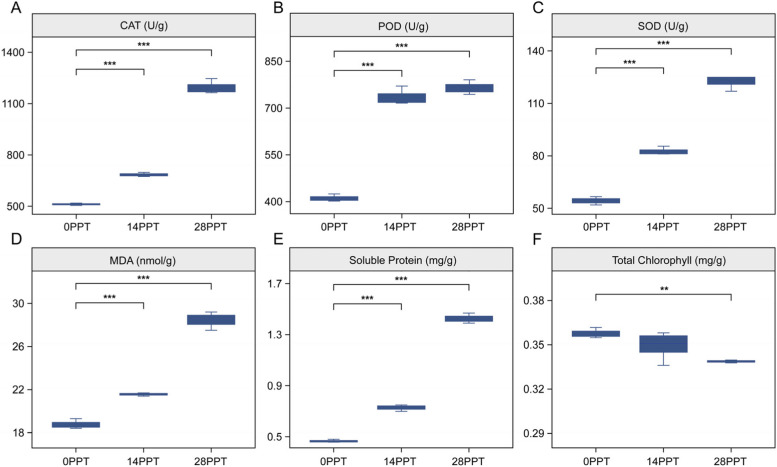
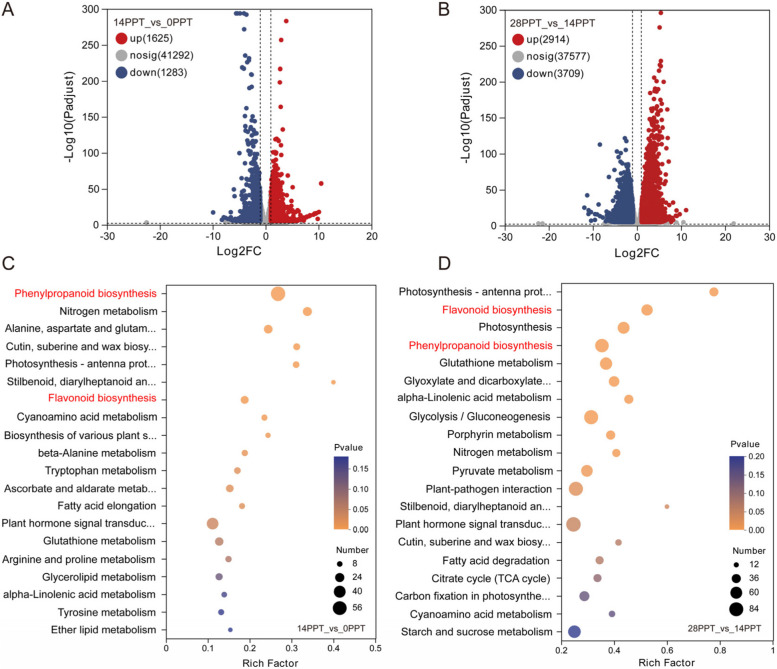
Seagrasses maintain cellular water balance by regulating ion concentrations and accumulating organic osmolytes, enabling them to survive in the fluctuating salinity of intertidal environments. However, the molecular mechanisms underlying seagrass responses to salinity changes remain relatively understudied. To address this, we conducted a multi-omics analysis of Ruppia sinensis under low, moderate, and high salinity conditions to uncover the mechanisms behind its adaptation to salinity fluctuations. Our research revealed that the transition from low to high salinity significantly altered the physiological characteristics of R. sinensis. Simultaneously, the species enhanced its ability to cope with and adapt to salinity fluctuations by increasing antioxidant enzyme activity. Integration of multi-omics data further indicated that under high salinity conditions, R. sinensis synthesizes more flavonoids to bolster its adaptive capacity. Additionally, the phenylpropanoid metabolic pathway appears to play a crucial role in the response of R. sinensis to changes in water salinity.
期刊介绍:
BMC Plant Biology is an open access, peer-reviewed journal that considers articles on all aspects of plant biology, including molecular, cellular, tissue, organ and whole organism research.





 京公网安备 11010802042870号
京ICP备2023020795号-1
京公网安备 11010802042870号
京ICP备2023020795号-1

 分享
分享
 求助内容:
求助内容: 应助结果提醒方式:
 扫码关注我们
