{"title":"聚琥珀酸丁二烯能在海水中降解吗?","authors":"Yuya Tachibana , Yuta Sawanaka , Toyokazu Tsutsuba , Miwa Suzuki , Manami Hiraishi , Momoka Kudo , Junko Torii , Ken-ichi Kasuya","doi":"10.1016/j.chemosphere.2025.144203","DOIUrl":null,"url":null,"abstract":"<div><div>Poly(butylene succinate) (PBSu) is a promising biodegradable polymer in natural environments. However, its biodegradability in marine environments is debatable. It is well known that the biodegradability of biodegradable polymers depends on their molecular weight. In this study, we explored the effect of the molecular weight of PBSu on its biodegradability through biochemical oxygen demand (BOD) testing in seawater. PBSu samples with different molecular weights were prepared by size-exclusion chromatography (SEC). After biodegradation testing, we extracted the residual organic matter from seawater to evaluate changes in the molecular weight by SEC, revealing that PBSu was enzymatically hydrolysed in seawater. Low-molecular-weight (LMW)-PBSu exhibited higher biodegradability in seawater while high-molecular-weight PBSu underwent hydrolysis over an extended period. Moreover, we evaluated the changes in microbial flora during biodegradation testing using amplicon sequencing of the culture media, which revealed that the microbial flora changed in response to the presence of PBSu. These findings suggest that PBSu is a potential biodegradable polymer at a sufficiently low molecular weight or when the degradation period is sufficiently long.</div></div>","PeriodicalId":276,"journal":{"name":"Chemosphere","volume":"374 ","pages":"Article 144203"},"PeriodicalIF":8.1000,"publicationDate":"2025-04-01","publicationTypes":"Journal Article","fieldsOfStudy":null,"isOpenAccess":false,"openAccessPdf":"","citationCount":"0","resultStr":"{\"title\":\"Can poly(butylene succinate) degrade in seawater?\",\"authors\":\"Yuya Tachibana , Yuta Sawanaka , Toyokazu Tsutsuba , Miwa Suzuki , Manami Hiraishi , Momoka Kudo , Junko Torii , Ken-ichi Kasuya\",\"doi\":\"10.1016/j.chemosphere.2025.144203\",\"DOIUrl\":null,\"url\":null,\"abstract\":\"<div><div>Poly(butylene succinate) (PBSu) is a promising biodegradable polymer in natural environments. However, its biodegradability in marine environments is debatable. It is well known that the biodegradability of biodegradable polymers depends on their molecular weight. In this study, we explored the effect of the molecular weight of PBSu on its biodegradability through biochemical oxygen demand (BOD) testing in seawater. PBSu samples with different molecular weights were prepared by size-exclusion chromatography (SEC). After biodegradation testing, we extracted the residual organic matter from seawater to evaluate changes in the molecular weight by SEC, revealing that PBSu was enzymatically hydrolysed in seawater. Low-molecular-weight (LMW)-PBSu exhibited higher biodegradability in seawater while high-molecular-weight PBSu underwent hydrolysis over an extended period. Moreover, we evaluated the changes in microbial flora during biodegradation testing using amplicon sequencing of the culture media, which revealed that the microbial flora changed in response to the presence of PBSu. These findings suggest that PBSu is a potential biodegradable polymer at a sufficiently low molecular weight or when the degradation period is sufficiently long.</div></div>\",\"PeriodicalId\":276,\"journal\":{\"name\":\"Chemosphere\",\"volume\":\"374 \",\"pages\":\"Article 144203\"},\"PeriodicalIF\":8.1000,\"publicationDate\":\"2025-04-01\",\"publicationTypes\":\"Journal Article\",\"fieldsOfStudy\":null,\"isOpenAccess\":false,\"openAccessPdf\":\"\",\"citationCount\":\"0\",\"resultStr\":null,\"platform\":\"Semanticscholar\",\"paperid\":null,\"PeriodicalName\":\"Chemosphere\",\"FirstCategoryId\":\"93\",\"ListUrlMain\":\"https://www.sciencedirect.com/science/article/pii/S0045653525001456\",\"RegionNum\":2,\"RegionCategory\":\"环境科学与生态学\",\"ArticlePicture\":[],\"TitleCN\":null,\"AbstractTextCN\":null,\"PMCID\":null,\"EPubDate\":\"2025/2/12 0:00:00\",\"PubModel\":\"Epub\",\"JCR\":\"Q1\",\"JCRName\":\"ENVIRONMENTAL SCIENCES\",\"Score\":null,\"Total\":0}","platform":"Semanticscholar","paperid":null,"PeriodicalName":"Chemosphere","FirstCategoryId":"93","ListUrlMain":"https://www.sciencedirect.com/science/article/pii/S0045653525001456","RegionNum":2,"RegionCategory":"环境科学与生态学","ArticlePicture":[],"TitleCN":null,"AbstractTextCN":null,"PMCID":null,"EPubDate":"2025/2/12 0:00:00","PubModel":"Epub","JCR":"Q1","JCRName":"ENVIRONMENTAL SCIENCES","Score":null,"Total":0}
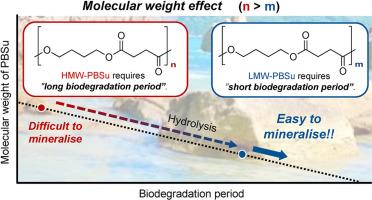
Poly(butylene succinate) (PBSu) is a promising biodegradable polymer in natural environments. However, its biodegradability in marine environments is debatable. It is well known that the biodegradability of biodegradable polymers depends on their molecular weight. In this study, we explored the effect of the molecular weight of PBSu on its biodegradability through biochemical oxygen demand (BOD) testing in seawater. PBSu samples with different molecular weights were prepared by size-exclusion chromatography (SEC). After biodegradation testing, we extracted the residual organic matter from seawater to evaluate changes in the molecular weight by SEC, revealing that PBSu was enzymatically hydrolysed in seawater. Low-molecular-weight (LMW)-PBSu exhibited higher biodegradability in seawater while high-molecular-weight PBSu underwent hydrolysis over an extended period. Moreover, we evaluated the changes in microbial flora during biodegradation testing using amplicon sequencing of the culture media, which revealed that the microbial flora changed in response to the presence of PBSu. These findings suggest that PBSu is a potential biodegradable polymer at a sufficiently low molecular weight or when the degradation period is sufficiently long.
期刊介绍:
Chemosphere, being an international multidisciplinary journal, is dedicated to publishing original communications and review articles on chemicals in the environment. The scope covers a wide range of topics, including the identification, quantification, behavior, fate, toxicology, treatment, and remediation of chemicals in the bio-, hydro-, litho-, and atmosphere, ensuring the broad dissemination of research in this field.




 京公网安备 11010802042870号
京ICP备2023020795号-1
京公网安备 11010802042870号
京ICP备2023020795号-1

 分享
分享
 求助内容:
求助内容: 应助结果提醒方式:
 扫码关注我们
