Jenny Spahlholz, Eva Baumann, Sven Speerforck, Christian Sander, Matthias C Angermeyer, Georg Schomerus
{"title":"对精神疾病患者的污名化——与特定环境的世界观有关?这是德国一项人口调查的结果。","authors":"Jenny Spahlholz, Eva Baumann, Sven Speerforck, Christian Sander, Matthias C Angermeyer, Georg Schomerus","doi":"10.3389/fpsyt.2024.1501194","DOIUrl":null,"url":null,"abstract":"<p><strong>Background: </strong>Despite numerous awareness campaigns and anti-stigma programs, people with mental illness, particularly schizophrenia, are still stigmatized. Although the society is both cause and solution, societal-level conditions, such as society's customs and policies that legitimize and perpetuate stigmatization is often neglected. We used a milieu approach to investigate how shared social, cultural and political orientations and expectations are associated with manifestations of the mental-illness related stigma.</p><p><strong>Methods: </strong>We analyzed cross-sectional data from 3,042 adults aged ≥18 years from a national vignette-based representative survey on the stigma of mental illness in Germany from 2020. For milieu classification, we used an established population segmentation tool based on values and political preferences. Two stigma measures associated with the stereotype and status loss/discrimination components were assessed (i.e., the Social Distance Scale and a list of well-known stereotypes associated with depression or schizophrenia). Descriptive analyses and one-way ANOVAs with <i>post-hoc</i> pairwise contrasts between milieu groups were used to evaluate agreement on stereotypes and the desire for social distance towards people with depression or schizophrenia.</p><p><strong>Results: </strong>Negative stereotypes about people with a depression (i.e., beliefs about being weak-willed) and schizophrenia (i.e., beliefs about dangerousness) tended to be more common in milieu groups leaning more toward the authoritarian pole. Milieu groups with a more liberal attitude on the socio-cultural dimension further expressed a lower desire for social distance towards people with depression (p<0.001). However, the extent of differentiation between the milieu groups was less pronounced regarding the desire for social distance towards people with schizophrenia than towards people with depression.</p><p><strong>Conclusion: </strong>Our findings suggest that socio-cultural and socioeconomic dimensions of the society can be used for both describing heterogeneous societies and illuminating the underlying social structure of stigma. In addition to making blind spots more visible (i.e., schizophrenia), milieu-specific knowledge could be useful in deciding which intervention components are most appropriate for which milieu groups and how to apply them successfully.</p>","PeriodicalId":12605,"journal":{"name":"Frontiers in Psychiatry","volume":"15 ","pages":"1501194"},"PeriodicalIF":3.2000,"publicationDate":"2025-01-28","publicationTypes":"Journal Article","fieldsOfStudy":null,"isOpenAccess":false,"openAccessPdf":"https://www.ncbi.nlm.nih.gov/pmc/articles/PMC11810944/pdf/","citationCount":"0","resultStr":"{\"title\":\"Stigmatization of people with mental illness - a matter of milieu-specific worldviews? Results from a population-based survey in Germany.\",\"authors\":\"Jenny Spahlholz, Eva Baumann, Sven Speerforck, Christian Sander, Matthias C Angermeyer, Georg Schomerus\",\"doi\":\"10.3389/fpsyt.2024.1501194\",\"DOIUrl\":null,\"url\":null,\"abstract\":\"<p><strong>Background: </strong>Despite numerous awareness campaigns and anti-stigma programs, people with mental illness, particularly schizophrenia, are still stigmatized. Although the society is both cause and solution, societal-level conditions, such as society's customs and policies that legitimize and perpetuate stigmatization is often neglected. We used a milieu approach to investigate how shared social, cultural and political orientations and expectations are associated with manifestations of the mental-illness related stigma.</p><p><strong>Methods: </strong>We analyzed cross-sectional data from 3,042 adults aged ≥18 years from a national vignette-based representative survey on the stigma of mental illness in Germany from 2020. For milieu classification, we used an established population segmentation tool based on values and political preferences. Two stigma measures associated with the stereotype and status loss/discrimination components were assessed (i.e., the Social Distance Scale and a list of well-known stereotypes associated with depression or schizophrenia). Descriptive analyses and one-way ANOVAs with <i>post-hoc</i> pairwise contrasts between milieu groups were used to evaluate agreement on stereotypes and the desire for social distance towards people with depression or schizophrenia.</p><p><strong>Results: </strong>Negative stereotypes about people with a depression (i.e., beliefs about being weak-willed) and schizophrenia (i.e., beliefs about dangerousness) tended to be more common in milieu groups leaning more toward the authoritarian pole. Milieu groups with a more liberal attitude on the socio-cultural dimension further expressed a lower desire for social distance towards people with depression (p<0.001). However, the extent of differentiation between the milieu groups was less pronounced regarding the desire for social distance towards people with schizophrenia than towards people with depression.</p><p><strong>Conclusion: </strong>Our findings suggest that socio-cultural and socioeconomic dimensions of the society can be used for both describing heterogeneous societies and illuminating the underlying social structure of stigma. In addition to making blind spots more visible (i.e., schizophrenia), milieu-specific knowledge could be useful in deciding which intervention components are most appropriate for which milieu groups and how to apply them successfully.</p>\",\"PeriodicalId\":12605,\"journal\":{\"name\":\"Frontiers in Psychiatry\",\"volume\":\"15 \",\"pages\":\"1501194\"},\"PeriodicalIF\":3.2000,\"publicationDate\":\"2025-01-28\",\"publicationTypes\":\"Journal Article\",\"fieldsOfStudy\":null,\"isOpenAccess\":false,\"openAccessPdf\":\"https://www.ncbi.nlm.nih.gov/pmc/articles/PMC11810944/pdf/\",\"citationCount\":\"0\",\"resultStr\":null,\"platform\":\"Semanticscholar\",\"paperid\":null,\"PeriodicalName\":\"Frontiers in Psychiatry\",\"FirstCategoryId\":\"3\",\"ListUrlMain\":\"https://doi.org/10.3389/fpsyt.2024.1501194\",\"RegionNum\":3,\"RegionCategory\":\"医学\",\"ArticlePicture\":[],\"TitleCN\":null,\"AbstractTextCN\":null,\"PMCID\":null,\"EPubDate\":\"2024/1/1 0:00:00\",\"PubModel\":\"eCollection\",\"JCR\":\"Q2\",\"JCRName\":\"PSYCHIATRY\",\"Score\":null,\"Total\":0}","platform":"Semanticscholar","paperid":null,"PeriodicalName":"Frontiers in Psychiatry","FirstCategoryId":"3","ListUrlMain":"https://doi.org/10.3389/fpsyt.2024.1501194","RegionNum":3,"RegionCategory":"医学","ArticlePicture":[],"TitleCN":null,"AbstractTextCN":null,"PMCID":null,"EPubDate":"2024/1/1 0:00:00","PubModel":"eCollection","JCR":"Q2","JCRName":"PSYCHIATRY","Score":null,"Total":0}
Stigmatization of people with mental illness - a matter of milieu-specific worldviews? Results from a population-based survey in Germany.
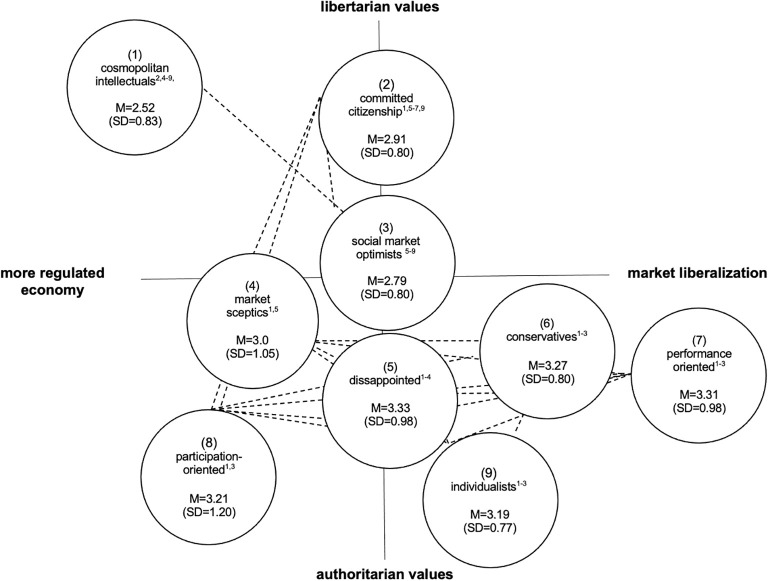
Background: Despite numerous awareness campaigns and anti-stigma programs, people with mental illness, particularly schizophrenia, are still stigmatized. Although the society is both cause and solution, societal-level conditions, such as society's customs and policies that legitimize and perpetuate stigmatization is often neglected. We used a milieu approach to investigate how shared social, cultural and political orientations and expectations are associated with manifestations of the mental-illness related stigma.
Methods: We analyzed cross-sectional data from 3,042 adults aged ≥18 years from a national vignette-based representative survey on the stigma of mental illness in Germany from 2020. For milieu classification, we used an established population segmentation tool based on values and political preferences. Two stigma measures associated with the stereotype and status loss/discrimination components were assessed (i.e., the Social Distance Scale and a list of well-known stereotypes associated with depression or schizophrenia). Descriptive analyses and one-way ANOVAs with post-hoc pairwise contrasts between milieu groups were used to evaluate agreement on stereotypes and the desire for social distance towards people with depression or schizophrenia.
Results: Negative stereotypes about people with a depression (i.e., beliefs about being weak-willed) and schizophrenia (i.e., beliefs about dangerousness) tended to be more common in milieu groups leaning more toward the authoritarian pole. Milieu groups with a more liberal attitude on the socio-cultural dimension further expressed a lower desire for social distance towards people with depression (p<0.001). However, the extent of differentiation between the milieu groups was less pronounced regarding the desire for social distance towards people with schizophrenia than towards people with depression.
Conclusion: Our findings suggest that socio-cultural and socioeconomic dimensions of the society can be used for both describing heterogeneous societies and illuminating the underlying social structure of stigma. In addition to making blind spots more visible (i.e., schizophrenia), milieu-specific knowledge could be useful in deciding which intervention components are most appropriate for which milieu groups and how to apply them successfully.
期刊介绍:
Frontiers in Psychiatry publishes rigorously peer-reviewed research across a wide spectrum of translational, basic and clinical research. Field Chief Editor Stefan Borgwardt at the University of Basel is supported by an outstanding Editorial Board of international researchers. This multidisciplinary open-access journal is at the forefront of disseminating and communicating scientific knowledge and impactful discoveries to researchers, academics, clinicians and the public worldwide.
The journal''s mission is to use translational approaches to improve therapeutic options for mental illness and consequently to improve patient treatment outcomes.






 京公网安备 11010802042870号
京ICP备2023020795号-1
京公网安备 11010802042870号
京ICP备2023020795号-1

 分享
分享
 求助内容:
求助内容: 应助结果提醒方式:
 扫码关注我们
