{"title":"通过人工智能增强纳米光子应用:途径、进展和前景","authors":"Wei Chen, Shuya Yang, Yiming Yan, Yuan Gao, Jinfeng Zhu, Zhaogang Dong","doi":"10.1515/nanoph-2024-0723","DOIUrl":null,"url":null,"abstract":"Empowering nanophotonic devices via artificial intelligence (AI) has revolutionized both scientific research methodologies and engineering practices, addressing critical challenges in the design and optimization of complex systems. Traditional methods for developing nanophotonic devices are often constrained by the high dimensionality of design spaces and computational inefficiencies. This review highlights how AI-driven techniques provide transformative solutions by enabling the efficient exploration of vast design spaces, optimizing intricate parameter systems, and predicting the performance of advanced nanophotonic materials and devices with high accuracy. By bridging the gap between computational complexity and practical implementation, AI accelerates the discovery of novel nanophotonic functionalities. Furthermore, we delve into emerging domains, such as diffractive neural networks and quantum machine learning, emphasizing their potential to exploit photonic properties for innovative strategies. The review also examines AI’s applications in advanced engineering areas, e.g., optical image recognition, showcasing its role in addressing complex challenges in device integration. By facilitating the development of highly efficient, compact optical devices, these AI-powered methodologies are paving the way for next-generation nanophotonic systems with enhanced functionalities and broader applications.","PeriodicalId":19027,"journal":{"name":"Nanophotonics","volume":"19 1","pages":""},"PeriodicalIF":6.6000,"publicationDate":"2025-02-13","publicationTypes":"Journal Article","fieldsOfStudy":null,"isOpenAccess":false,"openAccessPdf":"","citationCount":"0","resultStr":"{\"title\":\"Empowering nanophotonic applications via artificial intelligence: pathways, progress, and prospects\",\"authors\":\"Wei Chen, Shuya Yang, Yiming Yan, Yuan Gao, Jinfeng Zhu, Zhaogang Dong\",\"doi\":\"10.1515/nanoph-2024-0723\",\"DOIUrl\":null,\"url\":null,\"abstract\":\"Empowering nanophotonic devices via artificial intelligence (AI) has revolutionized both scientific research methodologies and engineering practices, addressing critical challenges in the design and optimization of complex systems. Traditional methods for developing nanophotonic devices are often constrained by the high dimensionality of design spaces and computational inefficiencies. This review highlights how AI-driven techniques provide transformative solutions by enabling the efficient exploration of vast design spaces, optimizing intricate parameter systems, and predicting the performance of advanced nanophotonic materials and devices with high accuracy. By bridging the gap between computational complexity and practical implementation, AI accelerates the discovery of novel nanophotonic functionalities. Furthermore, we delve into emerging domains, such as diffractive neural networks and quantum machine learning, emphasizing their potential to exploit photonic properties for innovative strategies. The review also examines AI’s applications in advanced engineering areas, e.g., optical image recognition, showcasing its role in addressing complex challenges in device integration. By facilitating the development of highly efficient, compact optical devices, these AI-powered methodologies are paving the way for next-generation nanophotonic systems with enhanced functionalities and broader applications.\",\"PeriodicalId\":19027,\"journal\":{\"name\":\"Nanophotonics\",\"volume\":\"19 1\",\"pages\":\"\"},\"PeriodicalIF\":6.6000,\"publicationDate\":\"2025-02-13\",\"publicationTypes\":\"Journal Article\",\"fieldsOfStudy\":null,\"isOpenAccess\":false,\"openAccessPdf\":\"\",\"citationCount\":\"0\",\"resultStr\":null,\"platform\":\"Semanticscholar\",\"paperid\":null,\"PeriodicalName\":\"Nanophotonics\",\"FirstCategoryId\":\"101\",\"ListUrlMain\":\"https://doi.org/10.1515/nanoph-2024-0723\",\"RegionNum\":2,\"RegionCategory\":\"物理与天体物理\",\"ArticlePicture\":[],\"TitleCN\":null,\"AbstractTextCN\":null,\"PMCID\":null,\"EPubDate\":\"\",\"PubModel\":\"\",\"JCR\":\"Q1\",\"JCRName\":\"MATERIALS SCIENCE, MULTIDISCIPLINARY\",\"Score\":null,\"Total\":0}","platform":"Semanticscholar","paperid":null,"PeriodicalName":"Nanophotonics","FirstCategoryId":"101","ListUrlMain":"https://doi.org/10.1515/nanoph-2024-0723","RegionNum":2,"RegionCategory":"物理与天体物理","ArticlePicture":[],"TitleCN":null,"AbstractTextCN":null,"PMCID":null,"EPubDate":"","PubModel":"","JCR":"Q1","JCRName":"MATERIALS SCIENCE, MULTIDISCIPLINARY","Score":null,"Total":0}
Empowering nanophotonic applications via artificial intelligence: pathways, progress, and prospects
Empowering nanophotonic devices via artificial intelligence (AI) has revolutionized both scientific research methodologies and engineering practices, addressing critical challenges in the design and optimization of complex systems. Traditional methods for developing nanophotonic devices are often constrained by the high dimensionality of design spaces and computational inefficiencies. This review highlights how AI-driven techniques provide transformative solutions by enabling the efficient exploration of vast design spaces, optimizing intricate parameter systems, and predicting the performance of advanced nanophotonic materials and devices with high accuracy. By bridging the gap between computational complexity and practical implementation, AI accelerates the discovery of novel nanophotonic functionalities. Furthermore, we delve into emerging domains, such as diffractive neural networks and quantum machine learning, emphasizing their potential to exploit photonic properties for innovative strategies. The review also examines AI’s applications in advanced engineering areas, e.g., optical image recognition, showcasing its role in addressing complex challenges in device integration. By facilitating the development of highly efficient, compact optical devices, these AI-powered methodologies are paving the way for next-generation nanophotonic systems with enhanced functionalities and broader applications.
期刊介绍:
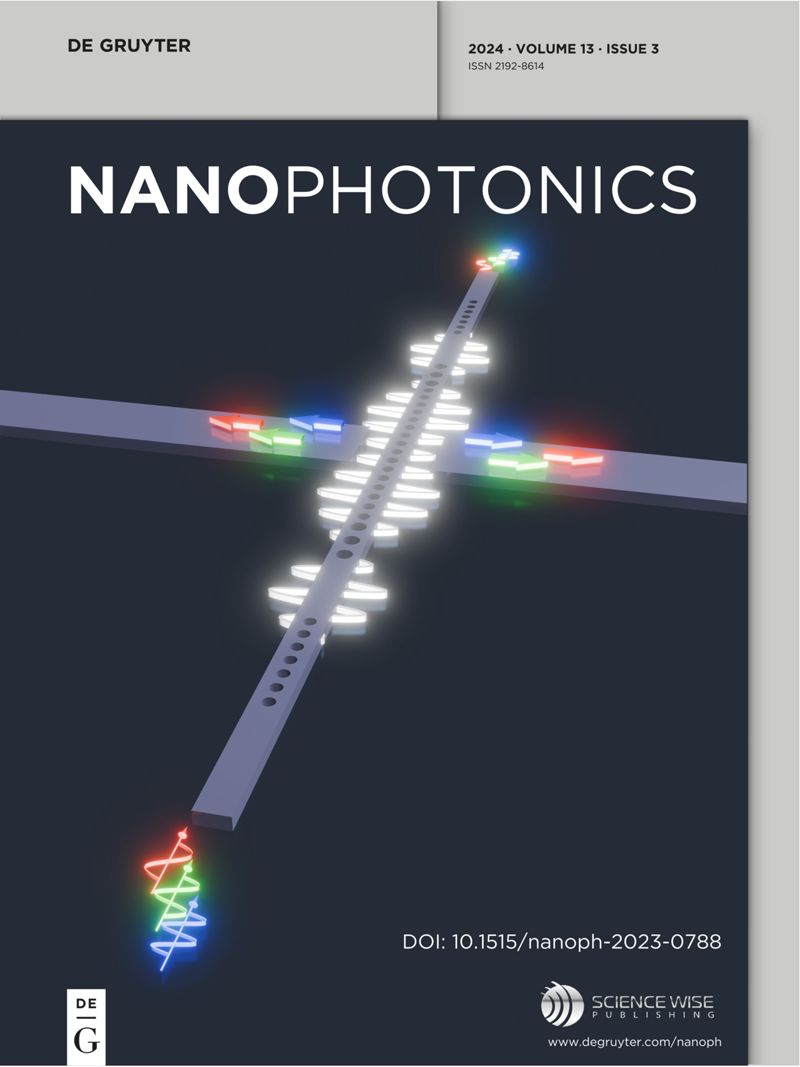
Nanophotonics, published in collaboration with Sciencewise, is a prestigious journal that showcases recent international research results, notable advancements in the field, and innovative applications. It is regarded as one of the leading publications in the realm of nanophotonics and encompasses a range of article types including research articles, selectively invited reviews, letters, and perspectives.
The journal specifically delves into the study of photon interaction with nano-structures, such as carbon nano-tubes, nano metal particles, nano crystals, semiconductor nano dots, photonic crystals, tissue, and DNA. It offers comprehensive coverage of the most up-to-date discoveries, making it an essential resource for physicists, engineers, and material scientists.



 京公网安备 11010802042870号
京ICP备2023020795号-1
京公网安备 11010802042870号
京ICP备2023020795号-1

 分享
分享
 求助内容:
求助内容: 应助结果提醒方式:
 扫码关注我们
