Sansan Feng , Hongwei Lu , Yuxuan Xue , Hengchen Li , Chaodong Zhou , Pengdong Yan , Xiaohan Zhang
{"title":"黄河源区土壤中微塑料的驱动因素及来源","authors":"Sansan Feng , Hongwei Lu , Yuxuan Xue , Hengchen Li , Chaodong Zhou , Pengdong Yan , Xiaohan Zhang","doi":"10.1016/j.envpol.2025.125848","DOIUrl":null,"url":null,"abstract":"<div><div>Microplastics (MPs) are widespread in various environments worldwide, they pose a serious threat to ecosystems. As a typical remote area, the Qinghai–Tibetan Plateau (QTP) has a sophisticated road system. However, the contributions of anthropogenic and natural factors to MP accumulation in remote plateau regions remain unclear. Here, we investigated the distribution, driving factors, and main sources of MPs in the source area of Yellow River on the QTP. MPs in soil showed an average abundance of (75.39 ± 49.16) items/kg, which was approximately 1–10<sup>3</sup> lower than that in the lower sections of Yellow River. Film, transparent color, and polyethylene were the common shapes, colors, and polymers, respectively. Under different land uses, MP abundance was remarkably higher in nonagricultural soils than in farmland. The influencing factors, source analysis on the basis of MP characteristics, and statistical analysis (redundancy analysis and structural equation modeling) showed that MP abundance was influenced by nonagricultural activities (tourism, traffic, and grazing). Utilizing the conditional fragmentation model, we further revealed that MP abundance in the upstream and downstream regions was related to roadside dust (traffic) and atmospheric dust. It was associated with human activities, including plastic packaging waste from tourism and herdsmen, in the midstream region. Moreover, MPs in farmland were related to local sources (fertilizers). These results provide valuable information on MP distribution in headstream areas and thus contribute to controlling potential MP pollution on the QTP.</div></div>","PeriodicalId":311,"journal":{"name":"Environmental Pollution","volume":"369 ","pages":"Article 125848"},"PeriodicalIF":7.3000,"publicationDate":"2025-03-15","publicationTypes":"Journal Article","fieldsOfStudy":null,"isOpenAccess":false,"openAccessPdf":"","citationCount":"0","resultStr":"{\"title\":\"Driving factors and sources of microplastics in soils in the Yellow River source area\",\"authors\":\"Sansan Feng , Hongwei Lu , Yuxuan Xue , Hengchen Li , Chaodong Zhou , Pengdong Yan , Xiaohan Zhang\",\"doi\":\"10.1016/j.envpol.2025.125848\",\"DOIUrl\":null,\"url\":null,\"abstract\":\"<div><div>Microplastics (MPs) are widespread in various environments worldwide, they pose a serious threat to ecosystems. As a typical remote area, the Qinghai–Tibetan Plateau (QTP) has a sophisticated road system. However, the contributions of anthropogenic and natural factors to MP accumulation in remote plateau regions remain unclear. Here, we investigated the distribution, driving factors, and main sources of MPs in the source area of Yellow River on the QTP. MPs in soil showed an average abundance of (75.39 ± 49.16) items/kg, which was approximately 1–10<sup>3</sup> lower than that in the lower sections of Yellow River. Film, transparent color, and polyethylene were the common shapes, colors, and polymers, respectively. Under different land uses, MP abundance was remarkably higher in nonagricultural soils than in farmland. The influencing factors, source analysis on the basis of MP characteristics, and statistical analysis (redundancy analysis and structural equation modeling) showed that MP abundance was influenced by nonagricultural activities (tourism, traffic, and grazing). Utilizing the conditional fragmentation model, we further revealed that MP abundance in the upstream and downstream regions was related to roadside dust (traffic) and atmospheric dust. It was associated with human activities, including plastic packaging waste from tourism and herdsmen, in the midstream region. Moreover, MPs in farmland were related to local sources (fertilizers). These results provide valuable information on MP distribution in headstream areas and thus contribute to controlling potential MP pollution on the QTP.</div></div>\",\"PeriodicalId\":311,\"journal\":{\"name\":\"Environmental Pollution\",\"volume\":\"369 \",\"pages\":\"Article 125848\"},\"PeriodicalIF\":7.3000,\"publicationDate\":\"2025-03-15\",\"publicationTypes\":\"Journal Article\",\"fieldsOfStudy\":null,\"isOpenAccess\":false,\"openAccessPdf\":\"\",\"citationCount\":\"0\",\"resultStr\":null,\"platform\":\"Semanticscholar\",\"paperid\":null,\"PeriodicalName\":\"Environmental Pollution\",\"FirstCategoryId\":\"93\",\"ListUrlMain\":\"https://www.sciencedirect.com/science/article/pii/S0269749125002210\",\"RegionNum\":2,\"RegionCategory\":\"环境科学与生态学\",\"ArticlePicture\":[],\"TitleCN\":null,\"AbstractTextCN\":null,\"PMCID\":null,\"EPubDate\":\"2025/2/13 0:00:00\",\"PubModel\":\"Epub\",\"JCR\":\"Q1\",\"JCRName\":\"ENVIRONMENTAL SCIENCES\",\"Score\":null,\"Total\":0}","platform":"Semanticscholar","paperid":null,"PeriodicalName":"Environmental Pollution","FirstCategoryId":"93","ListUrlMain":"https://www.sciencedirect.com/science/article/pii/S0269749125002210","RegionNum":2,"RegionCategory":"环境科学与生态学","ArticlePicture":[],"TitleCN":null,"AbstractTextCN":null,"PMCID":null,"EPubDate":"2025/2/13 0:00:00","PubModel":"Epub","JCR":"Q1","JCRName":"ENVIRONMENTAL SCIENCES","Score":null,"Total":0}
Driving factors and sources of microplastics in soils in the Yellow River source area
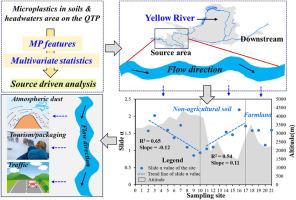
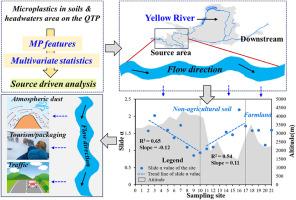
Microplastics (MPs) are widespread in various environments worldwide, they pose a serious threat to ecosystems. As a typical remote area, the Qinghai–Tibetan Plateau (QTP) has a sophisticated road system. However, the contributions of anthropogenic and natural factors to MP accumulation in remote plateau regions remain unclear. Here, we investigated the distribution, driving factors, and main sources of MPs in the source area of Yellow River on the QTP. MPs in soil showed an average abundance of (75.39 ± 49.16) items/kg, which was approximately 1–103 lower than that in the lower sections of Yellow River. Film, transparent color, and polyethylene were the common shapes, colors, and polymers, respectively. Under different land uses, MP abundance was remarkably higher in nonagricultural soils than in farmland. The influencing factors, source analysis on the basis of MP characteristics, and statistical analysis (redundancy analysis and structural equation modeling) showed that MP abundance was influenced by nonagricultural activities (tourism, traffic, and grazing). Utilizing the conditional fragmentation model, we further revealed that MP abundance in the upstream and downstream regions was related to roadside dust (traffic) and atmospheric dust. It was associated with human activities, including plastic packaging waste from tourism and herdsmen, in the midstream region. Moreover, MPs in farmland were related to local sources (fertilizers). These results provide valuable information on MP distribution in headstream areas and thus contribute to controlling potential MP pollution on the QTP.
期刊介绍:
Environmental Pollution is an international peer-reviewed journal that publishes high-quality research papers and review articles covering all aspects of environmental pollution and its impacts on ecosystems and human health.
Subject areas include, but are not limited to:
• Sources and occurrences of pollutants that are clearly defined and measured in environmental compartments, food and food-related items, and human bodies;
• Interlinks between contaminant exposure and biological, ecological, and human health effects, including those of climate change;
• Contaminants of emerging concerns (including but not limited to antibiotic resistant microorganisms or genes, microplastics/nanoplastics, electronic wastes, light, and noise) and/or their biological, ecological, or human health effects;
• Laboratory and field studies on the remediation/mitigation of environmental pollution via new techniques and with clear links to biological, ecological, or human health effects;
• Modeling of pollution processes, patterns, or trends that is of clear environmental and/or human health interest;
• New techniques that measure and examine environmental occurrences, transport, behavior, and effects of pollutants within the environment or the laboratory, provided that they can be clearly used to address problems within regional or global environmental compartments.




 京公网安备 11010802042870号
京ICP备2023020795号-1
京公网安备 11010802042870号
京ICP备2023020795号-1

 分享
分享
 求助内容:
求助内容: 应助结果提醒方式:
 扫码关注我们
