Zhaorui Jin, Daniel R. Neuville and Delia S. Brauer
{"title":"骨再生玻璃:控制生物活性玻璃45S5、S53P4和13-93的物理性能和离子释放的结构特征","authors":"Zhaorui Jin, Daniel R. Neuville and Delia S. Brauer","doi":"10.1039/D4RA06081D","DOIUrl":null,"url":null,"abstract":"<p >The structure, <em>i.e.</em> atomic arrangement, of glasses is known to determine many of their properties. This study investigates the structure of three well-known bioactive glass compositions, 45S5 (known as Bioglass), S53P4 (commercialised as BonAlive) and 13-93 (developed for improved high-temperature processing) by Si-29 and P-31 solid-state nuclear magnetic resonance and Raman spectroscopy. Results show that 45S5 has a more depolymerised silicate structure than the other two glasses, in agreement with its lowest silica content. These structural differences explain the well known high solubility and fast reactivity <em>in vivo</em> of 45S5 compared to the other two compositions. Differences between S53P4 and 13-93, by contrast, originate more from differences in their average modifier field strength, as their network connectivity, <em>i.e.</em> average silicate network polymerisation, is similar. As a result, 13-93 shows the lowest crystallisation tendency of the three glasses but also reacts relatively slowly during contact with aqueous solutions. The structural differences are also reflected in glass viscosity, where at a given temperature 45S5 has the lowest viscosity, 13-93 the highest and S53P4's viscosity is lying in between.</p>","PeriodicalId":102,"journal":{"name":"RSC Advances","volume":" 7","pages":" 4997-5006"},"PeriodicalIF":4.6000,"publicationDate":"2025-02-14","publicationTypes":"Journal Article","fieldsOfStudy":null,"isOpenAccess":false,"openAccessPdf":"https://pubs.rsc.org/en/content/articlepdf/2025/ra/d4ra06081d?page=search","citationCount":"0","resultStr":"{\"title\":\"Glasses for bone regeneration: structural features controlling physical properties and ion release of bioactive glasses 45S5, S53P4 and 13-93\",\"authors\":\"Zhaorui Jin, Daniel R. Neuville and Delia S. Brauer\",\"doi\":\"10.1039/D4RA06081D\",\"DOIUrl\":null,\"url\":null,\"abstract\":\"<p >The structure, <em>i.e.</em> atomic arrangement, of glasses is known to determine many of their properties. This study investigates the structure of three well-known bioactive glass compositions, 45S5 (known as Bioglass), S53P4 (commercialised as BonAlive) and 13-93 (developed for improved high-temperature processing) by Si-29 and P-31 solid-state nuclear magnetic resonance and Raman spectroscopy. Results show that 45S5 has a more depolymerised silicate structure than the other two glasses, in agreement with its lowest silica content. These structural differences explain the well known high solubility and fast reactivity <em>in vivo</em> of 45S5 compared to the other two compositions. Differences between S53P4 and 13-93, by contrast, originate more from differences in their average modifier field strength, as their network connectivity, <em>i.e.</em> average silicate network polymerisation, is similar. As a result, 13-93 shows the lowest crystallisation tendency of the three glasses but also reacts relatively slowly during contact with aqueous solutions. The structural differences are also reflected in glass viscosity, where at a given temperature 45S5 has the lowest viscosity, 13-93 the highest and S53P4's viscosity is lying in between.</p>\",\"PeriodicalId\":102,\"journal\":{\"name\":\"RSC Advances\",\"volume\":\" 7\",\"pages\":\" 4997-5006\"},\"PeriodicalIF\":4.6000,\"publicationDate\":\"2025-02-14\",\"publicationTypes\":\"Journal Article\",\"fieldsOfStudy\":null,\"isOpenAccess\":false,\"openAccessPdf\":\"https://pubs.rsc.org/en/content/articlepdf/2025/ra/d4ra06081d?page=search\",\"citationCount\":\"0\",\"resultStr\":null,\"platform\":\"Semanticscholar\",\"paperid\":null,\"PeriodicalName\":\"RSC Advances\",\"FirstCategoryId\":\"92\",\"ListUrlMain\":\"https://pubs.rsc.org/en/content/articlelanding/2025/ra/d4ra06081d\",\"RegionNum\":3,\"RegionCategory\":\"化学\",\"ArticlePicture\":[],\"TitleCN\":null,\"AbstractTextCN\":null,\"PMCID\":null,\"EPubDate\":\"\",\"PubModel\":\"\",\"JCR\":\"Q2\",\"JCRName\":\"CHEMISTRY, MULTIDISCIPLINARY\",\"Score\":null,\"Total\":0}","platform":"Semanticscholar","paperid":null,"PeriodicalName":"RSC Advances","FirstCategoryId":"92","ListUrlMain":"https://pubs.rsc.org/en/content/articlelanding/2025/ra/d4ra06081d","RegionNum":3,"RegionCategory":"化学","ArticlePicture":[],"TitleCN":null,"AbstractTextCN":null,"PMCID":null,"EPubDate":"","PubModel":"","JCR":"Q2","JCRName":"CHEMISTRY, MULTIDISCIPLINARY","Score":null,"Total":0}
Glasses for bone regeneration: structural features controlling physical properties and ion release of bioactive glasses 45S5, S53P4 and 13-93
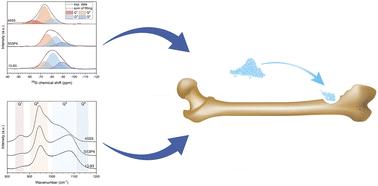
The structure, i.e. atomic arrangement, of glasses is known to determine many of their properties. This study investigates the structure of three well-known bioactive glass compositions, 45S5 (known as Bioglass), S53P4 (commercialised as BonAlive) and 13-93 (developed for improved high-temperature processing) by Si-29 and P-31 solid-state nuclear magnetic resonance and Raman spectroscopy. Results show that 45S5 has a more depolymerised silicate structure than the other two glasses, in agreement with its lowest silica content. These structural differences explain the well known high solubility and fast reactivity in vivo of 45S5 compared to the other two compositions. Differences between S53P4 and 13-93, by contrast, originate more from differences in their average modifier field strength, as their network connectivity, i.e. average silicate network polymerisation, is similar. As a result, 13-93 shows the lowest crystallisation tendency of the three glasses but also reacts relatively slowly during contact with aqueous solutions. The structural differences are also reflected in glass viscosity, where at a given temperature 45S5 has the lowest viscosity, 13-93 the highest and S53P4's viscosity is lying in between.
期刊介绍:
An international, peer-reviewed journal covering all of the chemical sciences, including multidisciplinary and emerging areas. RSC Advances is a gold open access journal allowing researchers free access to research articles, and offering an affordable open access publishing option for authors around the world.




 京公网安备 11010802042870号
京ICP备2023020795号-1
京公网安备 11010802042870号
京ICP备2023020795号-1

 分享
分享
 求助内容:
求助内容: 应助结果提醒方式:
 扫码关注我们
