Hoang Duy Nguyen, Amy Fay Moss, Frances Yan, Hugo Romero-Sanchez, Thi Hiep Dao
{"title":"饲喂蛋氨酸羟基类似物螯合锌、铜和锰对肉鸡生长性能、营养物质消化率、矿物质排泄和福利状况的影响:第2部分:可持续性和福利方面","authors":"Hoang Duy Nguyen, Amy Fay Moss, Frances Yan, Hugo Romero-Sanchez, Thi Hiep Dao","doi":"10.3390/ani15030419","DOIUrl":null,"url":null,"abstract":"<p><p>This study investigated the effects of the dietary supplementation of mineral methionine hydroxyl analogue chelates (MMHACs) zinc (Zn), copper (Cu), and manganese (Mn) on excreta nitrogen and mineral levels, housing conditions, and the welfare status of broilers. Three-hundred eighty-four day-old Ross 308 male chicks were randomly distributed to four dietary treatments, each consisting of eight replicate pens of twelve birds per pen. The treatments were (1) inorganic trace mineral ZnSO<sub>4</sub> (110 ppm), CuSO<sub>4</sub> (16 ppm), and MnO (120 ppm) (ITM); (2) MMHAC Zn (40 ppm), Cu (10 ppm), and Mn (40 ppm) (M10); (3) inorganic trace mineral ZnSO<sub>4</sub> (110 ppm), tribasic copper chloride (125 ppm), and MnO (120 ppm) (T125); and (4) MMHAC Zn (40 ppm), Cu (30 ppm), and Mn (40 ppm) (M30). Three feeding phases including the starter (days 0-10), grower (days 10-21), and finisher (days 21-42) were used. The findings showed that birds offered MMHACs at both levels had significantly lower Zn and Mn levels, and birds offered the T125 diet had higher Cu levels in the excreta compared to those fed the other diets on days 10, 16, 21, 28, and 42 (<i>p</i> < 0.001). The life cycle assessment showed that MMHAC supplementation at 30 ppm can be expected to improve the sustainability of the poultry industry in terms of reduced emissions into the environment, whereas excreta nitrogen and moisture content, litter conditions, levels of air gases (ammonia, carbon dioxide, and methane), and welfare indicators were similar between the dietary treatments. Hence, the supplementation of MMHACs to broiler diets at 30 ppm could maintain litter quality and welfare status while reducing emissions into the environment and the Zn, Mn, and/or Cu excretion of broilers, therefore reducing the environmental impacts of broiler production.</p>","PeriodicalId":7955,"journal":{"name":"Animals","volume":"15 3","pages":""},"PeriodicalIF":3.2000,"publicationDate":"2025-02-03","publicationTypes":"Journal Article","fieldsOfStudy":null,"isOpenAccess":false,"openAccessPdf":"https://www.ncbi.nlm.nih.gov/pmc/articles/PMC11816016/pdf/","citationCount":"0","resultStr":"{\"title\":\"Effects of Feeding Methionine Hydroxyl Analogue Chelated Zinc, Copper, and Manganese on Growth Performance, Nutrient Digestibility, Mineral Excretion, and Welfare Conditions of Broiler Chickens: Part 2: Sustainability and Welfare Aspects.\",\"authors\":\"Hoang Duy Nguyen, Amy Fay Moss, Frances Yan, Hugo Romero-Sanchez, Thi Hiep Dao\",\"doi\":\"10.3390/ani15030419\",\"DOIUrl\":null,\"url\":null,\"abstract\":\"<p><p>This study investigated the effects of the dietary supplementation of mineral methionine hydroxyl analogue chelates (MMHACs) zinc (Zn), copper (Cu), and manganese (Mn) on excreta nitrogen and mineral levels, housing conditions, and the welfare status of broilers. Three-hundred eighty-four day-old Ross 308 male chicks were randomly distributed to four dietary treatments, each consisting of eight replicate pens of twelve birds per pen. The treatments were (1) inorganic trace mineral ZnSO<sub>4</sub> (110 ppm), CuSO<sub>4</sub> (16 ppm), and MnO (120 ppm) (ITM); (2) MMHAC Zn (40 ppm), Cu (10 ppm), and Mn (40 ppm) (M10); (3) inorganic trace mineral ZnSO<sub>4</sub> (110 ppm), tribasic copper chloride (125 ppm), and MnO (120 ppm) (T125); and (4) MMHAC Zn (40 ppm), Cu (30 ppm), and Mn (40 ppm) (M30). Three feeding phases including the starter (days 0-10), grower (days 10-21), and finisher (days 21-42) were used. The findings showed that birds offered MMHACs at both levels had significantly lower Zn and Mn levels, and birds offered the T125 diet had higher Cu levels in the excreta compared to those fed the other diets on days 10, 16, 21, 28, and 42 (<i>p</i> < 0.001). The life cycle assessment showed that MMHAC supplementation at 30 ppm can be expected to improve the sustainability of the poultry industry in terms of reduced emissions into the environment, whereas excreta nitrogen and moisture content, litter conditions, levels of air gases (ammonia, carbon dioxide, and methane), and welfare indicators were similar between the dietary treatments. Hence, the supplementation of MMHACs to broiler diets at 30 ppm could maintain litter quality and welfare status while reducing emissions into the environment and the Zn, Mn, and/or Cu excretion of broilers, therefore reducing the environmental impacts of broiler production.</p>\",\"PeriodicalId\":7955,\"journal\":{\"name\":\"Animals\",\"volume\":\"15 3\",\"pages\":\"\"},\"PeriodicalIF\":3.2000,\"publicationDate\":\"2025-02-03\",\"publicationTypes\":\"Journal Article\",\"fieldsOfStudy\":null,\"isOpenAccess\":false,\"openAccessPdf\":\"https://www.ncbi.nlm.nih.gov/pmc/articles/PMC11816016/pdf/\",\"citationCount\":\"0\",\"resultStr\":null,\"platform\":\"Semanticscholar\",\"paperid\":null,\"PeriodicalName\":\"Animals\",\"FirstCategoryId\":\"97\",\"ListUrlMain\":\"https://doi.org/10.3390/ani15030419\",\"RegionNum\":2,\"RegionCategory\":\"农林科学\",\"ArticlePicture\":[],\"TitleCN\":null,\"AbstractTextCN\":null,\"PMCID\":null,\"EPubDate\":\"\",\"PubModel\":\"\",\"JCR\":\"Q1\",\"JCRName\":\"AGRICULTURE, DAIRY & ANIMAL SCIENCE\",\"Score\":null,\"Total\":0}","platform":"Semanticscholar","paperid":null,"PeriodicalName":"Animals","FirstCategoryId":"97","ListUrlMain":"https://doi.org/10.3390/ani15030419","RegionNum":2,"RegionCategory":"农林科学","ArticlePicture":[],"TitleCN":null,"AbstractTextCN":null,"PMCID":null,"EPubDate":"","PubModel":"","JCR":"Q1","JCRName":"AGRICULTURE, DAIRY & ANIMAL SCIENCE","Score":null,"Total":0}
Effects of Feeding Methionine Hydroxyl Analogue Chelated Zinc, Copper, and Manganese on Growth Performance, Nutrient Digestibility, Mineral Excretion, and Welfare Conditions of Broiler Chickens: Part 2: Sustainability and Welfare Aspects.
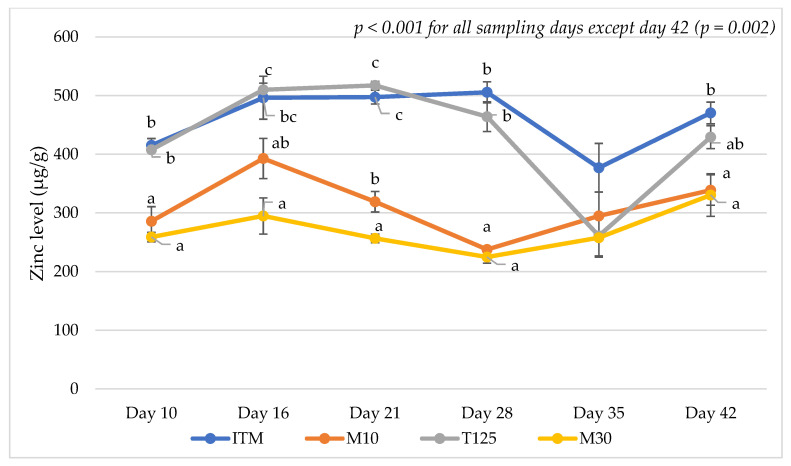
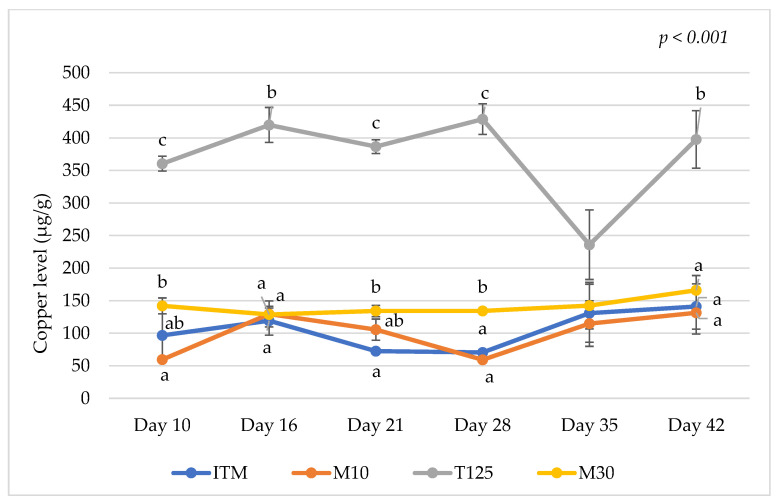
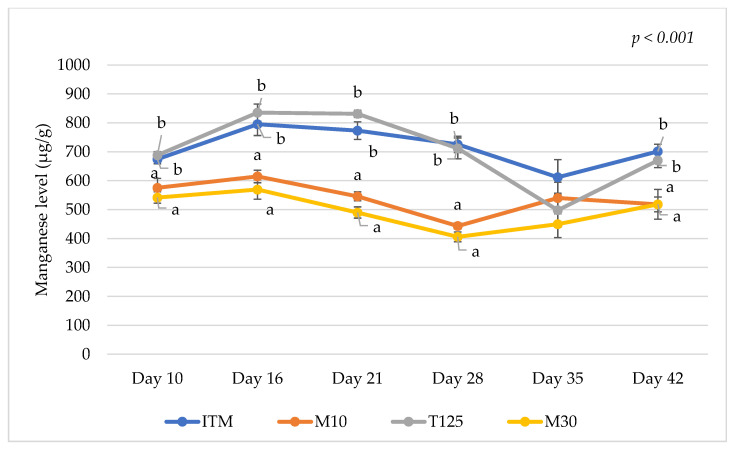
This study investigated the effects of the dietary supplementation of mineral methionine hydroxyl analogue chelates (MMHACs) zinc (Zn), copper (Cu), and manganese (Mn) on excreta nitrogen and mineral levels, housing conditions, and the welfare status of broilers. Three-hundred eighty-four day-old Ross 308 male chicks were randomly distributed to four dietary treatments, each consisting of eight replicate pens of twelve birds per pen. The treatments were (1) inorganic trace mineral ZnSO4 (110 ppm), CuSO4 (16 ppm), and MnO (120 ppm) (ITM); (2) MMHAC Zn (40 ppm), Cu (10 ppm), and Mn (40 ppm) (M10); (3) inorganic trace mineral ZnSO4 (110 ppm), tribasic copper chloride (125 ppm), and MnO (120 ppm) (T125); and (4) MMHAC Zn (40 ppm), Cu (30 ppm), and Mn (40 ppm) (M30). Three feeding phases including the starter (days 0-10), grower (days 10-21), and finisher (days 21-42) were used. The findings showed that birds offered MMHACs at both levels had significantly lower Zn and Mn levels, and birds offered the T125 diet had higher Cu levels in the excreta compared to those fed the other diets on days 10, 16, 21, 28, and 42 (p < 0.001). The life cycle assessment showed that MMHAC supplementation at 30 ppm can be expected to improve the sustainability of the poultry industry in terms of reduced emissions into the environment, whereas excreta nitrogen and moisture content, litter conditions, levels of air gases (ammonia, carbon dioxide, and methane), and welfare indicators were similar between the dietary treatments. Hence, the supplementation of MMHACs to broiler diets at 30 ppm could maintain litter quality and welfare status while reducing emissions into the environment and the Zn, Mn, and/or Cu excretion of broilers, therefore reducing the environmental impacts of broiler production.
AnimalsAgricultural and Biological Sciences-Animal Science and Zoology
CiteScore
4.90
自引率
16.70%
发文量
3015
审稿时长
20.52 days
期刊介绍:
Animals (ISSN 2076-2615) is an international and interdisciplinary scholarly open access journal. It publishes original research articles, reviews, communications, and short notes that are relevant to any field of study that involves animals, including zoology, ethnozoology, animal science, animal ethics and animal welfare. However, preference will be given to those articles that provide an understanding of animals within a larger context (i.e., the animals'' interactions with the outside world, including humans). There is no restriction on the length of the papers. Our aim is to encourage scientists to publish their experimental and theoretical research in as much detail as possible. Full experimental details and/or method of study, must be provided for research articles. Articles submitted that involve subjecting animals to unnecessary pain or suffering will not be accepted, and all articles must be submitted with the necessary ethical approval (please refer to the Ethical Guidelines for more information).




 京公网安备 11010802042870号
京ICP备2023020795号-1
京公网安备 11010802042870号
京ICP备2023020795号-1

 分享
分享
 求助内容:
求助内容: 应助结果提醒方式:
 扫码关注我们
