I Strbačko, M Radoš, I Jurjević, D Orešković, M Klarica
{"title":"体位对脑脊液在脑脊液腔内体积再分布的影响。","authors":"I Strbačko, M Radoš, I Jurjević, D Orešković, M Klarica","doi":"10.3389/fnhum.2024.1463740","DOIUrl":null,"url":null,"abstract":"<p><strong>Introduction: </strong>It is generally accepted that during body position changes from horizontal to vertical there is a short-lasting shift of a certain CSF volume from the cranium into the hydrostatically lower parts of the spinal space, which leads to transitory CSF pressure decrease to negative values.</p><p><strong>Methods: </strong>In order to test this, we performed MRI volumetry of cranial and spinal part of the CSF space in healthy volunteers of both genders (<i>n</i> = 22) in three different body positions [horizontal (H); elevated head and upper body (H-UP) under an angle about 30° from the base; elevated lower body (B-UP) under an angle about 30° from the base].</p><p><strong>Results: </strong>Volumes of brain and spinal cord tissue did not change during body position changes. Significant CSF volume (ml) changes occur inside the spinal space in the tested body positions, primarily in the lumbosacral segment (H-UP - 38.1 ± 7.0; H - 34.4 ± 6.5; B-UP - 28.7 ± 6.5), while at the same time no significant CSF volume changes have been observed inside the cranium in two tested positions (H and B-UP) in which it was possible to measure intracranial CSF volume changes or if we sum up cervical and cranial CSF volumes in those positions.</p><p><strong>Conclusion: </strong>Observed results suggest that during the changes of body position CSF volume redistribution occurs, primarily inside the spinal and not the cranial space. This is in accordance with the new hypothesis by which spinal intradural space can significantly change its volume due to its elasticity, thus adjusting to the influence of gravity and pressure changes.</p>","PeriodicalId":12536,"journal":{"name":"Frontiers in Human Neuroscience","volume":"18 ","pages":"1463740"},"PeriodicalIF":2.7000,"publicationDate":"2025-01-29","publicationTypes":"Journal Article","fieldsOfStudy":null,"isOpenAccess":false,"openAccessPdf":"https://www.ncbi.nlm.nih.gov/pmc/articles/PMC11814182/pdf/","citationCount":"0","resultStr":"{\"title\":\"Body position influence on cerebrospinal fluid volume redistribution inside the cranial and spinal CSF compartments.\",\"authors\":\"I Strbačko, M Radoš, I Jurjević, D Orešković, M Klarica\",\"doi\":\"10.3389/fnhum.2024.1463740\",\"DOIUrl\":null,\"url\":null,\"abstract\":\"<p><strong>Introduction: </strong>It is generally accepted that during body position changes from horizontal to vertical there is a short-lasting shift of a certain CSF volume from the cranium into the hydrostatically lower parts of the spinal space, which leads to transitory CSF pressure decrease to negative values.</p><p><strong>Methods: </strong>In order to test this, we performed MRI volumetry of cranial and spinal part of the CSF space in healthy volunteers of both genders (<i>n</i> = 22) in three different body positions [horizontal (H); elevated head and upper body (H-UP) under an angle about 30° from the base; elevated lower body (B-UP) under an angle about 30° from the base].</p><p><strong>Results: </strong>Volumes of brain and spinal cord tissue did not change during body position changes. Significant CSF volume (ml) changes occur inside the spinal space in the tested body positions, primarily in the lumbosacral segment (H-UP - 38.1 ± 7.0; H - 34.4 ± 6.5; B-UP - 28.7 ± 6.5), while at the same time no significant CSF volume changes have been observed inside the cranium in two tested positions (H and B-UP) in which it was possible to measure intracranial CSF volume changes or if we sum up cervical and cranial CSF volumes in those positions.</p><p><strong>Conclusion: </strong>Observed results suggest that during the changes of body position CSF volume redistribution occurs, primarily inside the spinal and not the cranial space. This is in accordance with the new hypothesis by which spinal intradural space can significantly change its volume due to its elasticity, thus adjusting to the influence of gravity and pressure changes.</p>\",\"PeriodicalId\":12536,\"journal\":{\"name\":\"Frontiers in Human Neuroscience\",\"volume\":\"18 \",\"pages\":\"1463740\"},\"PeriodicalIF\":2.7000,\"publicationDate\":\"2025-01-29\",\"publicationTypes\":\"Journal Article\",\"fieldsOfStudy\":null,\"isOpenAccess\":false,\"openAccessPdf\":\"https://www.ncbi.nlm.nih.gov/pmc/articles/PMC11814182/pdf/\",\"citationCount\":\"0\",\"resultStr\":null,\"platform\":\"Semanticscholar\",\"paperid\":null,\"PeriodicalName\":\"Frontiers in Human Neuroscience\",\"FirstCategoryId\":\"3\",\"ListUrlMain\":\"https://doi.org/10.3389/fnhum.2024.1463740\",\"RegionNum\":3,\"RegionCategory\":\"医学\",\"ArticlePicture\":[],\"TitleCN\":null,\"AbstractTextCN\":null,\"PMCID\":null,\"EPubDate\":\"2024/1/1 0:00:00\",\"PubModel\":\"eCollection\",\"JCR\":\"Q3\",\"JCRName\":\"NEUROSCIENCES\",\"Score\":null,\"Total\":0}","platform":"Semanticscholar","paperid":null,"PeriodicalName":"Frontiers in Human Neuroscience","FirstCategoryId":"3","ListUrlMain":"https://doi.org/10.3389/fnhum.2024.1463740","RegionNum":3,"RegionCategory":"医学","ArticlePicture":[],"TitleCN":null,"AbstractTextCN":null,"PMCID":null,"EPubDate":"2024/1/1 0:00:00","PubModel":"eCollection","JCR":"Q3","JCRName":"NEUROSCIENCES","Score":null,"Total":0}
Body position influence on cerebrospinal fluid volume redistribution inside the cranial and spinal CSF compartments.
Introduction: It is generally accepted that during body position changes from horizontal to vertical there is a short-lasting shift of a certain CSF volume from the cranium into the hydrostatically lower parts of the spinal space, which leads to transitory CSF pressure decrease to negative values.
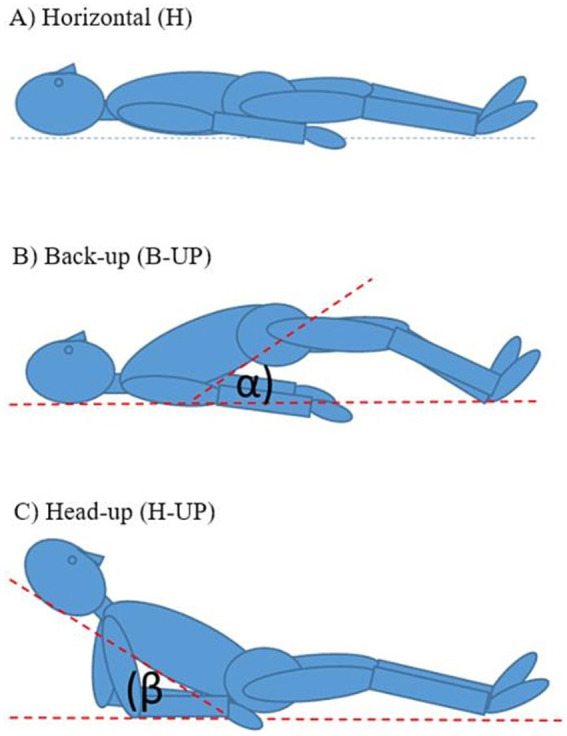
Methods: In order to test this, we performed MRI volumetry of cranial and spinal part of the CSF space in healthy volunteers of both genders (n = 22) in three different body positions [horizontal (H); elevated head and upper body (H-UP) under an angle about 30° from the base; elevated lower body (B-UP) under an angle about 30° from the base].
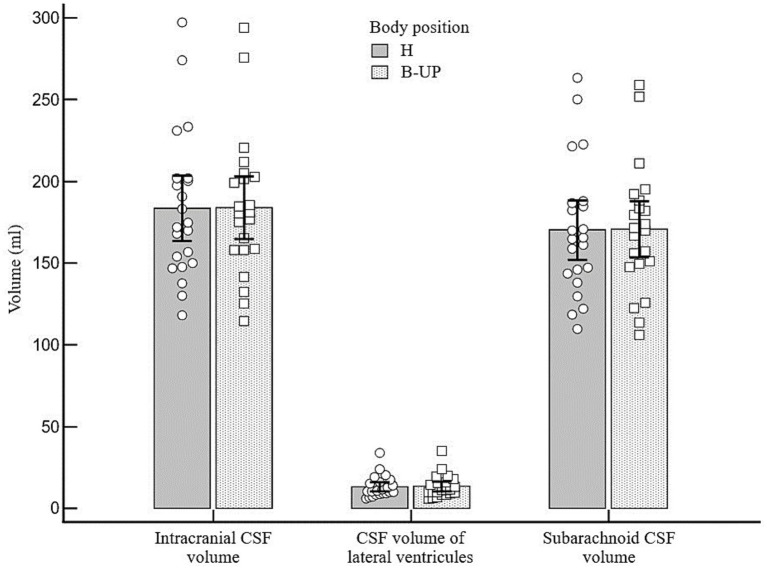
Results: Volumes of brain and spinal cord tissue did not change during body position changes. Significant CSF volume (ml) changes occur inside the spinal space in the tested body positions, primarily in the lumbosacral segment (H-UP - 38.1 ± 7.0; H - 34.4 ± 6.5; B-UP - 28.7 ± 6.5), while at the same time no significant CSF volume changes have been observed inside the cranium in two tested positions (H and B-UP) in which it was possible to measure intracranial CSF volume changes or if we sum up cervical and cranial CSF volumes in those positions.
Conclusion: Observed results suggest that during the changes of body position CSF volume redistribution occurs, primarily inside the spinal and not the cranial space. This is in accordance with the new hypothesis by which spinal intradural space can significantly change its volume due to its elasticity, thus adjusting to the influence of gravity and pressure changes.
期刊介绍:
Frontiers in Human Neuroscience is a first-tier electronic journal devoted to understanding the brain mechanisms supporting cognitive and social behavior in humans, and how these mechanisms might be altered in disease states. The last 25 years have seen an explosive growth in both the methods and the theoretical constructs available to study the human brain. Advances in electrophysiological, neuroimaging, neuropsychological, psychophysical, neuropharmacological and computational approaches have provided key insights into the mechanisms of a broad range of human behaviors in both health and disease. Work in human neuroscience ranges from the cognitive domain, including areas such as memory, attention, language and perception to the social domain, with this last subject addressing topics, such as interpersonal interactions, social discourse and emotional regulation. How these processes unfold during development, mature in adulthood and often decline in aging, and how they are altered in a host of developmental, neurological and psychiatric disorders, has become increasingly amenable to human neuroscience research approaches. Work in human neuroscience has influenced many areas of inquiry ranging from social and cognitive psychology to economics, law and public policy. Accordingly, our journal will provide a forum for human research spanning all areas of human cognitive, social, developmental and translational neuroscience using any research approach.






 京公网安备 11010802042870号
京ICP备2023020795号-1
京公网安备 11010802042870号
京ICP备2023020795号-1

 分享
分享
 求助内容:
求助内容: 应助结果提醒方式:
 扫码关注我们
