Zishan Ahmad, Olga Babich, Stanislav Sukhikh, Vikas Yadav, Muthusamy Ramakrishnan, Fatima Firdaus, Anwar Shahzad
{"title":"解锁七叶草的生物技术潜力:探索合成种子生产、代谢谱、遗传稳定性以及光合光子通量密度对驯化的影响。","authors":"Zishan Ahmad, Olga Babich, Stanislav Sukhikh, Vikas Yadav, Muthusamy Ramakrishnan, Fatima Firdaus, Anwar Shahzad","doi":"10.1186/s12870-025-06174-w","DOIUrl":null,"url":null,"abstract":"<p><p>Decalepis arayapathra is an important medicinal plant known for several medicinal values, however, due to overharvesting, habitat destruction, and its limited geographical distribution, D. arayapathra faces severe threats of extinction. A synthetic seed protocol was developed for this plant, representing a novel approach in its propagation and conservation. Nodal segments (NS) were encapsulated in a sodium alginate (SA) matrix. 3% SA with 100 mM CaCl<sub>2</sub> solutions was best to obtain ideal beads with fine texture. Murashige and Skoog (MS) medium consisting of BA 5.0 µM + NAA 0.5 µM + ADS 20.0 µM resulted in a maximum regrowth frequency of 71.26% with 3.13 shoots per bead and a shoot length of 4.10 cm after six weeks of culture. Rooting in the microshoots was better observed with half- strength MS + 2.5 µM NAA, resulting in 3.1 roots per microshoot and a root length of 3.0 cm after four weeks of culture, followed by successful acclimatization. The study investigated the effect of photosynthetic photon flux density (PPFD) levels of 50 and 300 PPFD on various physiological and biochemical parameters during the acclimatization of in vitro-derived plants. Results showed an increase in photosynthetic pigments, including chlorophyll and carotenoids, as well as an enhanced net photosynthetic rate (P<sub>N</sub>) and stomatal conductance (gs) with prolonged acclimatization, with higher PPFD being more effective. Antioxidant enzyme activities, including SOD, CAT, APX, and GR, increased over time, except for SOD, which began to decline after 21 days under both light conditions. Stress markers such as malondialdehyde (MDA) and electrolyte leakage decreased over time, indicating successful acclimatization. Genetic fidelity was confirmed through clear and monomorphic banding patterns obtained using RAPD and ISSR markers. Quantification of 2H4MB (2-hydroxy-4-methoxy benzaldehyde) in synseed-derived roots using HPLC revealed a concentration of 16.27 µg/ml. Metabolic profiling of the synseed-derived root tuber using GC-MS identified several major and minor metabolites. This study offers a breakthrough in the conservation of D. arayapathra through synthetic seed technology, enabling sustainable propagation while preserving genetic stability. It ensures a consistent supply of the bioactive compound 2H4MB, promoting medicinal research and commercial applications.</p>","PeriodicalId":9198,"journal":{"name":"BMC Plant Biology","volume":"25 1","pages":"189"},"PeriodicalIF":4.8000,"publicationDate":"2025-02-13","publicationTypes":"Journal Article","fieldsOfStudy":null,"isOpenAccess":false,"openAccessPdf":"https://www.ncbi.nlm.nih.gov/pmc/articles/PMC11823203/pdf/","citationCount":"0","resultStr":"{\"title\":\"Unlocking the biotechnological potential of Decalepis arayalpathra: exploring synthetic seed production, metabolic profiling, genetic stability, and the impact of photosynthetic photon flux density on acclimatization.\",\"authors\":\"Zishan Ahmad, Olga Babich, Stanislav Sukhikh, Vikas Yadav, Muthusamy Ramakrishnan, Fatima Firdaus, Anwar Shahzad\",\"doi\":\"10.1186/s12870-025-06174-w\",\"DOIUrl\":null,\"url\":null,\"abstract\":\"<p><p>Decalepis arayapathra is an important medicinal plant known for several medicinal values, however, due to overharvesting, habitat destruction, and its limited geographical distribution, D. arayapathra faces severe threats of extinction. A synthetic seed protocol was developed for this plant, representing a novel approach in its propagation and conservation. Nodal segments (NS) were encapsulated in a sodium alginate (SA) matrix. 3% SA with 100 mM CaCl<sub>2</sub> solutions was best to obtain ideal beads with fine texture. Murashige and Skoog (MS) medium consisting of BA 5.0 µM + NAA 0.5 µM + ADS 20.0 µM resulted in a maximum regrowth frequency of 71.26% with 3.13 shoots per bead and a shoot length of 4.10 cm after six weeks of culture. Rooting in the microshoots was better observed with half- strength MS + 2.5 µM NAA, resulting in 3.1 roots per microshoot and a root length of 3.0 cm after four weeks of culture, followed by successful acclimatization. The study investigated the effect of photosynthetic photon flux density (PPFD) levels of 50 and 300 PPFD on various physiological and biochemical parameters during the acclimatization of in vitro-derived plants. Results showed an increase in photosynthetic pigments, including chlorophyll and carotenoids, as well as an enhanced net photosynthetic rate (P<sub>N</sub>) and stomatal conductance (gs) with prolonged acclimatization, with higher PPFD being more effective. Antioxidant enzyme activities, including SOD, CAT, APX, and GR, increased over time, except for SOD, which began to decline after 21 days under both light conditions. Stress markers such as malondialdehyde (MDA) and electrolyte leakage decreased over time, indicating successful acclimatization. Genetic fidelity was confirmed through clear and monomorphic banding patterns obtained using RAPD and ISSR markers. Quantification of 2H4MB (2-hydroxy-4-methoxy benzaldehyde) in synseed-derived roots using HPLC revealed a concentration of 16.27 µg/ml. Metabolic profiling of the synseed-derived root tuber using GC-MS identified several major and minor metabolites. This study offers a breakthrough in the conservation of D. arayapathra through synthetic seed technology, enabling sustainable propagation while preserving genetic stability. It ensures a consistent supply of the bioactive compound 2H4MB, promoting medicinal research and commercial applications.</p>\",\"PeriodicalId\":9198,\"journal\":{\"name\":\"BMC Plant Biology\",\"volume\":\"25 1\",\"pages\":\"189\"},\"PeriodicalIF\":4.8000,\"publicationDate\":\"2025-02-13\",\"publicationTypes\":\"Journal Article\",\"fieldsOfStudy\":null,\"isOpenAccess\":false,\"openAccessPdf\":\"https://www.ncbi.nlm.nih.gov/pmc/articles/PMC11823203/pdf/\",\"citationCount\":\"0\",\"resultStr\":null,\"platform\":\"Semanticscholar\",\"paperid\":null,\"PeriodicalName\":\"BMC Plant Biology\",\"FirstCategoryId\":\"99\",\"ListUrlMain\":\"https://doi.org/10.1186/s12870-025-06174-w\",\"RegionNum\":2,\"RegionCategory\":\"生物学\",\"ArticlePicture\":[],\"TitleCN\":null,\"AbstractTextCN\":null,\"PMCID\":null,\"EPubDate\":\"\",\"PubModel\":\"\",\"JCR\":\"Q1\",\"JCRName\":\"PLANT SCIENCES\",\"Score\":null,\"Total\":0}","platform":"Semanticscholar","paperid":null,"PeriodicalName":"BMC Plant Biology","FirstCategoryId":"99","ListUrlMain":"https://doi.org/10.1186/s12870-025-06174-w","RegionNum":2,"RegionCategory":"生物学","ArticlePicture":[],"TitleCN":null,"AbstractTextCN":null,"PMCID":null,"EPubDate":"","PubModel":"","JCR":"Q1","JCRName":"PLANT SCIENCES","Score":null,"Total":0}
Unlocking the biotechnological potential of Decalepis arayalpathra: exploring synthetic seed production, metabolic profiling, genetic stability, and the impact of photosynthetic photon flux density on acclimatization.
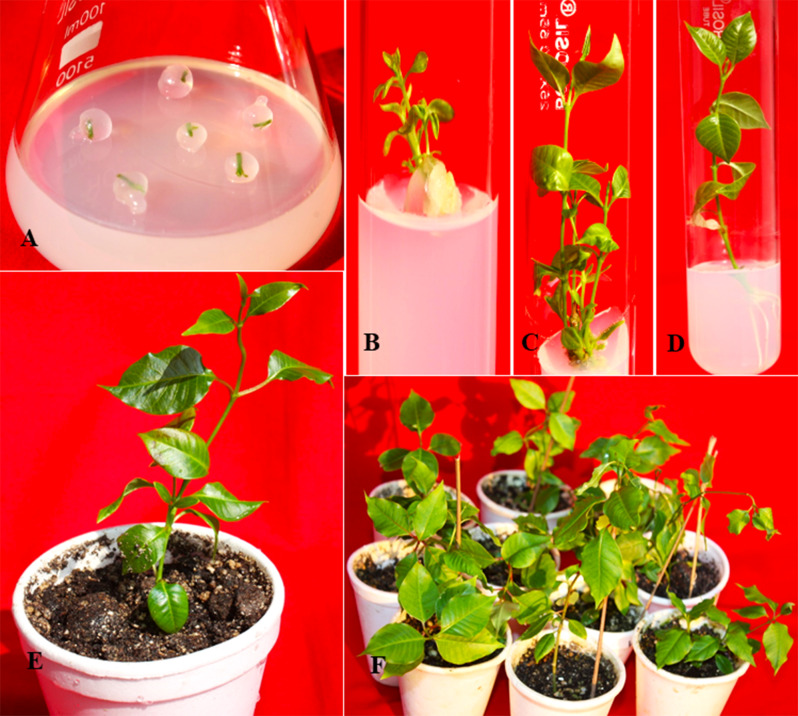
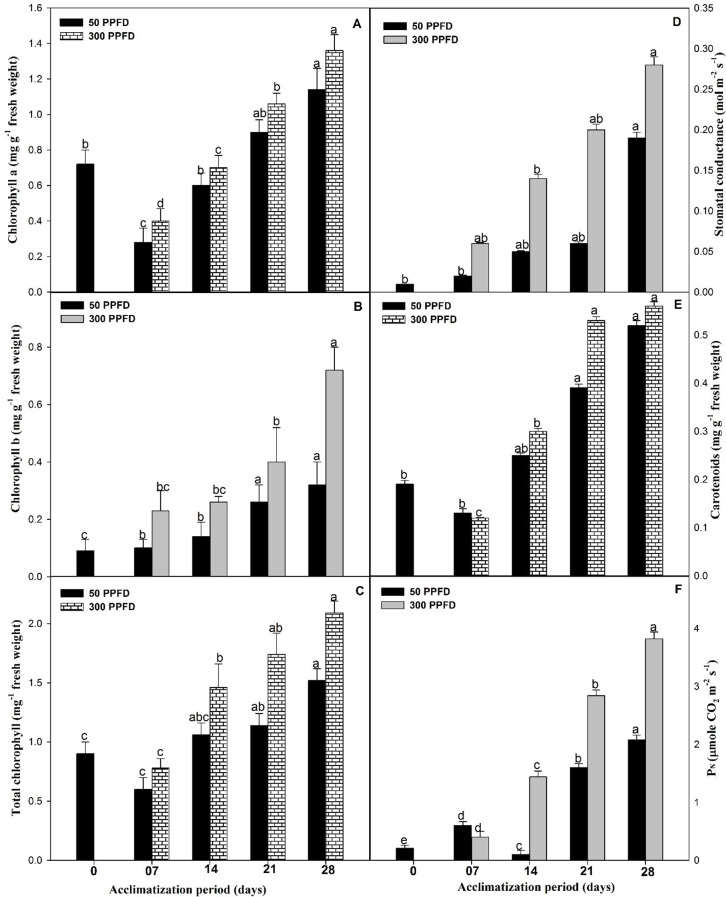
Decalepis arayapathra is an important medicinal plant known for several medicinal values, however, due to overharvesting, habitat destruction, and its limited geographical distribution, D. arayapathra faces severe threats of extinction. A synthetic seed protocol was developed for this plant, representing a novel approach in its propagation and conservation. Nodal segments (NS) were encapsulated in a sodium alginate (SA) matrix. 3% SA with 100 mM CaCl2 solutions was best to obtain ideal beads with fine texture. Murashige and Skoog (MS) medium consisting of BA 5.0 µM + NAA 0.5 µM + ADS 20.0 µM resulted in a maximum regrowth frequency of 71.26% with 3.13 shoots per bead and a shoot length of 4.10 cm after six weeks of culture. Rooting in the microshoots was better observed with half- strength MS + 2.5 µM NAA, resulting in 3.1 roots per microshoot and a root length of 3.0 cm after four weeks of culture, followed by successful acclimatization. The study investigated the effect of photosynthetic photon flux density (PPFD) levels of 50 and 300 PPFD on various physiological and biochemical parameters during the acclimatization of in vitro-derived plants. Results showed an increase in photosynthetic pigments, including chlorophyll and carotenoids, as well as an enhanced net photosynthetic rate (PN) and stomatal conductance (gs) with prolonged acclimatization, with higher PPFD being more effective. Antioxidant enzyme activities, including SOD, CAT, APX, and GR, increased over time, except for SOD, which began to decline after 21 days under both light conditions. Stress markers such as malondialdehyde (MDA) and electrolyte leakage decreased over time, indicating successful acclimatization. Genetic fidelity was confirmed through clear and monomorphic banding patterns obtained using RAPD and ISSR markers. Quantification of 2H4MB (2-hydroxy-4-methoxy benzaldehyde) in synseed-derived roots using HPLC revealed a concentration of 16.27 µg/ml. Metabolic profiling of the synseed-derived root tuber using GC-MS identified several major and minor metabolites. This study offers a breakthrough in the conservation of D. arayapathra through synthetic seed technology, enabling sustainable propagation while preserving genetic stability. It ensures a consistent supply of the bioactive compound 2H4MB, promoting medicinal research and commercial applications.
期刊介绍:
BMC Plant Biology is an open access, peer-reviewed journal that considers articles on all aspects of plant biology, including molecular, cellular, tissue, organ and whole organism research.





 京公网安备 11010802042870号
京ICP备2023020795号-1
京公网安备 11010802042870号
京ICP备2023020795号-1

 分享
分享
 求助内容:
求助内容: 应助结果提醒方式:
 扫码关注我们
