Catherine E Myers, Rokas Perskaudas, Vibha Reddy, Chintan V Dave, John G Keilp, Arlene King, Kailyn Rodriguez, Lauren St Hill, Rachael Miller, Alejandro Interian
{"title":"模糊反馈的负面评价可以预测自杀高风险退伍军人近期自杀企图的风险。","authors":"Catherine E Myers, Rokas Perskaudas, Vibha Reddy, Chintan V Dave, John G Keilp, Arlene King, Kailyn Rodriguez, Lauren St Hill, Rachael Miller, Alejandro Interian","doi":"10.3389/fpsyt.2024.1492332","DOIUrl":null,"url":null,"abstract":"<p><strong>Background: </strong>Learning from feedback - adapting behavior based on reinforcing and punishing outcomes - has been implicated in numerous psychiatric disorders, including substance misuse, post-traumatic stress disorder, and depression; an emerging literature suggests it may also play a role in suicidality. This study examined whether a feedback-based learning task with rewarding, punishing and ambiguous outcomes, followed by computational modeling, could improve near-term prospective prediction of suicide attempt in a high-risk sample.</p><p><strong>Method: </strong>Veterans (N=60) at high-risk for suicide were tested on a task of reward- and punishment-based learning, at multiple sessions across a one-year period. Each session was coded according to whether the participant had (1) an actual suicide attempt (ASA); (2) another suicide-related event (OtherSE) such as suicidal behavior or suicidal ideation-related hospital admission (but not an ASA); or (3) neither (noSE) in the next 90 days. Computational modeling was used to estimate latent cognitive variables including learning rates from positive and negative outcomes, and the subjective value of ambiguous feedback.</p><p><strong>Results: </strong>Optimal responding on the reward-based trials was positively associated with upcoming ASA, and remained predictive even after controlling for other standard clinical variables such as current suicidal ideation severity and prior suicide attempts. Computational modeling revealed that patients with upcoming ASA tended to view ambiguous outcomes as similar to weak punishment, while OtherSE and noSE both tended to view the ambiguous outcome as similar to weak reward. Differences in the reinforcement value of the neutral outcome remained predictive for ASA even after controlling for current suicidal ideation and prior suicide attempts.</p><p><strong>Conclusion: </strong>A reinforcement learning task with ambiguous neutral outcomes may provide a useful tool to help predict near-term risk of ASA in at-risk patients. While most individuals interpret ambiguous feedback as mildly reinforcing (a \"glass half full\" interpretation), those with upcoming ASA tend to view it as mildly punishing (a \"glass half empty\" interpretation). While the current results are based on a very small sample with relatively few ASA events, and require replication in a larger sample, they provide support for the role of negative biases in feedback-based learning in the cognitive profile of suicide risk.</p>","PeriodicalId":12605,"journal":{"name":"Frontiers in Psychiatry","volume":"15 ","pages":"1492332"},"PeriodicalIF":3.2000,"publicationDate":"2025-01-30","publicationTypes":"Journal Article","fieldsOfStudy":null,"isOpenAccess":false,"openAccessPdf":"https://www.ncbi.nlm.nih.gov/pmc/articles/PMC11821650/pdf/","citationCount":"0","resultStr":"{\"title\":\"Negative valuation of ambiguous feedback may predict near-term risk for suicide attempt in Veterans at high risk for suicide.\",\"authors\":\"Catherine E Myers, Rokas Perskaudas, Vibha Reddy, Chintan V Dave, John G Keilp, Arlene King, Kailyn Rodriguez, Lauren St Hill, Rachael Miller, Alejandro Interian\",\"doi\":\"10.3389/fpsyt.2024.1492332\",\"DOIUrl\":null,\"url\":null,\"abstract\":\"<p><strong>Background: </strong>Learning from feedback - adapting behavior based on reinforcing and punishing outcomes - has been implicated in numerous psychiatric disorders, including substance misuse, post-traumatic stress disorder, and depression; an emerging literature suggests it may also play a role in suicidality. This study examined whether a feedback-based learning task with rewarding, punishing and ambiguous outcomes, followed by computational modeling, could improve near-term prospective prediction of suicide attempt in a high-risk sample.</p><p><strong>Method: </strong>Veterans (N=60) at high-risk for suicide were tested on a task of reward- and punishment-based learning, at multiple sessions across a one-year period. Each session was coded according to whether the participant had (1) an actual suicide attempt (ASA); (2) another suicide-related event (OtherSE) such as suicidal behavior or suicidal ideation-related hospital admission (but not an ASA); or (3) neither (noSE) in the next 90 days. Computational modeling was used to estimate latent cognitive variables including learning rates from positive and negative outcomes, and the subjective value of ambiguous feedback.</p><p><strong>Results: </strong>Optimal responding on the reward-based trials was positively associated with upcoming ASA, and remained predictive even after controlling for other standard clinical variables such as current suicidal ideation severity and prior suicide attempts. Computational modeling revealed that patients with upcoming ASA tended to view ambiguous outcomes as similar to weak punishment, while OtherSE and noSE both tended to view the ambiguous outcome as similar to weak reward. Differences in the reinforcement value of the neutral outcome remained predictive for ASA even after controlling for current suicidal ideation and prior suicide attempts.</p><p><strong>Conclusion: </strong>A reinforcement learning task with ambiguous neutral outcomes may provide a useful tool to help predict near-term risk of ASA in at-risk patients. While most individuals interpret ambiguous feedback as mildly reinforcing (a \\\"glass half full\\\" interpretation), those with upcoming ASA tend to view it as mildly punishing (a \\\"glass half empty\\\" interpretation). While the current results are based on a very small sample with relatively few ASA events, and require replication in a larger sample, they provide support for the role of negative biases in feedback-based learning in the cognitive profile of suicide risk.</p>\",\"PeriodicalId\":12605,\"journal\":{\"name\":\"Frontiers in Psychiatry\",\"volume\":\"15 \",\"pages\":\"1492332\"},\"PeriodicalIF\":3.2000,\"publicationDate\":\"2025-01-30\",\"publicationTypes\":\"Journal Article\",\"fieldsOfStudy\":null,\"isOpenAccess\":false,\"openAccessPdf\":\"https://www.ncbi.nlm.nih.gov/pmc/articles/PMC11821650/pdf/\",\"citationCount\":\"0\",\"resultStr\":null,\"platform\":\"Semanticscholar\",\"paperid\":null,\"PeriodicalName\":\"Frontiers in Psychiatry\",\"FirstCategoryId\":\"3\",\"ListUrlMain\":\"https://doi.org/10.3389/fpsyt.2024.1492332\",\"RegionNum\":3,\"RegionCategory\":\"医学\",\"ArticlePicture\":[],\"TitleCN\":null,\"AbstractTextCN\":null,\"PMCID\":null,\"EPubDate\":\"2024/1/1 0:00:00\",\"PubModel\":\"eCollection\",\"JCR\":\"Q2\",\"JCRName\":\"PSYCHIATRY\",\"Score\":null,\"Total\":0}","platform":"Semanticscholar","paperid":null,"PeriodicalName":"Frontiers in Psychiatry","FirstCategoryId":"3","ListUrlMain":"https://doi.org/10.3389/fpsyt.2024.1492332","RegionNum":3,"RegionCategory":"医学","ArticlePicture":[],"TitleCN":null,"AbstractTextCN":null,"PMCID":null,"EPubDate":"2024/1/1 0:00:00","PubModel":"eCollection","JCR":"Q2","JCRName":"PSYCHIATRY","Score":null,"Total":0}
Negative valuation of ambiguous feedback may predict near-term risk for suicide attempt in Veterans at high risk for suicide.
Background: Learning from feedback - adapting behavior based on reinforcing and punishing outcomes - has been implicated in numerous psychiatric disorders, including substance misuse, post-traumatic stress disorder, and depression; an emerging literature suggests it may also play a role in suicidality. This study examined whether a feedback-based learning task with rewarding, punishing and ambiguous outcomes, followed by computational modeling, could improve near-term prospective prediction of suicide attempt in a high-risk sample.
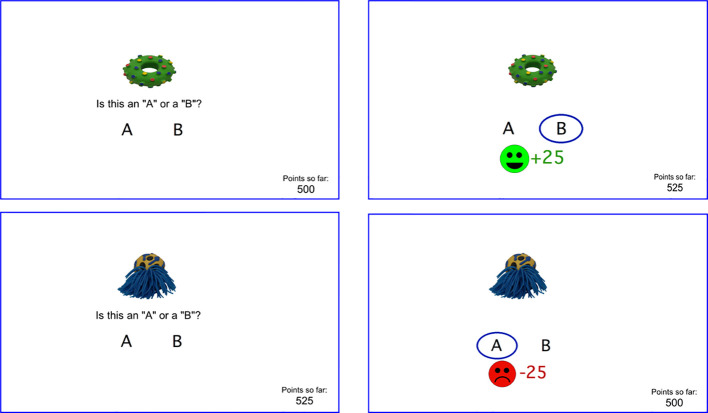
Method: Veterans (N=60) at high-risk for suicide were tested on a task of reward- and punishment-based learning, at multiple sessions across a one-year period. Each session was coded according to whether the participant had (1) an actual suicide attempt (ASA); (2) another suicide-related event (OtherSE) such as suicidal behavior or suicidal ideation-related hospital admission (but not an ASA); or (3) neither (noSE) in the next 90 days. Computational modeling was used to estimate latent cognitive variables including learning rates from positive and negative outcomes, and the subjective value of ambiguous feedback.
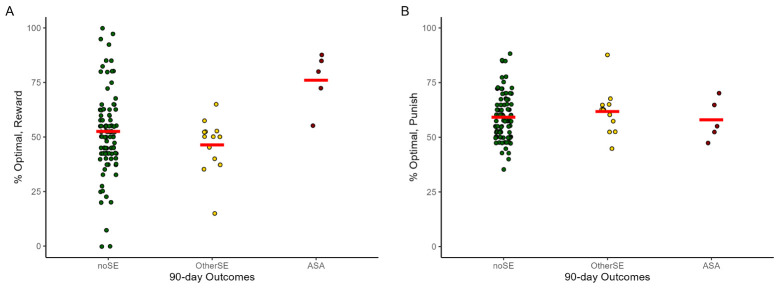
Results: Optimal responding on the reward-based trials was positively associated with upcoming ASA, and remained predictive even after controlling for other standard clinical variables such as current suicidal ideation severity and prior suicide attempts. Computational modeling revealed that patients with upcoming ASA tended to view ambiguous outcomes as similar to weak punishment, while OtherSE and noSE both tended to view the ambiguous outcome as similar to weak reward. Differences in the reinforcement value of the neutral outcome remained predictive for ASA even after controlling for current suicidal ideation and prior suicide attempts.
Conclusion: A reinforcement learning task with ambiguous neutral outcomes may provide a useful tool to help predict near-term risk of ASA in at-risk patients. While most individuals interpret ambiguous feedback as mildly reinforcing (a "glass half full" interpretation), those with upcoming ASA tend to view it as mildly punishing (a "glass half empty" interpretation). While the current results are based on a very small sample with relatively few ASA events, and require replication in a larger sample, they provide support for the role of negative biases in feedback-based learning in the cognitive profile of suicide risk.
期刊介绍:
Frontiers in Psychiatry publishes rigorously peer-reviewed research across a wide spectrum of translational, basic and clinical research. Field Chief Editor Stefan Borgwardt at the University of Basel is supported by an outstanding Editorial Board of international researchers. This multidisciplinary open-access journal is at the forefront of disseminating and communicating scientific knowledge and impactful discoveries to researchers, academics, clinicians and the public worldwide.
The journal''s mission is to use translational approaches to improve therapeutic options for mental illness and consequently to improve patient treatment outcomes.





 京公网安备 11010802042870号
京ICP备2023020795号-1
京公网安备 11010802042870号
京ICP备2023020795号-1

 分享
分享
 求助内容:
求助内容: 应助结果提醒方式:
 扫码关注我们
