{"title":"Bryo delic应承担的!野苔中多种联苯大麻素的研究","authors":"Philip Carella","doi":"10.1111/nph.70026","DOIUrl":null,"url":null,"abstract":"<p>Phytocannabinoids are the active ingredients in cannabis extracts, with tetrahydrocannabinol (THC) and cannabidiol (CBD) metabolites representing the two major subclasses with medicinal and economic value (Reekie <i>et al</i>., <span>2017</span>). Early investigations of cannabinoid compounds prompted the discovery of human cannabinoid receptors and the endocannabinoid system, which has diverse roles in immunity and the nervous system (Ligresti <i>et al</i>., <span>2016</span>). Despite their prominent association with the plant <i>Cannabis sativa</i>, cannabinoids have been isolated from a wider evolutionary spectrum of organisms, including other clades of flowering plants (<i>Helichrysum umbraculigerum</i>, <i>Glycyrrhiza foetida</i>, <i>Amorpha fruticosa</i>, <i>Rhododendron dauricum</i>, and <i>Rhododendron anthopogonoides</i>), nonflowering plants belonging to the <i>Radula</i> genus of liverworts (<i>Radula marginata</i> and <i>R. perrottetii</i>), and even fungi (<i>Albatrellus</i> and <i>Cylindrocarpon olidum</i>) (Gülck & Møller, <span>2020</span>). Among these cannabinoid producers, <i>Radula</i> liverworts are notable for the inverted stereoconfigurations of their cannabinoids relative to other organisms.</p><p>The cannabinoid-like molecule <i>cis</i>-perrottetine (<i>cis</i>-PET) was first identified in <i>R. perottetii</i> liverworts in Japan and is a structural analog of (−)-Δ9-<i>trans</i>-tetrahydrocannabinol (Δ9-<i>trans</i>-THC) (Toyota <i>et al</i>., <span>1994</span>). Since then, cannabinoid-like molecules have been identified in <i>R. laxirameae</i> growing in Costa Rica (Cullmann & Becker, <span>1999</span>) and <i>R. marginata</i> growing in New Zealand (Toyota <i>et al</i>., <span>2002</span>). Unlike the common model liverwort <i>Marchantia polymorpha</i>, which develops a thallus plant body, <i>Radula</i> liverworts display a ‘leafy’ morphology where small leaf-like appendages and root hair-like rhizoids emanate from a central stem-like structure (Fig. 1). They also grow epiphytically on the bark of forest trees and are notably slow-growing compared with model liverworts. Pharmacological studies of synthetic liverwort-type <i>cis</i>-PET have shown that this compound has a psychoactive role in mice, where it penetrates the blood brain barrier and stimulates cannabinoid receptor (CB1)-dependent processes with potentially fewer side effects compared with THC (Chicca <i>et al</i>., <span>2018</span>). While this validates <i>Radula cis</i>-PET as a highly promising and pharmacologically relevant metabolite, the chemical and genetic diversity of bibenzyl cannabinoid-like metabolites produced naturally in <i>Radula</i> remained largely unexplored.</p><p><i>Cannabis</i> cultivars generally present as one of three distinct categories of ‘chemotype’ capable of producing high levels of THC, CBD, or a mixture accumulating lower levels of each class (Jin <i>et al</i>., <span>2021</span>). To begin to understand whether <i>Radula</i> liverworts exhibit a similar chemotype range, Andre <i>et al</i>. interrogated natural populations of <i>R. marginata</i> liverworts sampled across three disparate locations during several seasons in New Zealand. By collecting and analytically quantifying cannabinoid-like bibenzyl compounds in over 75 samples, the authors confirmed that wild liverworts produce the THC structural analog <i>cis</i>-PET. They also found accumulation of perrottetinediol (PTD, a structural analog of CBD) and bibenzyl-4-geranyl (BB4G, a structural analog of the THC/CBD precursor cannabigerol) among other cannabinoid-like compounds and their chemical derivatives (Fig. 1). Importantly, they observed that individual plants fell into definable chemotype categories displaying PET dominance, PTD dominance, or an intermediate mixture of the two. Remarkably, this mirrored the chemotype classes observed in <i>Cannabis</i>, where THC/CBD ratios are genetically defined by the presence, absence, and heterozygosity of functional <i>CBDAS (CBD acid synthase)</i> and <i>THCAS</i> (<i>THC acid synthase</i>) alleles of enzymes that both compete for the same precursor substrate CBGA (cannabigerolic acid) (Ren <i>et al</i>., <span>2021</span>). While a full genetic understanding of PET vs PTD dominance remains to be resolved, the authors speculate that a comparable but independently evolved genetic framework underpins cannabinoid chemotypes in <i>R. marginata</i>.</p><p>Since varying PET vs PTD levels could be explained by seasonal variation in abiotic factors (light, climate), the authors tested whether <i>R. marginata</i> propagated in controlled and/or axenic conditions maintained their chemotype status. Plants cultivated indoors showed little difference in cannabinoid levels for the first 4 months when compared to the wild plants from which they were sourced, supporting the idea chemotypes are indeed stable and therefore likely to be genetically encoded. Indeed, the same plants cultivated for over 1 year in artificial lighting, supplemented with far-red light, eventually produced higher levels of PET or PTD, depending on their original chemotype. The authors also explored whether axenic cultures of <i>R. marginata</i> could be generated and used for chemical analyses. While sterile plant cultures propagated in tissue culture conditions were developmentally impacted and slower growing overall, they generally produced higher levels (<i>c</i>. twofold) of cannabinoids than their wild-grown counterparts. This again supports the idea that <i>R. marginata</i> chemotypes are genetically encoded, demonstrating promise for future efforts to cultivate these liverworts for cannabinoid production.</p><p>The chemical and ecological insights provided by Andre <i>et al</i>. significantly expand our understanding of cannabinoid structural diversity in a divergent land plant lineage. While it is clear that some <i>Radula</i> liverwort species have independently evolved the ability to make cannabinoid-like compounds, further research is required to clarify the genetic and biochemical pathways underpinning their synthesis. Importantly, future efforts to generate chromosome-level genome resources should include a diverse range of individual accessions that sample both geographically distinct ‘ecotypes’ and chemically diverse ‘chemotypes’. In addition, future explorations into the utility of <i>R. marginata</i> cannabinoid-like bibenzyls for liverwort fitness may also reveal the ecological context underlying their evolution. Initial hypotheses for this include a potential role in plant–herbivore interactions, given that these compounds accumulate within liverwort oil bodies that are known to repel insects in the model liverwort <i>Marchantia</i> (Kanazawa <i>et al</i>., <span>2020</span>; Romani <i>et al</i>., <span>2020</span>). In any case, the research and resources generated by Andre <i>et al</i>. represent an important first step toward such endeavors.</p><p>While it would be easy to focus solely on their fascinating scientific discoveries, the authors also take care to highlight the ethical and moral considerations of their work, which was performed with permission and assistance from indigenous authorities on tribal estates. Like all species endemic to New Zealand, <i>R. marginata</i> are considered natural treasures to Māori who are guardians of their conservation. The authors note and rightfully remind readers that future exploitation of <i>R. marginata</i> chemistry must be performed under international frameworks that recognize Indigenous peoples' assertions of authority over natural resources. This study presents a successful example of such collaborations.</p><p>The New Phytologist Foundation remains neutral with regard to jurisdictional claims in maps and in any institutional affiliations.</p>","PeriodicalId":214,"journal":{"name":"New Phytologist","volume":"246 6","pages":"2377-2379"},"PeriodicalIF":8.1000,"publicationDate":"2025-05-21","publicationTypes":"Journal Article","fieldsOfStudy":null,"isOpenAccess":false,"openAccessPdf":"https://onlinelibrary.wiley.com/doi/epdf/10.1111/nph.70026","citationCount":"0","resultStr":"{\"title\":\"Bryo-delic! Diverse bibenzyl cannabinoids in the liverwort Radula marginata\",\"authors\":\"Philip Carella\",\"doi\":\"10.1111/nph.70026\",\"DOIUrl\":null,\"url\":null,\"abstract\":\"<p>Phytocannabinoids are the active ingredients in cannabis extracts, with tetrahydrocannabinol (THC) and cannabidiol (CBD) metabolites representing the two major subclasses with medicinal and economic value (Reekie <i>et al</i>., <span>2017</span>). Early investigations of cannabinoid compounds prompted the discovery of human cannabinoid receptors and the endocannabinoid system, which has diverse roles in immunity and the nervous system (Ligresti <i>et al</i>., <span>2016</span>). Despite their prominent association with the plant <i>Cannabis sativa</i>, cannabinoids have been isolated from a wider evolutionary spectrum of organisms, including other clades of flowering plants (<i>Helichrysum umbraculigerum</i>, <i>Glycyrrhiza foetida</i>, <i>Amorpha fruticosa</i>, <i>Rhododendron dauricum</i>, and <i>Rhododendron anthopogonoides</i>), nonflowering plants belonging to the <i>Radula</i> genus of liverworts (<i>Radula marginata</i> and <i>R. perrottetii</i>), and even fungi (<i>Albatrellus</i> and <i>Cylindrocarpon olidum</i>) (Gülck & Møller, <span>2020</span>). Among these cannabinoid producers, <i>Radula</i> liverworts are notable for the inverted stereoconfigurations of their cannabinoids relative to other organisms.</p><p>The cannabinoid-like molecule <i>cis</i>-perrottetine (<i>cis</i>-PET) was first identified in <i>R. perottetii</i> liverworts in Japan and is a structural analog of (−)-Δ9-<i>trans</i>-tetrahydrocannabinol (Δ9-<i>trans</i>-THC) (Toyota <i>et al</i>., <span>1994</span>). Since then, cannabinoid-like molecules have been identified in <i>R. laxirameae</i> growing in Costa Rica (Cullmann & Becker, <span>1999</span>) and <i>R. marginata</i> growing in New Zealand (Toyota <i>et al</i>., <span>2002</span>). Unlike the common model liverwort <i>Marchantia polymorpha</i>, which develops a thallus plant body, <i>Radula</i> liverworts display a ‘leafy’ morphology where small leaf-like appendages and root hair-like rhizoids emanate from a central stem-like structure (Fig. 1). They also grow epiphytically on the bark of forest trees and are notably slow-growing compared with model liverworts. Pharmacological studies of synthetic liverwort-type <i>cis</i>-PET have shown that this compound has a psychoactive role in mice, where it penetrates the blood brain barrier and stimulates cannabinoid receptor (CB1)-dependent processes with potentially fewer side effects compared with THC (Chicca <i>et al</i>., <span>2018</span>). While this validates <i>Radula cis</i>-PET as a highly promising and pharmacologically relevant metabolite, the chemical and genetic diversity of bibenzyl cannabinoid-like metabolites produced naturally in <i>Radula</i> remained largely unexplored.</p><p><i>Cannabis</i> cultivars generally present as one of three distinct categories of ‘chemotype’ capable of producing high levels of THC, CBD, or a mixture accumulating lower levels of each class (Jin <i>et al</i>., <span>2021</span>). To begin to understand whether <i>Radula</i> liverworts exhibit a similar chemotype range, Andre <i>et al</i>. interrogated natural populations of <i>R. marginata</i> liverworts sampled across three disparate locations during several seasons in New Zealand. By collecting and analytically quantifying cannabinoid-like bibenzyl compounds in over 75 samples, the authors confirmed that wild liverworts produce the THC structural analog <i>cis</i>-PET. They also found accumulation of perrottetinediol (PTD, a structural analog of CBD) and bibenzyl-4-geranyl (BB4G, a structural analog of the THC/CBD precursor cannabigerol) among other cannabinoid-like compounds and their chemical derivatives (Fig. 1). Importantly, they observed that individual plants fell into definable chemotype categories displaying PET dominance, PTD dominance, or an intermediate mixture of the two. Remarkably, this mirrored the chemotype classes observed in <i>Cannabis</i>, where THC/CBD ratios are genetically defined by the presence, absence, and heterozygosity of functional <i>CBDAS (CBD acid synthase)</i> and <i>THCAS</i> (<i>THC acid synthase</i>) alleles of enzymes that both compete for the same precursor substrate CBGA (cannabigerolic acid) (Ren <i>et al</i>., <span>2021</span>). While a full genetic understanding of PET vs PTD dominance remains to be resolved, the authors speculate that a comparable but independently evolved genetic framework underpins cannabinoid chemotypes in <i>R. marginata</i>.</p><p>Since varying PET vs PTD levels could be explained by seasonal variation in abiotic factors (light, climate), the authors tested whether <i>R. marginata</i> propagated in controlled and/or axenic conditions maintained their chemotype status. Plants cultivated indoors showed little difference in cannabinoid levels for the first 4 months when compared to the wild plants from which they were sourced, supporting the idea chemotypes are indeed stable and therefore likely to be genetically encoded. Indeed, the same plants cultivated for over 1 year in artificial lighting, supplemented with far-red light, eventually produced higher levels of PET or PTD, depending on their original chemotype. The authors also explored whether axenic cultures of <i>R. marginata</i> could be generated and used for chemical analyses. While sterile plant cultures propagated in tissue culture conditions were developmentally impacted and slower growing overall, they generally produced higher levels (<i>c</i>. twofold) of cannabinoids than their wild-grown counterparts. This again supports the idea that <i>R. marginata</i> chemotypes are genetically encoded, demonstrating promise for future efforts to cultivate these liverworts for cannabinoid production.</p><p>The chemical and ecological insights provided by Andre <i>et al</i>. significantly expand our understanding of cannabinoid structural diversity in a divergent land plant lineage. While it is clear that some <i>Radula</i> liverwort species have independently evolved the ability to make cannabinoid-like compounds, further research is required to clarify the genetic and biochemical pathways underpinning their synthesis. Importantly, future efforts to generate chromosome-level genome resources should include a diverse range of individual accessions that sample both geographically distinct ‘ecotypes’ and chemically diverse ‘chemotypes’. In addition, future explorations into the utility of <i>R. marginata</i> cannabinoid-like bibenzyls for liverwort fitness may also reveal the ecological context underlying their evolution. Initial hypotheses for this include a potential role in plant–herbivore interactions, given that these compounds accumulate within liverwort oil bodies that are known to repel insects in the model liverwort <i>Marchantia</i> (Kanazawa <i>et al</i>., <span>2020</span>; Romani <i>et al</i>., <span>2020</span>). In any case, the research and resources generated by Andre <i>et al</i>. represent an important first step toward such endeavors.</p><p>While it would be easy to focus solely on their fascinating scientific discoveries, the authors also take care to highlight the ethical and moral considerations of their work, which was performed with permission and assistance from indigenous authorities on tribal estates. Like all species endemic to New Zealand, <i>R. marginata</i> are considered natural treasures to Māori who are guardians of their conservation. The authors note and rightfully remind readers that future exploitation of <i>R. marginata</i> chemistry must be performed under international frameworks that recognize Indigenous peoples' assertions of authority over natural resources. This study presents a successful example of such collaborations.</p><p>The New Phytologist Foundation remains neutral with regard to jurisdictional claims in maps and in any institutional affiliations.</p>\",\"PeriodicalId\":214,\"journal\":{\"name\":\"New Phytologist\",\"volume\":\"246 6\",\"pages\":\"2377-2379\"},\"PeriodicalIF\":8.1000,\"publicationDate\":\"2025-05-21\",\"publicationTypes\":\"Journal Article\",\"fieldsOfStudy\":null,\"isOpenAccess\":false,\"openAccessPdf\":\"https://onlinelibrary.wiley.com/doi/epdf/10.1111/nph.70026\",\"citationCount\":\"0\",\"resultStr\":null,\"platform\":\"Semanticscholar\",\"paperid\":null,\"PeriodicalName\":\"New Phytologist\",\"FirstCategoryId\":\"99\",\"ListUrlMain\":\"https://onlinelibrary.wiley.com/doi/10.1111/nph.70026\",\"RegionNum\":1,\"RegionCategory\":\"生物学\",\"ArticlePicture\":[],\"TitleCN\":null,\"AbstractTextCN\":null,\"PMCID\":null,\"EPubDate\":\"2025/2/15 0:00:00\",\"PubModel\":\"Epub\",\"JCR\":\"Q1\",\"JCRName\":\"PLANT SCIENCES\",\"Score\":null,\"Total\":0}","platform":"Semanticscholar","paperid":null,"PeriodicalName":"New Phytologist","FirstCategoryId":"99","ListUrlMain":"https://onlinelibrary.wiley.com/doi/10.1111/nph.70026","RegionNum":1,"RegionCategory":"生物学","ArticlePicture":[],"TitleCN":null,"AbstractTextCN":null,"PMCID":null,"EPubDate":"2025/2/15 0:00:00","PubModel":"Epub","JCR":"Q1","JCRName":"PLANT SCIENCES","Score":null,"Total":0}
引用次数: 0
摘要
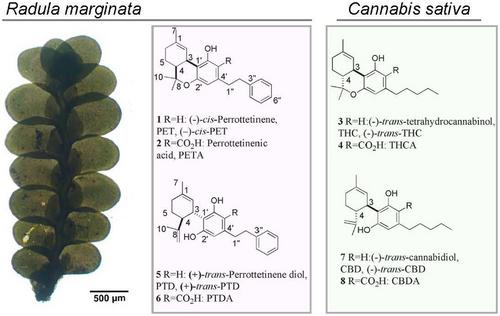
大麻素是一类结构多样的具有精神活性的动物化合物。顾名思义,大麻素最初是从药用和文化相关的植物大麻中提取的,大麻曾一度受到诟病,但最近在世界许多地方又死气沉沉的。这使人们对探索大麻素的遗传和化学多样性产生了新的兴趣,大麻素在大麻属植物和不同的陆地植物分支中进化而来。在最近发表在《新植物学家》上的一篇文章中,Andre等人(2024,doi: 10.1111/nph.20349)探索了叶苔植物Radula marginata产生的大麻素样代谢物的多样性。缘苔属植物是一种非维管/非种子植物,在450年前从开花植物如苜蓿中分化出来。有趣的是,这种苔类植物产生多种类型的联苯化合物,其结构与大麻中的主要大麻素相似,使其成为探索大麻素在植物界独立进化的化学和遗传多样性的重要实验系统。“Andre等人提供的化学和生态学见解大大扩展了我们对不同陆地植物谱系中大麻素结构多样性的理解。植物大麻素是大麻提取物中的活性成分,四氢大麻酚(THC)和大麻二酚(CBD)代谢物代表了具有药用和经济价值的两个主要亚类(Reekie et al., 2017)。早期对大麻素化合物的研究促进了人类大麻素受体和内源性大麻素系统的发现,其在免疫和神经系统中具有多种作用(Ligresti et al., 2016)。尽管大麻素与大麻植物有着显著的联系,但大麻素已经从更广泛的生物进化光谱中分离出来,包括开花植物的其他分支(蜡菊、甘草、紫穗槐、杜鹃花和人形杜鹃花),属苔类植物的Radula属的非开花植物(Radula marginata和R. perrottetii),甚至真菌(信天虫和圆柱carpon olidum) (g<e:1> lck &;Mø噢,2020)。在这些大麻素生产者中,Radula liverworts因其大麻素相对于其他生物的倒置立体构型而闻名。大麻素样分子顺式- perotetii(顺式- pet)首次在日本的r.p otetii liverworts中被发现,是(−)-Δ9-trans-tetrahydrocannabinol (Δ9-trans-THC)的结构类似物(Toyota et al., 1994)。从那时起,在哥斯达黎加生长的r.l axirameae (Cullmann &;Becker, 1999)和R. marginata在新西兰的生长(Toyota et al., 2002)。与常见的多态地衣(Marchantia polymorpha)不同,地衣呈现出“叶状”形态,其中小的叶状附属物和根毛状的根状体从中心茎状结构中发出(图1)。它们也生长在森林树木的树皮上,与模式地衣相比,生长速度明显较慢。合成肝草型顺式pet的药理学研究表明,这种化合物在小鼠中具有精神活性,与四氢大麻酚相比,它能穿透血脑屏障,刺激大麻素受体(CB1)依赖的过程,副作用可能更少(Chicca等人,2018)。虽然这证实了Radula cis-PET是一种非常有前途的药理学相关代谢物,但Radula天然产生的联苯大麻素样代谢物的化学和遗传多样性仍未得到充分研究。叶苔植物Radula marginata产生主要大麻大麻素的结构类似物。这是一张野外采集的野田参的照片,旁边是其联苯化合物顺式- perrotitenine(顺式- pet)或反式- perrotitene二醇(trans-PTD)的一般化学结构,它们的结构分别类似于大麻反式四氢大麻酚(trans-THC)和反式大麻二酚(trans-CBD)。该图改编自Andre et al. (2024;doi: 10.1111 / nph.20349)。大麻品种通常是三种不同类型的“化学型”之一,能够产生高水平的四氢大麻酚、CBD,或积累每一类较低水平的混合物(Jin et al., 2021)。为了开始了解Radula liverworts是否表现出相似的化学型范围,Andre等人在新西兰的几个季节中从三个不同的地点取样了R. marginata liverworts的自然种群。通过在超过75个样品中收集和分析定量大麻素样联苯化合物,作者证实野生肝草产生四氢大麻酚结构类似物顺式pet。 他们还发现,在其他大麻素样化合物及其化学衍生物中,perrotetindiol (PTD, CBD的结构类似物)和bibenzyl-4-geranyl (BB4G, THC/CBD前体大麻igerol的结构类似物)积累(图1)。重要的是,他们观察到单个植物属于可定义的化学型类别,显示PET优势,PTD优势,或两者的中间混合物。值得注意的是,这反映了在大麻中观察到的化学型分类,其中THC/CBD比率是由功能性CBDAS (CBD酸合成酶)和THCAS (THC酸合成酶)等位基因的存在、缺失和杂合性决定的,这两种酶都竞争相同的前体底物CBGA(大麻酚酸)(Ren et al., 2021)。虽然对PET与PTD优势的完整遗传理解仍有待解决,但作者推测,一个可比较但独立进化的遗传框架支撑了边际大麻素化学型。由于PET和PTD水平的变化可以通过非生物因素(光、气候)的季节性变化来解释,因此作者测试了在控制和/或无性系条件下繁殖的边缘田鼠是否保持其化学型状态。与野生植物相比,室内栽培的植物在前4个月的大麻素水平几乎没有差异,这支持了化学型确实稳定的观点,因此可能是遗传编码的。事实上,同样的植物在人工照明下种植超过1年,并补充远红光,最终产生更高水平的PET或PTD,这取决于它们最初的化学型。作者还探讨了是否可以产生无性培养物并将其用于化学分析。虽然在组织培养条件下繁殖的无菌植物培养物的发育受到影响,总体上生长较慢,但它们通常比野生植物产生更高水平的大麻素(c.两倍)。这再次支持了边田草化学型是遗传编码的观点,表明了未来努力培养这些地草以生产大麻素的希望。Andre等人提供的化学和生态学见解显着扩展了我们对不同陆地植物谱系中大麻素结构多样性的理解。虽然很明显,一些Radula liverwort物种已经独立地进化出了制造大麻素样化合物的能力,但需要进一步的研究来阐明支撑其合成的遗传和生化途径。重要的是,未来产生染色体水平基因组资源的努力应该包括不同范围的个体资源,这些资源既包括地理上不同的“生态型”,也包括化学上不同的“化学型”。此外,未来对边苔大麻素样联苯在苔类适应性中的作用的探索也可能揭示其进化背后的生态背景。对此的初步假设包括在植物-食草动物相互作用中发挥潜在作用,因为这些化合物在已知的模型苔类Marchantia中具有驱虫作用的苔油体中积累(Kanazawa等,2020;Romani等人,2020)。无论如何,Andre等人所做的研究和提供的资源都是朝着这一目标迈出的重要的第一步。虽然只关注他们迷人的科学发现很容易,但作者也小心地强调了他们工作的伦理和道德考虑,他们的工作是在部落庄园的土著当局的许可和帮助下进行的。像新西兰特有的所有物种一样,R. marginata被Māori视为自然宝藏,他们是保护它们的守护者。作者注意到,并正确地提醒读者,未来对R. marginata化学的开发必须在承认土著人民对自然资源的权威主张的国际框架下进行。本研究是此类合作的成功范例。
Bryo-delic! Diverse bibenzyl cannabinoids in the liverwort Radula marginata
Phytocannabinoids are the active ingredients in cannabis extracts, with tetrahydrocannabinol (THC) and cannabidiol (CBD) metabolites representing the two major subclasses with medicinal and economic value (Reekie et al., 2017). Early investigations of cannabinoid compounds prompted the discovery of human cannabinoid receptors and the endocannabinoid system, which has diverse roles in immunity and the nervous system (Ligresti et al., 2016). Despite their prominent association with the plant Cannabis sativa, cannabinoids have been isolated from a wider evolutionary spectrum of organisms, including other clades of flowering plants (Helichrysum umbraculigerum, Glycyrrhiza foetida, Amorpha fruticosa, Rhododendron dauricum, and Rhododendron anthopogonoides), nonflowering plants belonging to the Radula genus of liverworts (Radula marginata and R. perrottetii), and even fungi (Albatrellus and Cylindrocarpon olidum) (Gülck & Møller, 2020). Among these cannabinoid producers, Radula liverworts are notable for the inverted stereoconfigurations of their cannabinoids relative to other organisms.
The cannabinoid-like molecule cis-perrottetine (cis-PET) was first identified in R. perottetii liverworts in Japan and is a structural analog of (−)-Δ9-trans-tetrahydrocannabinol (Δ9-trans-THC) (Toyota et al., 1994). Since then, cannabinoid-like molecules have been identified in R. laxirameae growing in Costa Rica (Cullmann & Becker, 1999) and R. marginata growing in New Zealand (Toyota et al., 2002). Unlike the common model liverwort Marchantia polymorpha, which develops a thallus plant body, Radula liverworts display a ‘leafy’ morphology where small leaf-like appendages and root hair-like rhizoids emanate from a central stem-like structure (Fig. 1). They also grow epiphytically on the bark of forest trees and are notably slow-growing compared with model liverworts. Pharmacological studies of synthetic liverwort-type cis-PET have shown that this compound has a psychoactive role in mice, where it penetrates the blood brain barrier and stimulates cannabinoid receptor (CB1)-dependent processes with potentially fewer side effects compared with THC (Chicca et al., 2018). While this validates Radula cis-PET as a highly promising and pharmacologically relevant metabolite, the chemical and genetic diversity of bibenzyl cannabinoid-like metabolites produced naturally in Radula remained largely unexplored.
Cannabis cultivars generally present as one of three distinct categories of ‘chemotype’ capable of producing high levels of THC, CBD, or a mixture accumulating lower levels of each class (Jin et al., 2021). To begin to understand whether Radula liverworts exhibit a similar chemotype range, Andre et al. interrogated natural populations of R. marginata liverworts sampled across three disparate locations during several seasons in New Zealand. By collecting and analytically quantifying cannabinoid-like bibenzyl compounds in over 75 samples, the authors confirmed that wild liverworts produce the THC structural analog cis-PET. They also found accumulation of perrottetinediol (PTD, a structural analog of CBD) and bibenzyl-4-geranyl (BB4G, a structural analog of the THC/CBD precursor cannabigerol) among other cannabinoid-like compounds and their chemical derivatives (Fig. 1). Importantly, they observed that individual plants fell into definable chemotype categories displaying PET dominance, PTD dominance, or an intermediate mixture of the two. Remarkably, this mirrored the chemotype classes observed in Cannabis, where THC/CBD ratios are genetically defined by the presence, absence, and heterozygosity of functional CBDAS (CBD acid synthase) and THCAS (THC acid synthase) alleles of enzymes that both compete for the same precursor substrate CBGA (cannabigerolic acid) (Ren et al., 2021). While a full genetic understanding of PET vs PTD dominance remains to be resolved, the authors speculate that a comparable but independently evolved genetic framework underpins cannabinoid chemotypes in R. marginata.
Since varying PET vs PTD levels could be explained by seasonal variation in abiotic factors (light, climate), the authors tested whether R. marginata propagated in controlled and/or axenic conditions maintained their chemotype status. Plants cultivated indoors showed little difference in cannabinoid levels for the first 4 months when compared to the wild plants from which they were sourced, supporting the idea chemotypes are indeed stable and therefore likely to be genetically encoded. Indeed, the same plants cultivated for over 1 year in artificial lighting, supplemented with far-red light, eventually produced higher levels of PET or PTD, depending on their original chemotype. The authors also explored whether axenic cultures of R. marginata could be generated and used for chemical analyses. While sterile plant cultures propagated in tissue culture conditions were developmentally impacted and slower growing overall, they generally produced higher levels (c. twofold) of cannabinoids than their wild-grown counterparts. This again supports the idea that R. marginata chemotypes are genetically encoded, demonstrating promise for future efforts to cultivate these liverworts for cannabinoid production.
The chemical and ecological insights provided by Andre et al. significantly expand our understanding of cannabinoid structural diversity in a divergent land plant lineage. While it is clear that some Radula liverwort species have independently evolved the ability to make cannabinoid-like compounds, further research is required to clarify the genetic and biochemical pathways underpinning their synthesis. Importantly, future efforts to generate chromosome-level genome resources should include a diverse range of individual accessions that sample both geographically distinct ‘ecotypes’ and chemically diverse ‘chemotypes’. In addition, future explorations into the utility of R. marginata cannabinoid-like bibenzyls for liverwort fitness may also reveal the ecological context underlying their evolution. Initial hypotheses for this include a potential role in plant–herbivore interactions, given that these compounds accumulate within liverwort oil bodies that are known to repel insects in the model liverwort Marchantia (Kanazawa et al., 2020; Romani et al., 2020). In any case, the research and resources generated by Andre et al. represent an important first step toward such endeavors.
While it would be easy to focus solely on their fascinating scientific discoveries, the authors also take care to highlight the ethical and moral considerations of their work, which was performed with permission and assistance from indigenous authorities on tribal estates. Like all species endemic to New Zealand, R. marginata are considered natural treasures to Māori who are guardians of their conservation. The authors note and rightfully remind readers that future exploitation of R. marginata chemistry must be performed under international frameworks that recognize Indigenous peoples' assertions of authority over natural resources. This study presents a successful example of such collaborations.
The New Phytologist Foundation remains neutral with regard to jurisdictional claims in maps and in any institutional affiliations.
期刊介绍:
New Phytologist is an international electronic journal published 24 times a year. It is owned by the New Phytologist Foundation, a non-profit-making charitable organization dedicated to promoting plant science. The journal publishes excellent, novel, rigorous, and timely research and scholarship in plant science and its applications. The articles cover topics in five sections: Physiology & Development, Environment, Interaction, Evolution, and Transformative Plant Biotechnology. These sections encompass intracellular processes, global environmental change, and encourage cross-disciplinary approaches. The journal recognizes the use of techniques from molecular and cell biology, functional genomics, modeling, and system-based approaches in plant science. Abstracting and Indexing Information for New Phytologist includes Academic Search, AgBiotech News & Information, Agroforestry Abstracts, Biochemistry & Biophysics Citation Index, Botanical Pesticides, CAB Abstracts®, Environment Index, Global Health, and Plant Breeding Abstracts, and others.






 京公网安备 11010802042870号
京ICP备2023020795号-1
京公网安备 11010802042870号
京ICP备2023020795号-1

 分享
分享
 求助内容:
求助内容: 应助结果提醒方式:
 扫码关注我们
