{"title":"长期慢性暴露于苯并[a]芘和儿茶酚诱导肺癌细胞多药耐药","authors":"Tongkuo Yuan , Yu Zheng , Jing Chen , Huancai Yin , Jian Yin","doi":"10.1016/j.envpol.2025.125859","DOIUrl":null,"url":null,"abstract":"<div><div>Multiple studies have raised concerns about the impact of long-term exposure to environmental pollutants on the occurrence and progression of cancer, but little is known about how these compounds affect the treatment of cancer patients. In this work, two common pollutants including benzo [a]pyrene (B [a]P) and catechol (CL) were tested for their chronic effects on the efficacy of common chemotherapeutic drug in lung cancer (A549) cells. Both pollutants were unlikely to be the substrates of ABC transporters, as their toxicity was unaffected by ABC transporter inhibitors. However, their repeated exposure led to the generation of chemoresistance to doxorubicin (DOX) and cisplatin (CDDP), indicating the formation of multidrug-resistance (MDR) cells. Compared with DOX-resistant cells, decreased expression of ABC transporters but increased responses were found in pollutants-resistant cells. In addition, pollutants-resistant cells were more potent in up-regulating anti-apoptosis, proliferation, and migration pathways, which were confirmed by the wound-healing and apoptosis assays. Overall, these results indicated a distinct MDR mechanism induced by non-substrate pollutants, and could be beneficial for understanding the environmental risk of pollutants in their “safe” concentrations.</div></div>","PeriodicalId":311,"journal":{"name":"Environmental Pollution","volume":"369 ","pages":"Article 125859"},"PeriodicalIF":7.3000,"publicationDate":"2025-03-15","publicationTypes":"Journal Article","fieldsOfStudy":null,"isOpenAccess":false,"openAccessPdf":"","citationCount":"0","resultStr":"{\"title\":\"Long-term chronic exposure to benzo[a]pyrene and catechol induced multidrug resistance in lung cancer cells\",\"authors\":\"Tongkuo Yuan , Yu Zheng , Jing Chen , Huancai Yin , Jian Yin\",\"doi\":\"10.1016/j.envpol.2025.125859\",\"DOIUrl\":null,\"url\":null,\"abstract\":\"<div><div>Multiple studies have raised concerns about the impact of long-term exposure to environmental pollutants on the occurrence and progression of cancer, but little is known about how these compounds affect the treatment of cancer patients. In this work, two common pollutants including benzo [a]pyrene (B [a]P) and catechol (CL) were tested for their chronic effects on the efficacy of common chemotherapeutic drug in lung cancer (A549) cells. Both pollutants were unlikely to be the substrates of ABC transporters, as their toxicity was unaffected by ABC transporter inhibitors. However, their repeated exposure led to the generation of chemoresistance to doxorubicin (DOX) and cisplatin (CDDP), indicating the formation of multidrug-resistance (MDR) cells. Compared with DOX-resistant cells, decreased expression of ABC transporters but increased responses were found in pollutants-resistant cells. In addition, pollutants-resistant cells were more potent in up-regulating anti-apoptosis, proliferation, and migration pathways, which were confirmed by the wound-healing and apoptosis assays. Overall, these results indicated a distinct MDR mechanism induced by non-substrate pollutants, and could be beneficial for understanding the environmental risk of pollutants in their “safe” concentrations.</div></div>\",\"PeriodicalId\":311,\"journal\":{\"name\":\"Environmental Pollution\",\"volume\":\"369 \",\"pages\":\"Article 125859\"},\"PeriodicalIF\":7.3000,\"publicationDate\":\"2025-03-15\",\"publicationTypes\":\"Journal Article\",\"fieldsOfStudy\":null,\"isOpenAccess\":false,\"openAccessPdf\":\"\",\"citationCount\":\"0\",\"resultStr\":null,\"platform\":\"Semanticscholar\",\"paperid\":null,\"PeriodicalName\":\"Environmental Pollution\",\"FirstCategoryId\":\"93\",\"ListUrlMain\":\"https://www.sciencedirect.com/science/article/pii/S0269749125002325\",\"RegionNum\":2,\"RegionCategory\":\"环境科学与生态学\",\"ArticlePicture\":[],\"TitleCN\":null,\"AbstractTextCN\":null,\"PMCID\":null,\"EPubDate\":\"2025/2/13 0:00:00\",\"PubModel\":\"Epub\",\"JCR\":\"Q1\",\"JCRName\":\"ENVIRONMENTAL SCIENCES\",\"Score\":null,\"Total\":0}","platform":"Semanticscholar","paperid":null,"PeriodicalName":"Environmental Pollution","FirstCategoryId":"93","ListUrlMain":"https://www.sciencedirect.com/science/article/pii/S0269749125002325","RegionNum":2,"RegionCategory":"环境科学与生态学","ArticlePicture":[],"TitleCN":null,"AbstractTextCN":null,"PMCID":null,"EPubDate":"2025/2/13 0:00:00","PubModel":"Epub","JCR":"Q1","JCRName":"ENVIRONMENTAL SCIENCES","Score":null,"Total":0}
Long-term chronic exposure to benzo[a]pyrene and catechol induced multidrug resistance in lung cancer cells
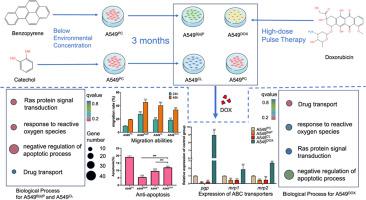
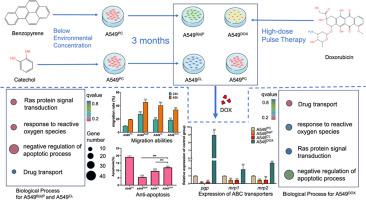
Multiple studies have raised concerns about the impact of long-term exposure to environmental pollutants on the occurrence and progression of cancer, but little is known about how these compounds affect the treatment of cancer patients. In this work, two common pollutants including benzo [a]pyrene (B [a]P) and catechol (CL) were tested for their chronic effects on the efficacy of common chemotherapeutic drug in lung cancer (A549) cells. Both pollutants were unlikely to be the substrates of ABC transporters, as their toxicity was unaffected by ABC transporter inhibitors. However, their repeated exposure led to the generation of chemoresistance to doxorubicin (DOX) and cisplatin (CDDP), indicating the formation of multidrug-resistance (MDR) cells. Compared with DOX-resistant cells, decreased expression of ABC transporters but increased responses were found in pollutants-resistant cells. In addition, pollutants-resistant cells were more potent in up-regulating anti-apoptosis, proliferation, and migration pathways, which were confirmed by the wound-healing and apoptosis assays. Overall, these results indicated a distinct MDR mechanism induced by non-substrate pollutants, and could be beneficial for understanding the environmental risk of pollutants in their “safe” concentrations.
期刊介绍:
Environmental Pollution is an international peer-reviewed journal that publishes high-quality research papers and review articles covering all aspects of environmental pollution and its impacts on ecosystems and human health.
Subject areas include, but are not limited to:
• Sources and occurrences of pollutants that are clearly defined and measured in environmental compartments, food and food-related items, and human bodies;
• Interlinks between contaminant exposure and biological, ecological, and human health effects, including those of climate change;
• Contaminants of emerging concerns (including but not limited to antibiotic resistant microorganisms or genes, microplastics/nanoplastics, electronic wastes, light, and noise) and/or their biological, ecological, or human health effects;
• Laboratory and field studies on the remediation/mitigation of environmental pollution via new techniques and with clear links to biological, ecological, or human health effects;
• Modeling of pollution processes, patterns, or trends that is of clear environmental and/or human health interest;
• New techniques that measure and examine environmental occurrences, transport, behavior, and effects of pollutants within the environment or the laboratory, provided that they can be clearly used to address problems within regional or global environmental compartments.




 京公网安备 11010802042870号
京ICP备2023020795号-1
京公网安备 11010802042870号
京ICP备2023020795号-1

 分享
分享
 求助内容:
求助内容: 应助结果提醒方式:
 扫码关注我们
