Hrishikesh P. Ingole , Gautam Saripalli , Zachary T. Jones , Manikannan Parthiban , Johnson Toyinbo , Sruthi Narayanan , Reyazul Rouf Mir , Sachin Rustgi
{"title":"花生热胁迫下花粉活力的全基因组关联分析","authors":"Hrishikesh P. Ingole , Gautam Saripalli , Zachary T. Jones , Manikannan Parthiban , Johnson Toyinbo , Sruthi Narayanan , Reyazul Rouf Mir , Sachin Rustgi","doi":"10.1016/j.stress.2025.100760","DOIUrl":null,"url":null,"abstract":"<div><div>Peanut is one of the most important crops, providing nutrition and food security to millions worldwide. Pollen viability (PV) is a major determinant of yield in crops and is adversely impacted by heat stress. This study aimed to identify molecular markers associated with sustained PV under heat stress. We evaluated 72 genetically non-redundant genotypes from the U.S. peanut mini-core collection for PV under heat stress and compared them to the PV of \"Georgia Green,\" a runner-type peanut variety used as a control. Seventy-two genotypes were grown under optimal conditions (28/22 °C day/night temperatures with a 16 h photoperiod). Once the plants reached the five-leaf stage, heat stress was applied for two weeks by raising the daytime temperature to 38 °C and the nighttime temperature to 28 °C. Un-opened flowers were collected and assayed for PV through <em>in vitro</em> pollen germination. PI 200441 from Japan exhibited the highest PV, while PI 504614 from Colombia showed the lowest. A genome-wide association study for PPV (percent pollen viability) under heat stress identified a marker on chromosome 20. Haplotype analysis revealed a 6 kb region, designated <em>qPPVA20</em>, containing three candidate genes, two of which (ribosomal protein and copper-transporting ATPase) showed high expression in reproductive organs. The co-localization of <em>qPPVA20</em> with a previously reported QTL hotspot for heat stress-related traits makes these genes important targets for future validation. Markers associated with seed lipid compositional traits, such as behenate, arachidate, oleate, and eicosenoate content under optimal growth conditions, were also identified, with plans to investigate the impact of heat stress on these QTLs in a future study.</div></div>","PeriodicalId":34736,"journal":{"name":"Plant Stress","volume":"15 ","pages":"Article 100760"},"PeriodicalIF":8.1000,"publicationDate":"2025-03-01","publicationTypes":"Journal Article","fieldsOfStudy":null,"isOpenAccess":false,"openAccessPdf":"","citationCount":"0","resultStr":"{\"title\":\"Genome-wide association analysis for pollen viability under heat stress in peanut\",\"authors\":\"Hrishikesh P. Ingole , Gautam Saripalli , Zachary T. Jones , Manikannan Parthiban , Johnson Toyinbo , Sruthi Narayanan , Reyazul Rouf Mir , Sachin Rustgi\",\"doi\":\"10.1016/j.stress.2025.100760\",\"DOIUrl\":null,\"url\":null,\"abstract\":\"<div><div>Peanut is one of the most important crops, providing nutrition and food security to millions worldwide. Pollen viability (PV) is a major determinant of yield in crops and is adversely impacted by heat stress. This study aimed to identify molecular markers associated with sustained PV under heat stress. We evaluated 72 genetically non-redundant genotypes from the U.S. peanut mini-core collection for PV under heat stress and compared them to the PV of \\\"Georgia Green,\\\" a runner-type peanut variety used as a control. Seventy-two genotypes were grown under optimal conditions (28/22 °C day/night temperatures with a 16 h photoperiod). Once the plants reached the five-leaf stage, heat stress was applied for two weeks by raising the daytime temperature to 38 °C and the nighttime temperature to 28 °C. Un-opened flowers were collected and assayed for PV through <em>in vitro</em> pollen germination. PI 200441 from Japan exhibited the highest PV, while PI 504614 from Colombia showed the lowest. A genome-wide association study for PPV (percent pollen viability) under heat stress identified a marker on chromosome 20. Haplotype analysis revealed a 6 kb region, designated <em>qPPVA20</em>, containing three candidate genes, two of which (ribosomal protein and copper-transporting ATPase) showed high expression in reproductive organs. The co-localization of <em>qPPVA20</em> with a previously reported QTL hotspot for heat stress-related traits makes these genes important targets for future validation. Markers associated with seed lipid compositional traits, such as behenate, arachidate, oleate, and eicosenoate content under optimal growth conditions, were also identified, with plans to investigate the impact of heat stress on these QTLs in a future study.</div></div>\",\"PeriodicalId\":34736,\"journal\":{\"name\":\"Plant Stress\",\"volume\":\"15 \",\"pages\":\"Article 100760\"},\"PeriodicalIF\":8.1000,\"publicationDate\":\"2025-03-01\",\"publicationTypes\":\"Journal Article\",\"fieldsOfStudy\":null,\"isOpenAccess\":false,\"openAccessPdf\":\"\",\"citationCount\":\"0\",\"resultStr\":null,\"platform\":\"Semanticscholar\",\"paperid\":null,\"PeriodicalName\":\"Plant Stress\",\"FirstCategoryId\":\"1085\",\"ListUrlMain\":\"https://www.sciencedirect.com/science/article/pii/S2667064X25000259\",\"RegionNum\":0,\"RegionCategory\":null,\"ArticlePicture\":[],\"TitleCN\":null,\"AbstractTextCN\":null,\"PMCID\":null,\"EPubDate\":\"2025/2/3 0:00:00\",\"PubModel\":\"Epub\",\"JCR\":\"Q1\",\"JCRName\":\"PLANT SCIENCES\",\"Score\":null,\"Total\":0}","platform":"Semanticscholar","paperid":null,"PeriodicalName":"Plant Stress","FirstCategoryId":"1085","ListUrlMain":"https://www.sciencedirect.com/science/article/pii/S2667064X25000259","RegionNum":0,"RegionCategory":null,"ArticlePicture":[],"TitleCN":null,"AbstractTextCN":null,"PMCID":null,"EPubDate":"2025/2/3 0:00:00","PubModel":"Epub","JCR":"Q1","JCRName":"PLANT SCIENCES","Score":null,"Total":0}
Genome-wide association analysis for pollen viability under heat stress in peanut
Peanut is one of the most important crops, providing nutrition and food security to millions worldwide. Pollen viability (PV) is a major determinant of yield in crops and is adversely impacted by heat stress. This study aimed to identify molecular markers associated with sustained PV under heat stress. We evaluated 72 genetically non-redundant genotypes from the U.S. peanut mini-core collection for PV under heat stress and compared them to the PV of "Georgia Green," a runner-type peanut variety used as a control. Seventy-two genotypes were grown under optimal conditions (28/22 °C day/night temperatures with a 16 h photoperiod). Once the plants reached the five-leaf stage, heat stress was applied for two weeks by raising the daytime temperature to 38 °C and the nighttime temperature to 28 °C. Un-opened flowers were collected and assayed for PV through in vitro pollen germination. PI 200441 from Japan exhibited the highest PV, while PI 504614 from Colombia showed the lowest. A genome-wide association study for PPV (percent pollen viability) under heat stress identified a marker on chromosome 20. Haplotype analysis revealed a 6 kb region, designated qPPVA20, containing three candidate genes, two of which (ribosomal protein and copper-transporting ATPase) showed high expression in reproductive organs. The co-localization of qPPVA20 with a previously reported QTL hotspot for heat stress-related traits makes these genes important targets for future validation. Markers associated with seed lipid compositional traits, such as behenate, arachidate, oleate, and eicosenoate content under optimal growth conditions, were also identified, with plans to investigate the impact of heat stress on these QTLs in a future study.
期刊介绍:
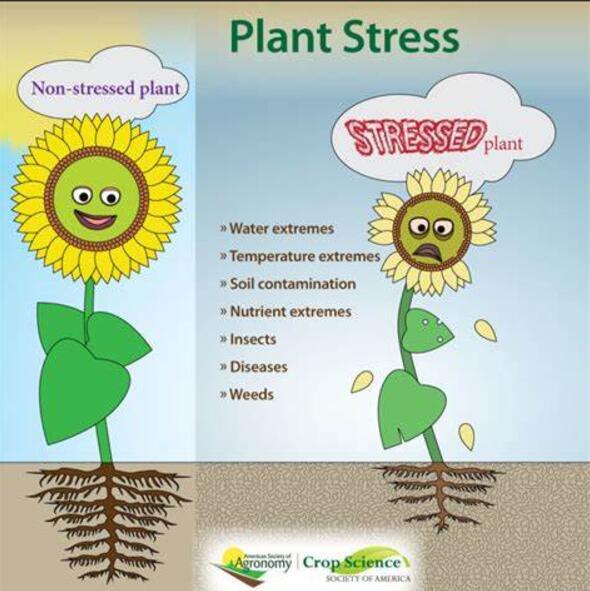
The journal Plant Stress deals with plant (or other photoautotrophs, such as algae, cyanobacteria and lichens) responses to abiotic and biotic stress factors that can result in limited growth and productivity. Such responses can be analyzed and described at a physiological, biochemical and molecular level. Experimental approaches/technologies aiming to improve growth and productivity with a potential for downstream validation under stress conditions will also be considered. Both fundamental and applied research manuscripts are welcome, provided that clear mechanistic hypotheses are made and descriptive approaches are avoided. In addition, high-quality review articles will also be considered, provided they follow a critical approach and stimulate thought for future research avenues.
Plant Stress welcomes high-quality manuscripts related (but not limited) to interactions between plants and:
Lack of water (drought) and excess (flooding),
Salinity stress,
Elevated temperature and/or low temperature (chilling and freezing),
Hypoxia and/or anoxia,
Mineral nutrient excess and/or deficiency,
Heavy metals and/or metalloids,
Plant priming (chemical, biological, physiological, nanomaterial, biostimulant) approaches for improved stress protection,
Viral, phytoplasma, bacterial and fungal plant-pathogen interactions.
The journal welcomes basic and applied research articles, as well as review articles and short communications. All submitted manuscripts will be subject to a thorough peer-reviewing process.





 京公网安备 11010802042870号
京ICP备2023020795号-1
京公网安备 11010802042870号
京ICP备2023020795号-1

 分享
分享
 求助内容:
求助内容: 应助结果提醒方式:
 扫码关注我们
