{"title":"探索北极污水处理泻湖和天然湿地中的单氟烷基和多氟烷基物质分布:加拿大努那维克的首次记录","authors":"Hamid Boleydei , Caroline Huot , Céline Vaneeckhaute","doi":"10.1016/j.chemosphere.2025.144186","DOIUrl":null,"url":null,"abstract":"<div><div>Per- and polyfluoroalkyl substances (PFAS), as emerging and bioaccumulative contaminants, are widely present in water and wastewater systems. Municipal wastewater effluents serve as pathways for PFAS to enter aquatic environments. This study monitors the PFAS in wastewater treatment lagoons, nearby wetlands and bay in a Canadian Arctic community. Eight out of the 40 targeted PFAS were detected in samples collected from raw wastewater, wastewater treatment lagoons, natural wetlands, and Ungava bay. The total PFAS concentrations were in the ranges of 45.9–56.1 ng/L in wastewater treatment lagoons, 36.6–70.8 ng/L in natural wetlands and measured at 7.3 ng/L in the bay. The most prevalent and frequently detected PFAS were 6:2 FTS, PFHxA, and PFNA. At all sites, short-chain PFAS concentrations surpassed long-chain PFAS. Short-chain PFAS peaked at 267.01 ng/L (79.74%), while long-chain PFAS totaled 67.83 ng/L (20.26%). The estimated yearly mass flow rate of total PFAS into the environment through lagoon effluent was 2.33 g/year. The conducted environmental risk assessment for both the effluent of the wastewater treatment lagoons and the three downstream natural wetlands suggests that the risks associated with all PFAS under study posed minimal ecological risk, though long-term evaluation is needed. In conclusion, the findings of this research provide further information on PFAS pollution through wastewater in Arctic regions and may, as such, guide the development of comprehensive regulations to safeguard both human health and the environment, thereby mitigating potential future risks.</div></div>","PeriodicalId":276,"journal":{"name":"Chemosphere","volume":"374 ","pages":"Article 144186"},"PeriodicalIF":8.1000,"publicationDate":"2025-04-01","publicationTypes":"Journal Article","fieldsOfStudy":null,"isOpenAccess":false,"openAccessPdf":"","citationCount":"0","resultStr":"{\"title\":\"Exploring per- and polyfluoroalkyl substance distribution in Arctic wastewater treatment lagoons and natural wetlands: First record in Nunavik, Canada\",\"authors\":\"Hamid Boleydei , Caroline Huot , Céline Vaneeckhaute\",\"doi\":\"10.1016/j.chemosphere.2025.144186\",\"DOIUrl\":null,\"url\":null,\"abstract\":\"<div><div>Per- and polyfluoroalkyl substances (PFAS), as emerging and bioaccumulative contaminants, are widely present in water and wastewater systems. Municipal wastewater effluents serve as pathways for PFAS to enter aquatic environments. This study monitors the PFAS in wastewater treatment lagoons, nearby wetlands and bay in a Canadian Arctic community. Eight out of the 40 targeted PFAS were detected in samples collected from raw wastewater, wastewater treatment lagoons, natural wetlands, and Ungava bay. The total PFAS concentrations were in the ranges of 45.9–56.1 ng/L in wastewater treatment lagoons, 36.6–70.8 ng/L in natural wetlands and measured at 7.3 ng/L in the bay. The most prevalent and frequently detected PFAS were 6:2 FTS, PFHxA, and PFNA. At all sites, short-chain PFAS concentrations surpassed long-chain PFAS. Short-chain PFAS peaked at 267.01 ng/L (79.74%), while long-chain PFAS totaled 67.83 ng/L (20.26%). The estimated yearly mass flow rate of total PFAS into the environment through lagoon effluent was 2.33 g/year. The conducted environmental risk assessment for both the effluent of the wastewater treatment lagoons and the three downstream natural wetlands suggests that the risks associated with all PFAS under study posed minimal ecological risk, though long-term evaluation is needed. In conclusion, the findings of this research provide further information on PFAS pollution through wastewater in Arctic regions and may, as such, guide the development of comprehensive regulations to safeguard both human health and the environment, thereby mitigating potential future risks.</div></div>\",\"PeriodicalId\":276,\"journal\":{\"name\":\"Chemosphere\",\"volume\":\"374 \",\"pages\":\"Article 144186\"},\"PeriodicalIF\":8.1000,\"publicationDate\":\"2025-04-01\",\"publicationTypes\":\"Journal Article\",\"fieldsOfStudy\":null,\"isOpenAccess\":false,\"openAccessPdf\":\"\",\"citationCount\":\"0\",\"resultStr\":null,\"platform\":\"Semanticscholar\",\"paperid\":null,\"PeriodicalName\":\"Chemosphere\",\"FirstCategoryId\":\"93\",\"ListUrlMain\":\"https://www.sciencedirect.com/science/article/pii/S0045653525001286\",\"RegionNum\":2,\"RegionCategory\":\"环境科学与生态学\",\"ArticlePicture\":[],\"TitleCN\":null,\"AbstractTextCN\":null,\"PMCID\":null,\"EPubDate\":\"2025/2/16 0:00:00\",\"PubModel\":\"Epub\",\"JCR\":\"Q1\",\"JCRName\":\"ENVIRONMENTAL SCIENCES\",\"Score\":null,\"Total\":0}","platform":"Semanticscholar","paperid":null,"PeriodicalName":"Chemosphere","FirstCategoryId":"93","ListUrlMain":"https://www.sciencedirect.com/science/article/pii/S0045653525001286","RegionNum":2,"RegionCategory":"环境科学与生态学","ArticlePicture":[],"TitleCN":null,"AbstractTextCN":null,"PMCID":null,"EPubDate":"2025/2/16 0:00:00","PubModel":"Epub","JCR":"Q1","JCRName":"ENVIRONMENTAL SCIENCES","Score":null,"Total":0}
Exploring per- and polyfluoroalkyl substance distribution in Arctic wastewater treatment lagoons and natural wetlands: First record in Nunavik, Canada
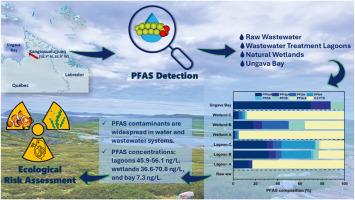
Per- and polyfluoroalkyl substances (PFAS), as emerging and bioaccumulative contaminants, are widely present in water and wastewater systems. Municipal wastewater effluents serve as pathways for PFAS to enter aquatic environments. This study monitors the PFAS in wastewater treatment lagoons, nearby wetlands and bay in a Canadian Arctic community. Eight out of the 40 targeted PFAS were detected in samples collected from raw wastewater, wastewater treatment lagoons, natural wetlands, and Ungava bay. The total PFAS concentrations were in the ranges of 45.9–56.1 ng/L in wastewater treatment lagoons, 36.6–70.8 ng/L in natural wetlands and measured at 7.3 ng/L in the bay. The most prevalent and frequently detected PFAS were 6:2 FTS, PFHxA, and PFNA. At all sites, short-chain PFAS concentrations surpassed long-chain PFAS. Short-chain PFAS peaked at 267.01 ng/L (79.74%), while long-chain PFAS totaled 67.83 ng/L (20.26%). The estimated yearly mass flow rate of total PFAS into the environment through lagoon effluent was 2.33 g/year. The conducted environmental risk assessment for both the effluent of the wastewater treatment lagoons and the three downstream natural wetlands suggests that the risks associated with all PFAS under study posed minimal ecological risk, though long-term evaluation is needed. In conclusion, the findings of this research provide further information on PFAS pollution through wastewater in Arctic regions and may, as such, guide the development of comprehensive regulations to safeguard both human health and the environment, thereby mitigating potential future risks.
期刊介绍:
Chemosphere, being an international multidisciplinary journal, is dedicated to publishing original communications and review articles on chemicals in the environment. The scope covers a wide range of topics, including the identification, quantification, behavior, fate, toxicology, treatment, and remediation of chemicals in the bio-, hydro-, litho-, and atmosphere, ensuring the broad dissemination of research in this field.




 京公网安备 11010802042870号
京ICP备2023020795号-1
京公网安备 11010802042870号
京ICP备2023020795号-1

 分享
分享
 求助内容:
求助内容: 应助结果提醒方式:
 扫码关注我们
