Timur Aliev, Ilya Korolev, Mikhail Yasnov, Michael Nosonovsky and Ekaterina V. Skorb
{"title":"玫瑰色或白色,玻璃或塑料:起泡酒中空化气泡的计算机视觉和机器学习研究","authors":"Timur Aliev, Ilya Korolev, Mikhail Yasnov, Michael Nosonovsky and Ekaterina V. Skorb","doi":"10.1039/D5RA00046G","DOIUrl":null,"url":null,"abstract":"<p >This study presents a machine learning (ML)/Artificial Intelligence (AI) approach to classify types of sparkling wines (champagnes) and their respective containers using image data of bubble patterns. Sparkling wines are oversaturated with dissolved CO<small><sub>2</sub></small>, which results in extensive bubbling when the wine bottle is uncorked. The nucleation and properties of bubbles depend on the chemical composition of the wine, the properties of the glass, and the concentration of CO<small><sub>2</sub></small>. For carbonated liquids supersaturated with CO<small><sub>2</sub></small>, the interaction of natural and cavitation bubbles is a non-trivial matter. We study ultrasonic cavitation bubbles in two types of sparkling wines and two types of glasses with the computer vision (CV) analysis of video images and clustering using an artificial neural network (NN) approach. By integrating a segmentation NN to filter out irrelevant frames and applying the Contrastive Language-Image Pre-Training (CLIP) NN for feature embedding, followed by TabNet for classification, we demonstrate a novel application of ML/AI for distinguishing champagne characteristics. The results show that the bubbles are significantly different to be classified by the ML techniques for different types of wine and glasses. Consequently, our study demonstrates that CV/AI/ML analysis of ultrasound cavitation bubbles can be used to analyze carbonated liquids.</p>","PeriodicalId":102,"journal":{"name":"RSC Advances","volume":" 7","pages":" 5151-5158"},"PeriodicalIF":4.6000,"publicationDate":"2025-02-17","publicationTypes":"Journal Article","fieldsOfStudy":null,"isOpenAccess":false,"openAccessPdf":"https://pubs.rsc.org/en/content/articlepdf/2025/ra/d5ra00046g?page=search","citationCount":"0","resultStr":"{\"title\":\"Rosé or white, glass or plastic: computer vision and machine learning study of cavitation bubbles in sparkling wines\",\"authors\":\"Timur Aliev, Ilya Korolev, Mikhail Yasnov, Michael Nosonovsky and Ekaterina V. Skorb\",\"doi\":\"10.1039/D5RA00046G\",\"DOIUrl\":null,\"url\":null,\"abstract\":\"<p >This study presents a machine learning (ML)/Artificial Intelligence (AI) approach to classify types of sparkling wines (champagnes) and their respective containers using image data of bubble patterns. Sparkling wines are oversaturated with dissolved CO<small><sub>2</sub></small>, which results in extensive bubbling when the wine bottle is uncorked. The nucleation and properties of bubbles depend on the chemical composition of the wine, the properties of the glass, and the concentration of CO<small><sub>2</sub></small>. For carbonated liquids supersaturated with CO<small><sub>2</sub></small>, the interaction of natural and cavitation bubbles is a non-trivial matter. We study ultrasonic cavitation bubbles in two types of sparkling wines and two types of glasses with the computer vision (CV) analysis of video images and clustering using an artificial neural network (NN) approach. By integrating a segmentation NN to filter out irrelevant frames and applying the Contrastive Language-Image Pre-Training (CLIP) NN for feature embedding, followed by TabNet for classification, we demonstrate a novel application of ML/AI for distinguishing champagne characteristics. The results show that the bubbles are significantly different to be classified by the ML techniques for different types of wine and glasses. Consequently, our study demonstrates that CV/AI/ML analysis of ultrasound cavitation bubbles can be used to analyze carbonated liquids.</p>\",\"PeriodicalId\":102,\"journal\":{\"name\":\"RSC Advances\",\"volume\":\" 7\",\"pages\":\" 5151-5158\"},\"PeriodicalIF\":4.6000,\"publicationDate\":\"2025-02-17\",\"publicationTypes\":\"Journal Article\",\"fieldsOfStudy\":null,\"isOpenAccess\":false,\"openAccessPdf\":\"https://pubs.rsc.org/en/content/articlepdf/2025/ra/d5ra00046g?page=search\",\"citationCount\":\"0\",\"resultStr\":null,\"platform\":\"Semanticscholar\",\"paperid\":null,\"PeriodicalName\":\"RSC Advances\",\"FirstCategoryId\":\"92\",\"ListUrlMain\":\"https://pubs.rsc.org/en/content/articlelanding/2025/ra/d5ra00046g\",\"RegionNum\":3,\"RegionCategory\":\"化学\",\"ArticlePicture\":[],\"TitleCN\":null,\"AbstractTextCN\":null,\"PMCID\":null,\"EPubDate\":\"\",\"PubModel\":\"\",\"JCR\":\"Q2\",\"JCRName\":\"CHEMISTRY, MULTIDISCIPLINARY\",\"Score\":null,\"Total\":0}","platform":"Semanticscholar","paperid":null,"PeriodicalName":"RSC Advances","FirstCategoryId":"92","ListUrlMain":"https://pubs.rsc.org/en/content/articlelanding/2025/ra/d5ra00046g","RegionNum":3,"RegionCategory":"化学","ArticlePicture":[],"TitleCN":null,"AbstractTextCN":null,"PMCID":null,"EPubDate":"","PubModel":"","JCR":"Q2","JCRName":"CHEMISTRY, MULTIDISCIPLINARY","Score":null,"Total":0}
Rosé or white, glass or plastic: computer vision and machine learning study of cavitation bubbles in sparkling wines
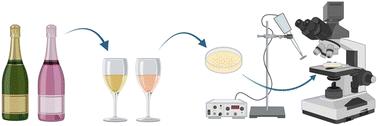
This study presents a machine learning (ML)/Artificial Intelligence (AI) approach to classify types of sparkling wines (champagnes) and their respective containers using image data of bubble patterns. Sparkling wines are oversaturated with dissolved CO2, which results in extensive bubbling when the wine bottle is uncorked. The nucleation and properties of bubbles depend on the chemical composition of the wine, the properties of the glass, and the concentration of CO2. For carbonated liquids supersaturated with CO2, the interaction of natural and cavitation bubbles is a non-trivial matter. We study ultrasonic cavitation bubbles in two types of sparkling wines and two types of glasses with the computer vision (CV) analysis of video images and clustering using an artificial neural network (NN) approach. By integrating a segmentation NN to filter out irrelevant frames and applying the Contrastive Language-Image Pre-Training (CLIP) NN for feature embedding, followed by TabNet for classification, we demonstrate a novel application of ML/AI for distinguishing champagne characteristics. The results show that the bubbles are significantly different to be classified by the ML techniques for different types of wine and glasses. Consequently, our study demonstrates that CV/AI/ML analysis of ultrasound cavitation bubbles can be used to analyze carbonated liquids.
期刊介绍:
An international, peer-reviewed journal covering all of the chemical sciences, including multidisciplinary and emerging areas. RSC Advances is a gold open access journal allowing researchers free access to research articles, and offering an affordable open access publishing option for authors around the world.





 京公网安备 11010802042870号
京ICP备2023020795号-1
京公网安备 11010802042870号
京ICP备2023020795号-1

 分享
分享
 求助内容:
求助内容: 应助结果提醒方式:
 扫码关注我们
