{"title":"构建微生物合成群落:从合成植物群落的设计中获得灵感","authors":"Paloma Durán, Fabienne Vailleau, Fabrice Roux","doi":"10.1111/nph.70011","DOIUrl":null,"url":null,"abstract":"<p>In the last decade, the generation of host-associated microbial culture collections has allowed the fine disentangling of complex relationships between commensal microbes and their hosts, and within-microbiota interactions. Specifically, these culture collections have been used to construct microbial synthetic communities (SynComs), which allow the reconstruction of host microbiota in laboratory conditions. In three recent perspective publications, the importance of this tool has been highlighted, and the ground rules of utilization and designing of such SynComs have been laid out. It is important to note that although microbial SynComs are used to understand intricate ecological interactions occurring in natural conditions, the intraspecific genetic diversity present in natural microbial communities has been seldom considered in the design of interspecific microbial SynComs so far. In this Viewpoint, we therefore argue that designing microbial SynComs could benefit from recent developments in the design of synthetic plant communities, or plant SynComs. For instance, considering intraspecific plant genetic diversity and its effects on intra- and interspecific plant–plant interactions appears essential to better understand and predict highly productive and stable plant communities. Therefore, considering genetic diversity within microbial species undoubtedly represents an exciting opportunity to design innovative microbial SynComs.</p>","PeriodicalId":214,"journal":{"name":"New Phytologist","volume":"246 2","pages":"402-405"},"PeriodicalIF":8.1000,"publicationDate":"2025-02-17","publicationTypes":"Journal Article","fieldsOfStudy":null,"isOpenAccess":false,"openAccessPdf":"https://onlinelibrary.wiley.com/doi/epdf/10.1111/nph.70011","citationCount":"0","resultStr":"{\"title\":\"Building microbial synthetic communities: get inspired by the design of synthetic plant communities\",\"authors\":\"Paloma Durán, Fabienne Vailleau, Fabrice Roux\",\"doi\":\"10.1111/nph.70011\",\"DOIUrl\":null,\"url\":null,\"abstract\":\"<p>In the last decade, the generation of host-associated microbial culture collections has allowed the fine disentangling of complex relationships between commensal microbes and their hosts, and within-microbiota interactions. Specifically, these culture collections have been used to construct microbial synthetic communities (SynComs), which allow the reconstruction of host microbiota in laboratory conditions. In three recent perspective publications, the importance of this tool has been highlighted, and the ground rules of utilization and designing of such SynComs have been laid out. It is important to note that although microbial SynComs are used to understand intricate ecological interactions occurring in natural conditions, the intraspecific genetic diversity present in natural microbial communities has been seldom considered in the design of interspecific microbial SynComs so far. In this Viewpoint, we therefore argue that designing microbial SynComs could benefit from recent developments in the design of synthetic plant communities, or plant SynComs. For instance, considering intraspecific plant genetic diversity and its effects on intra- and interspecific plant–plant interactions appears essential to better understand and predict highly productive and stable plant communities. Therefore, considering genetic diversity within microbial species undoubtedly represents an exciting opportunity to design innovative microbial SynComs.</p>\",\"PeriodicalId\":214,\"journal\":{\"name\":\"New Phytologist\",\"volume\":\"246 2\",\"pages\":\"402-405\"},\"PeriodicalIF\":8.1000,\"publicationDate\":\"2025-02-17\",\"publicationTypes\":\"Journal Article\",\"fieldsOfStudy\":null,\"isOpenAccess\":false,\"openAccessPdf\":\"https://onlinelibrary.wiley.com/doi/epdf/10.1111/nph.70011\",\"citationCount\":\"0\",\"resultStr\":null,\"platform\":\"Semanticscholar\",\"paperid\":null,\"PeriodicalName\":\"New Phytologist\",\"FirstCategoryId\":\"99\",\"ListUrlMain\":\"https://nph.onlinelibrary.wiley.com/doi/10.1111/nph.70011\",\"RegionNum\":1,\"RegionCategory\":\"生物学\",\"ArticlePicture\":[],\"TitleCN\":null,\"AbstractTextCN\":null,\"PMCID\":null,\"EPubDate\":\"\",\"PubModel\":\"\",\"JCR\":\"Q1\",\"JCRName\":\"PLANT SCIENCES\",\"Score\":null,\"Total\":0}","platform":"Semanticscholar","paperid":null,"PeriodicalName":"New Phytologist","FirstCategoryId":"99","ListUrlMain":"https://nph.onlinelibrary.wiley.com/doi/10.1111/nph.70011","RegionNum":1,"RegionCategory":"生物学","ArticlePicture":[],"TitleCN":null,"AbstractTextCN":null,"PMCID":null,"EPubDate":"","PubModel":"","JCR":"Q1","JCRName":"PLANT SCIENCES","Score":null,"Total":0}
Building microbial synthetic communities: get inspired by the design of synthetic plant communities
In the last decade, the generation of host-associated microbial culture collections has allowed the fine disentangling of complex relationships between commensal microbes and their hosts, and within-microbiota interactions. Specifically, these culture collections have been used to construct microbial synthetic communities (SynComs), which allow the reconstruction of host microbiota in laboratory conditions. In three recent perspective publications, the importance of this tool has been highlighted, and the ground rules of utilization and designing of such SynComs have been laid out. It is important to note that although microbial SynComs are used to understand intricate ecological interactions occurring in natural conditions, the intraspecific genetic diversity present in natural microbial communities has been seldom considered in the design of interspecific microbial SynComs so far. In this Viewpoint, we therefore argue that designing microbial SynComs could benefit from recent developments in the design of synthetic plant communities, or plant SynComs. For instance, considering intraspecific plant genetic diversity and its effects on intra- and interspecific plant–plant interactions appears essential to better understand and predict highly productive and stable plant communities. Therefore, considering genetic diversity within microbial species undoubtedly represents an exciting opportunity to design innovative microbial SynComs.
期刊介绍:
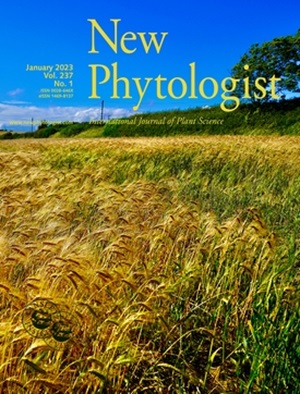
New Phytologist is an international electronic journal published 24 times a year. It is owned by the New Phytologist Foundation, a non-profit-making charitable organization dedicated to promoting plant science. The journal publishes excellent, novel, rigorous, and timely research and scholarship in plant science and its applications. The articles cover topics in five sections: Physiology & Development, Environment, Interaction, Evolution, and Transformative Plant Biotechnology. These sections encompass intracellular processes, global environmental change, and encourage cross-disciplinary approaches. The journal recognizes the use of techniques from molecular and cell biology, functional genomics, modeling, and system-based approaches in plant science. Abstracting and Indexing Information for New Phytologist includes Academic Search, AgBiotech News & Information, Agroforestry Abstracts, Biochemistry & Biophysics Citation Index, Botanical Pesticides, CAB Abstracts®, Environment Index, Global Health, and Plant Breeding Abstracts, and others.






 京公网安备 11010802042870号
京ICP备2023020795号-1
京公网安备 11010802042870号
京ICP备2023020795号-1

 分享
分享
 求助内容:
求助内容: 应助结果提醒方式:
 扫码关注我们
