Qianyu Zhang, Liping Wang, Jinghan Yang, Weichao Liu, Chengang Hong
{"title":"基于移动健康的心理弹性干预对乳腺癌术后化疗患者心理弹性、负面情绪和自我效能的影响","authors":"Qianyu Zhang, Liping Wang, Jinghan Yang, Weichao Liu, Chengang Hong","doi":"10.1016/j.lanwpc.2024.101357","DOIUrl":null,"url":null,"abstract":"<div><h3>Background</h3><div>Mental health problems are particularly acute in patients undergoing postoperative chemotherapy for breast cancer. Traditional offline psychological interventions not only cause patients to feel fatigued from travelling, but also increase the risk of group aggregation of infections. The application of mobile healthcare provides great convenience for patients. However, most of the existing online psychological intervention studies have not focused on the phenomenon of limitation of their limb movement due to postoperative incision and PICC problems. Therefore, this study will combine the consideration of these characteristics to investigate the effectiveness of a 3-month online psychological resilience intervention in improving negative emotions and increasing the level of psychological resilience in breast cancer patients during postoperative chemotherapy.</div></div><div><h3>Methods</h3><div>Using an experimental research design, 70 breast cancer patients during postoperative chemotherapy were recruited from two breast surgery wards of a tertiary hospital in Zhejiang Province in June 2022. Inclusion criteria were: ① patients older than 18 years old; ② patients with a pathological diagnosis of breast cancer during postoperative chemotherapy; ③ patients with the ability to read and write in Chinese; ④ patients or their family members owning a smartphone; and ⑤ patients who voluntarily participated in this study. Exclusion criteria: (1) those who do not know the condition; (2) those with physical dysfunction; (3) those with previous history of psychological disorders and psychiatric illnesses; (4) those with understanding and communication disorders. Grouped by ward, patients in the control group received routine discharge care and follow-up, and patients in the intervention group used the psychological resilience applet on the basis of the control group. The sample size was calculated using Gpower 3.1 software, and the total sample size for both groups was finally determined to be 70 cases, taking into account the 10%-20% loss of follow-up rate. Data were analysed using SPSS 26.0.</div></div><div><h3>Findings</h3><div>Sixty-six patients completed the study, 34 in the intervention group and 32 in the control group. One case withdrew from the intervention group and three cases were lost in the control group at T1. Before the intervention (T0) there was no statistically significant difference between the total psychological resilience, anxiety and depression, self-efficacy scores and the scores of each dimension between the two groups of patients (P>0.05). After the intervention (T1), the differences in psychological resilience, anxiety and depression, self-efficacy scores, and scores on all dimensions (except for the resilience and strength dimensions of psychological resilience) between the two groups were statistically significant (p<0.05).</div></div><div><h3>Interpretation</h3><div>This study provides evidence that mHealth-based psychological resilience interventions show significant benefits in terms of increasing patients' levels of psychological resilience, reducing levels of anxiety and depression, and increasing levels of self-efficacy. Future research should further explore how to optimise interaction during the intervention to maintain patient engagement without causing fatigue.</div></div><div><h3>Funding</h3><div>No.</div></div>","PeriodicalId":22792,"journal":{"name":"The Lancet Regional Health: Western Pacific","volume":"55 ","pages":"Article 101357"},"PeriodicalIF":8.1000,"publicationDate":"2025-02-01","publicationTypes":"Journal Article","fieldsOfStudy":null,"isOpenAccess":false,"openAccessPdf":"","citationCount":"0","resultStr":"{\"title\":\"Effects of an mHealth-based psychological resilience intervention on psychological resilience, negative emotions and self-efficacy in breast cancer patients during postoperative chemotherapy\",\"authors\":\"Qianyu Zhang, Liping Wang, Jinghan Yang, Weichao Liu, Chengang Hong\",\"doi\":\"10.1016/j.lanwpc.2024.101357\",\"DOIUrl\":null,\"url\":null,\"abstract\":\"<div><h3>Background</h3><div>Mental health problems are particularly acute in patients undergoing postoperative chemotherapy for breast cancer. Traditional offline psychological interventions not only cause patients to feel fatigued from travelling, but also increase the risk of group aggregation of infections. The application of mobile healthcare provides great convenience for patients. However, most of the existing online psychological intervention studies have not focused on the phenomenon of limitation of their limb movement due to postoperative incision and PICC problems. Therefore, this study will combine the consideration of these characteristics to investigate the effectiveness of a 3-month online psychological resilience intervention in improving negative emotions and increasing the level of psychological resilience in breast cancer patients during postoperative chemotherapy.</div></div><div><h3>Methods</h3><div>Using an experimental research design, 70 breast cancer patients during postoperative chemotherapy were recruited from two breast surgery wards of a tertiary hospital in Zhejiang Province in June 2022. Inclusion criteria were: ① patients older than 18 years old; ② patients with a pathological diagnosis of breast cancer during postoperative chemotherapy; ③ patients with the ability to read and write in Chinese; ④ patients or their family members owning a smartphone; and ⑤ patients who voluntarily participated in this study. Exclusion criteria: (1) those who do not know the condition; (2) those with physical dysfunction; (3) those with previous history of psychological disorders and psychiatric illnesses; (4) those with understanding and communication disorders. Grouped by ward, patients in the control group received routine discharge care and follow-up, and patients in the intervention group used the psychological resilience applet on the basis of the control group. The sample size was calculated using Gpower 3.1 software, and the total sample size for both groups was finally determined to be 70 cases, taking into account the 10%-20% loss of follow-up rate. Data were analysed using SPSS 26.0.</div></div><div><h3>Findings</h3><div>Sixty-six patients completed the study, 34 in the intervention group and 32 in the control group. One case withdrew from the intervention group and three cases were lost in the control group at T1. Before the intervention (T0) there was no statistically significant difference between the total psychological resilience, anxiety and depression, self-efficacy scores and the scores of each dimension between the two groups of patients (P>0.05). After the intervention (T1), the differences in psychological resilience, anxiety and depression, self-efficacy scores, and scores on all dimensions (except for the resilience and strength dimensions of psychological resilience) between the two groups were statistically significant (p<0.05).</div></div><div><h3>Interpretation</h3><div>This study provides evidence that mHealth-based psychological resilience interventions show significant benefits in terms of increasing patients' levels of psychological resilience, reducing levels of anxiety and depression, and increasing levels of self-efficacy. Future research should further explore how to optimise interaction during the intervention to maintain patient engagement without causing fatigue.</div></div><div><h3>Funding</h3><div>No.</div></div>\",\"PeriodicalId\":22792,\"journal\":{\"name\":\"The Lancet Regional Health: Western Pacific\",\"volume\":\"55 \",\"pages\":\"Article 101357\"},\"PeriodicalIF\":8.1000,\"publicationDate\":\"2025-02-01\",\"publicationTypes\":\"Journal Article\",\"fieldsOfStudy\":null,\"isOpenAccess\":false,\"openAccessPdf\":\"\",\"citationCount\":\"0\",\"resultStr\":null,\"platform\":\"Semanticscholar\",\"paperid\":null,\"PeriodicalName\":\"The Lancet Regional Health: Western Pacific\",\"FirstCategoryId\":\"3\",\"ListUrlMain\":\"https://www.sciencedirect.com/science/article/pii/S2666606524003511\",\"RegionNum\":1,\"RegionCategory\":\"医学\",\"ArticlePicture\":[],\"TitleCN\":null,\"AbstractTextCN\":null,\"PMCID\":null,\"EPubDate\":\"2025/2/17 0:00:00\",\"PubModel\":\"Epub\",\"JCR\":\"Q1\",\"JCRName\":\"HEALTH CARE SCIENCES & SERVICES\",\"Score\":null,\"Total\":0}","platform":"Semanticscholar","paperid":null,"PeriodicalName":"The Lancet Regional Health: Western Pacific","FirstCategoryId":"3","ListUrlMain":"https://www.sciencedirect.com/science/article/pii/S2666606524003511","RegionNum":1,"RegionCategory":"医学","ArticlePicture":[],"TitleCN":null,"AbstractTextCN":null,"PMCID":null,"EPubDate":"2025/2/17 0:00:00","PubModel":"Epub","JCR":"Q1","JCRName":"HEALTH CARE SCIENCES & SERVICES","Score":null,"Total":0}
Effects of an mHealth-based psychological resilience intervention on psychological resilience, negative emotions and self-efficacy in breast cancer patients during postoperative chemotherapy
Background
Mental health problems are particularly acute in patients undergoing postoperative chemotherapy for breast cancer. Traditional offline psychological interventions not only cause patients to feel fatigued from travelling, but also increase the risk of group aggregation of infections. The application of mobile healthcare provides great convenience for patients. However, most of the existing online psychological intervention studies have not focused on the phenomenon of limitation of their limb movement due to postoperative incision and PICC problems. Therefore, this study will combine the consideration of these characteristics to investigate the effectiveness of a 3-month online psychological resilience intervention in improving negative emotions and increasing the level of psychological resilience in breast cancer patients during postoperative chemotherapy.
Methods
Using an experimental research design, 70 breast cancer patients during postoperative chemotherapy were recruited from two breast surgery wards of a tertiary hospital in Zhejiang Province in June 2022. Inclusion criteria were: ① patients older than 18 years old; ② patients with a pathological diagnosis of breast cancer during postoperative chemotherapy; ③ patients with the ability to read and write in Chinese; ④ patients or their family members owning a smartphone; and ⑤ patients who voluntarily participated in this study. Exclusion criteria: (1) those who do not know the condition; (2) those with physical dysfunction; (3) those with previous history of psychological disorders and psychiatric illnesses; (4) those with understanding and communication disorders. Grouped by ward, patients in the control group received routine discharge care and follow-up, and patients in the intervention group used the psychological resilience applet on the basis of the control group. The sample size was calculated using Gpower 3.1 software, and the total sample size for both groups was finally determined to be 70 cases, taking into account the 10%-20% loss of follow-up rate. Data were analysed using SPSS 26.0.
Findings
Sixty-six patients completed the study, 34 in the intervention group and 32 in the control group. One case withdrew from the intervention group and three cases were lost in the control group at T1. Before the intervention (T0) there was no statistically significant difference between the total psychological resilience, anxiety and depression, self-efficacy scores and the scores of each dimension between the two groups of patients (P>0.05). After the intervention (T1), the differences in psychological resilience, anxiety and depression, self-efficacy scores, and scores on all dimensions (except for the resilience and strength dimensions of psychological resilience) between the two groups were statistically significant (p<0.05).
Interpretation
This study provides evidence that mHealth-based psychological resilience interventions show significant benefits in terms of increasing patients' levels of psychological resilience, reducing levels of anxiety and depression, and increasing levels of self-efficacy. Future research should further explore how to optimise interaction during the intervention to maintain patient engagement without causing fatigue.
期刊介绍:
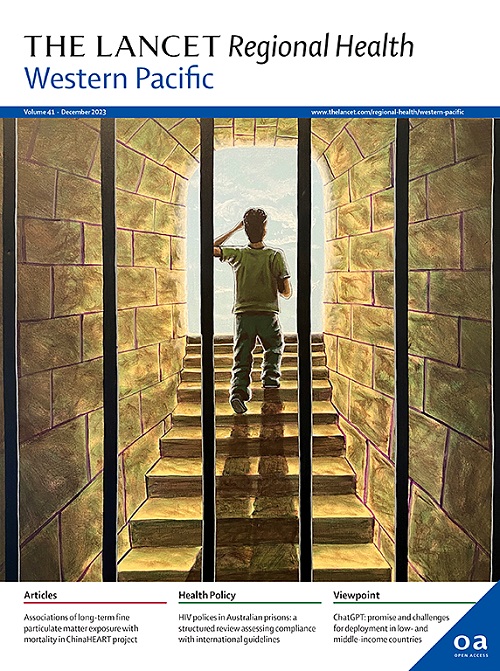
The Lancet Regional Health – Western Pacific, a gold open access journal, is an integral part of The Lancet's global initiative advocating for healthcare quality and access worldwide. It aims to advance clinical practice and health policy in the Western Pacific region, contributing to enhanced health outcomes. The journal publishes high-quality original research shedding light on clinical practice and health policy in the region. It also includes reviews, commentaries, and opinion pieces covering diverse regional health topics, such as infectious diseases, non-communicable diseases, child and adolescent health, maternal and reproductive health, aging health, mental health, the health workforce and systems, and health policy.




 京公网安备 11010802042870号
京ICP备2023020795号-1
京公网安备 11010802042870号
京ICP备2023020795号-1

 分享
分享
 求助内容:
求助内容: 应助结果提醒方式:
 扫码关注我们
