{"title":"TIP60中甘氨酸400的癌症相关突变破坏了其相分离特性和催化活性,导致细胞DNA损伤修复功能受损","authors":"Himanshu Gupta , Ashutosh Singh , Ashish Gupta","doi":"10.1016/j.bbrc.2025.151457","DOIUrl":null,"url":null,"abstract":"<div><div>TIP60 is a tumor suppressor with histone acetyltransferase (HAT) activity, playing a crucial role in regulating chromatin architecture by acetylating histones to enhance accessibility for other regulatory factors. Its function is vital for several key cellular processes, including DNA damage repair, apoptosis, and autophagy. While the downregulation of TIP60 has been associated with various cancers, the effects of naturally occurring mutations in TIP60 on its function in malignancies remain poorly understood. In this study, we explored how cancer-related mutations in TIP60 impact its structure and function. Several deleterious and destabilizing missense mutations were identified and analyzed for structural changes. Molecular dynamics simulations revealed alterations in protein conformational stability and radius of gyration due to these mutations, supported by significant changes in TIP60's solvent accessibility and intramolecular hydrogen bonding. Biochemical assays with recombinant proteins showed a loss of catalytic activity in the G400W mutant. Live cell imaging indicated abnormal localization of the G400W mutant within the nucleus. Additionally, we observed aberrant phase separation of TIP60 caused by the G400W mutation. Notably, the G400W mutation impairs TIP60's catalytic function, preventing effective DNA repair and leaving the genome vulnerable to further mutations. Our findings highlight cancer-associated mutations in TIP60 that may contribute to the molecular mechanisms underlying cancer initiation and progression.</div></div>","PeriodicalId":8779,"journal":{"name":"Biochemical and biophysical research communications","volume":"753 ","pages":"Article 151457"},"PeriodicalIF":2.5000,"publicationDate":"2025-03-19","publicationTypes":"Journal Article","fieldsOfStudy":null,"isOpenAccess":false,"openAccessPdf":"","citationCount":"0","resultStr":"{\"title\":\"Cancer-associated mutation at glycine 400 in TIP60 disrupt its phase separation property and catalytic activity resulting in compromised DNA damage repair function of the cell\",\"authors\":\"Himanshu Gupta , Ashutosh Singh , Ashish Gupta\",\"doi\":\"10.1016/j.bbrc.2025.151457\",\"DOIUrl\":null,\"url\":null,\"abstract\":\"<div><div>TIP60 is a tumor suppressor with histone acetyltransferase (HAT) activity, playing a crucial role in regulating chromatin architecture by acetylating histones to enhance accessibility for other regulatory factors. Its function is vital for several key cellular processes, including DNA damage repair, apoptosis, and autophagy. While the downregulation of TIP60 has been associated with various cancers, the effects of naturally occurring mutations in TIP60 on its function in malignancies remain poorly understood. In this study, we explored how cancer-related mutations in TIP60 impact its structure and function. Several deleterious and destabilizing missense mutations were identified and analyzed for structural changes. Molecular dynamics simulations revealed alterations in protein conformational stability and radius of gyration due to these mutations, supported by significant changes in TIP60's solvent accessibility and intramolecular hydrogen bonding. Biochemical assays with recombinant proteins showed a loss of catalytic activity in the G400W mutant. Live cell imaging indicated abnormal localization of the G400W mutant within the nucleus. Additionally, we observed aberrant phase separation of TIP60 caused by the G400W mutation. Notably, the G400W mutation impairs TIP60's catalytic function, preventing effective DNA repair and leaving the genome vulnerable to further mutations. Our findings highlight cancer-associated mutations in TIP60 that may contribute to the molecular mechanisms underlying cancer initiation and progression.</div></div>\",\"PeriodicalId\":8779,\"journal\":{\"name\":\"Biochemical and biophysical research communications\",\"volume\":\"753 \",\"pages\":\"Article 151457\"},\"PeriodicalIF\":2.5000,\"publicationDate\":\"2025-03-19\",\"publicationTypes\":\"Journal Article\",\"fieldsOfStudy\":null,\"isOpenAccess\":false,\"openAccessPdf\":\"\",\"citationCount\":\"0\",\"resultStr\":null,\"platform\":\"Semanticscholar\",\"paperid\":null,\"PeriodicalName\":\"Biochemical and biophysical research communications\",\"FirstCategoryId\":\"99\",\"ListUrlMain\":\"https://www.sciencedirect.com/science/article/pii/S0006291X25001718\",\"RegionNum\":3,\"RegionCategory\":\"生物学\",\"ArticlePicture\":[],\"TitleCN\":null,\"AbstractTextCN\":null,\"PMCID\":null,\"EPubDate\":\"2025/2/6 0:00:00\",\"PubModel\":\"Epub\",\"JCR\":\"Q3\",\"JCRName\":\"BIOCHEMISTRY & MOLECULAR BIOLOGY\",\"Score\":null,\"Total\":0}","platform":"Semanticscholar","paperid":null,"PeriodicalName":"Biochemical and biophysical research communications","FirstCategoryId":"99","ListUrlMain":"https://www.sciencedirect.com/science/article/pii/S0006291X25001718","RegionNum":3,"RegionCategory":"生物学","ArticlePicture":[],"TitleCN":null,"AbstractTextCN":null,"PMCID":null,"EPubDate":"2025/2/6 0:00:00","PubModel":"Epub","JCR":"Q3","JCRName":"BIOCHEMISTRY & MOLECULAR BIOLOGY","Score":null,"Total":0}
Cancer-associated mutation at glycine 400 in TIP60 disrupt its phase separation property and catalytic activity resulting in compromised DNA damage repair function of the cell
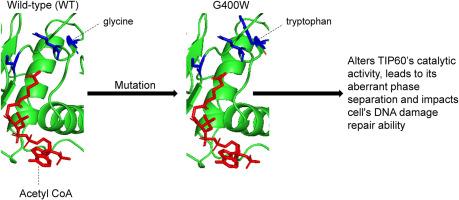
TIP60 is a tumor suppressor with histone acetyltransferase (HAT) activity, playing a crucial role in regulating chromatin architecture by acetylating histones to enhance accessibility for other regulatory factors. Its function is vital for several key cellular processes, including DNA damage repair, apoptosis, and autophagy. While the downregulation of TIP60 has been associated with various cancers, the effects of naturally occurring mutations in TIP60 on its function in malignancies remain poorly understood. In this study, we explored how cancer-related mutations in TIP60 impact its structure and function. Several deleterious and destabilizing missense mutations were identified and analyzed for structural changes. Molecular dynamics simulations revealed alterations in protein conformational stability and radius of gyration due to these mutations, supported by significant changes in TIP60's solvent accessibility and intramolecular hydrogen bonding. Biochemical assays with recombinant proteins showed a loss of catalytic activity in the G400W mutant. Live cell imaging indicated abnormal localization of the G400W mutant within the nucleus. Additionally, we observed aberrant phase separation of TIP60 caused by the G400W mutation. Notably, the G400W mutation impairs TIP60's catalytic function, preventing effective DNA repair and leaving the genome vulnerable to further mutations. Our findings highlight cancer-associated mutations in TIP60 that may contribute to the molecular mechanisms underlying cancer initiation and progression.
期刊介绍:
Biochemical and Biophysical Research Communications is the premier international journal devoted to the very rapid dissemination of timely and significant experimental results in diverse fields of biological research. The development of the "Breakthroughs and Views" section brings the minireview format to the journal, and issues often contain collections of special interest manuscripts. BBRC is published weekly (52 issues/year).Research Areas now include: Biochemistry; biophysics; cell biology; developmental biology; immunology
; molecular biology; neurobiology; plant biology and proteomics




 京公网安备 11010802042870号
京ICP备2023020795号-1
京公网安备 11010802042870号
京ICP备2023020795号-1

 分享
分享
 求助内容:
求助内容: 应助结果提醒方式:
 扫码关注我们
