Seungyeon Lee , Wenyu Song , David W. Bates , Richard D. Urman , Ping Zhang
{"title":"美国双胞胎流行的最新趋势:阿片类药物和兴奋剂联合处方的10年纵向队列研究","authors":"Seungyeon Lee , Wenyu Song , David W. Bates , Richard D. Urman , Ping Zhang","doi":"10.1016/j.lana.2025.101030","DOIUrl":null,"url":null,"abstract":"<div><h3>Background</h3><div>In recent years, the use of central nervous system stimulant medications has increased among the population already using opioids, referred to as a “twin epidemic.” There is an increasing concern about its harmful outcomes in large populations. However, very few studies examined the co-prescription pattern of these two drug categories over a long period, and there is currently no clear restriction on stimulant prescriptions among patients under opioid treatment in the United States. The objectives of our study were to identify opioid prescription dosage time-dependent patterns and patient subgroups representing distinct trajectories on a national level in the recent 10 years, and to further investigate longitudinal associations between stimulant and opioid prescriptions and the impact of stimulant prescriptions on opioid dosage patterns.</div></div><div><h3>Methods</h3><div>We obtained patient records from MarketScan, one of the largest clinical databases of health insurance in the United States. 10 years (2012–2021) of prescription records and related patient profiles, who received at least two independent opioid prescriptions, were utilized for developing a group-based opioid dose trajectory model.</div></div><div><h3>Findings</h3><div>From an initial cohort including 22 million patients with 96 million opioid prescriptions, we developed a study cohort of 2,895,960 patients with a mean age of 43.9 years (standard deviation [SD] 13.0), of whom 1,244,077 (43%) were male. Significant geographical variations in opioid prescription frequency and dosage among four U.S. regions were observed. The trajectory model identified five distinct opioid dose groups. Stimulant prescription before the initial opioid prescription was positively associated with escalating opioid doses (odds ratio [OR]: 7.58; 95% confidence intervals [CI] 6.14–9.35, opioid dose increasing group compared to the decreasing group). Stimulant co-prescriptions were also associated with increasing opioid doses (OR: 1.73; 95% CI 1.40–2.14) and were identified in patients with a higher prevalence of opioid use disorder.</div></div><div><h3>Interpretation</h3><div>During the recent 10 years, stimulant prescription is positively associated with escalating opioid prescription activities in U.S. healthcare systems, suggesting co-prescriptions of these two types of drugs are an important contributing factor for a national-level twin epidemic. Healthcare leaders and policymakers should pay more attention to this issue and its potential harms.</div></div><div><h3>Funding</h3><div><span>National Institute of General Medical Sciences</span>, <span>National Institute on Drug Abuse</span>, and <span>National Science Foundation</span>.</div></div>","PeriodicalId":29783,"journal":{"name":"Lancet Regional Health-Americas","volume":"44 ","pages":"Article 101030"},"PeriodicalIF":7.0000,"publicationDate":"2025-04-01","publicationTypes":"Journal Article","fieldsOfStudy":null,"isOpenAccess":false,"openAccessPdf":"","citationCount":"0","resultStr":"{\"title\":\"The recent trend of twin epidemic in the United States: a 10-year longitudinal cohort study of co-prescriptions of opioids and stimulants\",\"authors\":\"Seungyeon Lee , Wenyu Song , David W. Bates , Richard D. Urman , Ping Zhang\",\"doi\":\"10.1016/j.lana.2025.101030\",\"DOIUrl\":null,\"url\":null,\"abstract\":\"<div><h3>Background</h3><div>In recent years, the use of central nervous system stimulant medications has increased among the population already using opioids, referred to as a “twin epidemic.” There is an increasing concern about its harmful outcomes in large populations. However, very few studies examined the co-prescription pattern of these two drug categories over a long period, and there is currently no clear restriction on stimulant prescriptions among patients under opioid treatment in the United States. The objectives of our study were to identify opioid prescription dosage time-dependent patterns and patient subgroups representing distinct trajectories on a national level in the recent 10 years, and to further investigate longitudinal associations between stimulant and opioid prescriptions and the impact of stimulant prescriptions on opioid dosage patterns.</div></div><div><h3>Methods</h3><div>We obtained patient records from MarketScan, one of the largest clinical databases of health insurance in the United States. 10 years (2012–2021) of prescription records and related patient profiles, who received at least two independent opioid prescriptions, were utilized for developing a group-based opioid dose trajectory model.</div></div><div><h3>Findings</h3><div>From an initial cohort including 22 million patients with 96 million opioid prescriptions, we developed a study cohort of 2,895,960 patients with a mean age of 43.9 years (standard deviation [SD] 13.0), of whom 1,244,077 (43%) were male. Significant geographical variations in opioid prescription frequency and dosage among four U.S. regions were observed. The trajectory model identified five distinct opioid dose groups. Stimulant prescription before the initial opioid prescription was positively associated with escalating opioid doses (odds ratio [OR]: 7.58; 95% confidence intervals [CI] 6.14–9.35, opioid dose increasing group compared to the decreasing group). Stimulant co-prescriptions were also associated with increasing opioid doses (OR: 1.73; 95% CI 1.40–2.14) and were identified in patients with a higher prevalence of opioid use disorder.</div></div><div><h3>Interpretation</h3><div>During the recent 10 years, stimulant prescription is positively associated with escalating opioid prescription activities in U.S. healthcare systems, suggesting co-prescriptions of these two types of drugs are an important contributing factor for a national-level twin epidemic. Healthcare leaders and policymakers should pay more attention to this issue and its potential harms.</div></div><div><h3>Funding</h3><div><span>National Institute of General Medical Sciences</span>, <span>National Institute on Drug Abuse</span>, and <span>National Science Foundation</span>.</div></div>\",\"PeriodicalId\":29783,\"journal\":{\"name\":\"Lancet Regional Health-Americas\",\"volume\":\"44 \",\"pages\":\"Article 101030\"},\"PeriodicalIF\":7.0000,\"publicationDate\":\"2025-04-01\",\"publicationTypes\":\"Journal Article\",\"fieldsOfStudy\":null,\"isOpenAccess\":false,\"openAccessPdf\":\"\",\"citationCount\":\"0\",\"resultStr\":null,\"platform\":\"Semanticscholar\",\"paperid\":null,\"PeriodicalName\":\"Lancet Regional Health-Americas\",\"FirstCategoryId\":\"1085\",\"ListUrlMain\":\"https://www.sciencedirect.com/science/article/pii/S2667193X25000407\",\"RegionNum\":0,\"RegionCategory\":null,\"ArticlePicture\":[],\"TitleCN\":null,\"AbstractTextCN\":null,\"PMCID\":null,\"EPubDate\":\"2025/2/17 0:00:00\",\"PubModel\":\"Epub\",\"JCR\":\"Q1\",\"JCRName\":\"HEALTH CARE SCIENCES & SERVICES\",\"Score\":null,\"Total\":0}","platform":"Semanticscholar","paperid":null,"PeriodicalName":"Lancet Regional Health-Americas","FirstCategoryId":"1085","ListUrlMain":"https://www.sciencedirect.com/science/article/pii/S2667193X25000407","RegionNum":0,"RegionCategory":null,"ArticlePicture":[],"TitleCN":null,"AbstractTextCN":null,"PMCID":null,"EPubDate":"2025/2/17 0:00:00","PubModel":"Epub","JCR":"Q1","JCRName":"HEALTH CARE SCIENCES & SERVICES","Score":null,"Total":0}
引用次数: 0
摘要
近年来,在已经使用阿片类药物的人群中,中枢神经系统兴奋剂药物的使用有所增加,被称为“双重流行病”。人们越来越担心它对大量人口的有害影响。然而,很少有研究对这两种药物长期的共处方模式进行调查,目前美国对阿片类药物治疗患者的兴奋剂处方没有明确的限制。本研究的目的是确定阿片类药物处方剂量的时间依赖模式和近10年来在全国范围内代表不同轨迹的患者亚组,并进一步研究兴奋剂和阿片类药物处方之间的纵向关联以及兴奋剂处方对阿片类药物剂量模式的影响。方法从美国最大的医疗保险临床数据库MarketScan获取患者记录,利用10年(2012-2021)处方记录和相关患者资料,开发基于群体的阿片类药物剂量轨迹模型,这些患者至少接受过两次独立的阿片类药物处方。研究结果:从最初的包括2200万患者、9600万阿片类药物处方的队列中,我们发展了一个包括2,895,960名患者的研究队列,平均年龄为43.9岁(标准差[SD] 13.0),其中1,244,077名(43%)为男性。观察到美国四个地区阿片类药物处方频率和剂量的显著地理差异。轨迹模型确定了五个不同的阿片类药物剂量组。初始阿片类药物处方前的兴奋剂处方与阿片类药物剂量的增加呈正相关(优势比[OR]: 7.58;95%可信区间[CI] 6.14-9.35,阿片类药物剂量增加组与减少组比较)。兴奋剂联合处方也与阿片类药物剂量增加有关(OR: 1.73;95% CI 1.40-2.14),并在阿片类药物使用障碍患病率较高的患者中被确定。在最近10年中,兴奋剂处方与美国医疗保健系统中不断升级的阿片类药物处方活动呈正相关,这表明这两种药物的联合处方是全国性双重流行病的重要促成因素。医疗保健领导者和政策制定者应该更加关注这个问题及其潜在危害。国家综合医学科学研究所,国家药物滥用研究所和国家科学基金会。
The recent trend of twin epidemic in the United States: a 10-year longitudinal cohort study of co-prescriptions of opioids and stimulants
Background
In recent years, the use of central nervous system stimulant medications has increased among the population already using opioids, referred to as a “twin epidemic.” There is an increasing concern about its harmful outcomes in large populations. However, very few studies examined the co-prescription pattern of these two drug categories over a long period, and there is currently no clear restriction on stimulant prescriptions among patients under opioid treatment in the United States. The objectives of our study were to identify opioid prescription dosage time-dependent patterns and patient subgroups representing distinct trajectories on a national level in the recent 10 years, and to further investigate longitudinal associations between stimulant and opioid prescriptions and the impact of stimulant prescriptions on opioid dosage patterns.
Methods
We obtained patient records from MarketScan, one of the largest clinical databases of health insurance in the United States. 10 years (2012–2021) of prescription records and related patient profiles, who received at least two independent opioid prescriptions, were utilized for developing a group-based opioid dose trajectory model.
Findings
From an initial cohort including 22 million patients with 96 million opioid prescriptions, we developed a study cohort of 2,895,960 patients with a mean age of 43.9 years (standard deviation [SD] 13.0), of whom 1,244,077 (43%) were male. Significant geographical variations in opioid prescription frequency and dosage among four U.S. regions were observed. The trajectory model identified five distinct opioid dose groups. Stimulant prescription before the initial opioid prescription was positively associated with escalating opioid doses (odds ratio [OR]: 7.58; 95% confidence intervals [CI] 6.14–9.35, opioid dose increasing group compared to the decreasing group). Stimulant co-prescriptions were also associated with increasing opioid doses (OR: 1.73; 95% CI 1.40–2.14) and were identified in patients with a higher prevalence of opioid use disorder.
Interpretation
During the recent 10 years, stimulant prescription is positively associated with escalating opioid prescription activities in U.S. healthcare systems, suggesting co-prescriptions of these two types of drugs are an important contributing factor for a national-level twin epidemic. Healthcare leaders and policymakers should pay more attention to this issue and its potential harms.
Funding
National Institute of General Medical Sciences, National Institute on Drug Abuse, and National Science Foundation.
期刊介绍:
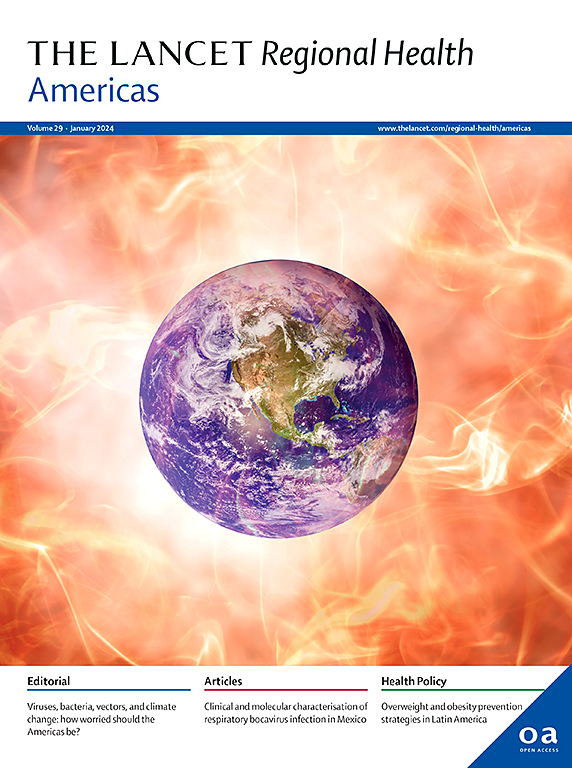
The Lancet Regional Health – Americas, an open-access journal, contributes to The Lancet's global initiative by focusing on health-care quality and access in the Americas. It aims to advance clinical practice and health policy in the region, promoting better health outcomes. The journal publishes high-quality original research advocating change or shedding light on clinical practice and health policy. It welcomes submissions on various regional health topics, including infectious diseases, non-communicable diseases, child and adolescent health, maternal and reproductive health, emergency care, health policy, and health equity.




 京公网安备 11010802042870号
京ICP备2023020795号-1
京公网安备 11010802042870号
京ICP备2023020795号-1

 分享
分享
 求助内容:
求助内容: 应助结果提醒方式:
 扫码关注我们
