Nurul Ashikin Elias, Mohamad Sofi Abu Hassan, Nor Asma Husna Yusoff, Noor Aniza Harun, Sharifah Rahmah, Farizan Abdullah, Ahmad Najmi Ishak, Joey Joe Yee Ng, Marina Hassan
{"title":"添加不同时间和浓度的千层木合成纳米金(MC-AuNPs)对凡纳滨对虾(Litopenaeus vannamei)免疫和组织病理学的影响","authors":"Nurul Ashikin Elias, Mohamad Sofi Abu Hassan, Nor Asma Husna Yusoff, Noor Aniza Harun, Sharifah Rahmah, Farizan Abdullah, Ahmad Najmi Ishak, Joey Joe Yee Ng, Marina Hassan","doi":"10.1007/s10499-025-01883-3","DOIUrl":null,"url":null,"abstract":"<div><p>The green synthesis nanoparticles formulated in aquatic feed were commonly studied nowadays to improve aquatic product immunity and mitigate disease occurrence due to their effectiveness, safety, and lower cost. This study was assessed to investigate the effect of <i>Melaleuca cajuputi</i>-synthesized gold nanoparticles (MC-AuNPs) at various concentrations (i.e., 0%, 10%, 40%, and 70%) and feeding periods: short-term (4 days) and long-term (30 days) on immunity and histology of the whiteleg shrimp <i>Litopenaeus vannamei</i>. The selected concentrations used are based on our previous study on the antibacterial properties of MC-AuNP diets against <i>Vibrio parahaemolyticus</i>. Following feeding, shrimps were then challenged with <i>Vibrio parahaemolyticus</i> to assess their resistance and histological alterations. Results showed that the shrimp fed with 10% and 40% MC-AuNP diets for both short-term and long-term feeding periods increased the biochemical and hematological parameters of the shrimp. After the challenge with <i>V. parahaemolyticus</i>, abnormal lumens were seen, while the hepatopancreatic cells and tissue in the 10% and 40% MC-AuNP diets appeared normal. Improved survival rates were observed in all shrimp supplemented with MC-AuNP diets, particularly in 10% and 40%. The findings suggest that the inclusion of 10% and 40% MC-AuNP diets for short-term feeding periods was recommended to be further studied as shrimp immunostimulants due to their potential to improve shrimp immunity with minimal histopathological changes to the shrimp hepatopancreas.</p></div>","PeriodicalId":8122,"journal":{"name":"Aquaculture International","volume":"33 3","pages":""},"PeriodicalIF":2.4000,"publicationDate":"2025-02-18","publicationTypes":"Journal Article","fieldsOfStudy":null,"isOpenAccess":false,"openAccessPdf":"","citationCount":"0","resultStr":"{\"title\":\"Immunity and histopathological changes of shrimp (Litopenaeus vannamei) fed with Melaleuca cajuputi-synthesized gold nanoparticles (MC-AuNPs) supplemented diets at various durations and concentrations\",\"authors\":\"Nurul Ashikin Elias, Mohamad Sofi Abu Hassan, Nor Asma Husna Yusoff, Noor Aniza Harun, Sharifah Rahmah, Farizan Abdullah, Ahmad Najmi Ishak, Joey Joe Yee Ng, Marina Hassan\",\"doi\":\"10.1007/s10499-025-01883-3\",\"DOIUrl\":null,\"url\":null,\"abstract\":\"<div><p>The green synthesis nanoparticles formulated in aquatic feed were commonly studied nowadays to improve aquatic product immunity and mitigate disease occurrence due to their effectiveness, safety, and lower cost. This study was assessed to investigate the effect of <i>Melaleuca cajuputi</i>-synthesized gold nanoparticles (MC-AuNPs) at various concentrations (i.e., 0%, 10%, 40%, and 70%) and feeding periods: short-term (4 days) and long-term (30 days) on immunity and histology of the whiteleg shrimp <i>Litopenaeus vannamei</i>. The selected concentrations used are based on our previous study on the antibacterial properties of MC-AuNP diets against <i>Vibrio parahaemolyticus</i>. Following feeding, shrimps were then challenged with <i>Vibrio parahaemolyticus</i> to assess their resistance and histological alterations. Results showed that the shrimp fed with 10% and 40% MC-AuNP diets for both short-term and long-term feeding periods increased the biochemical and hematological parameters of the shrimp. After the challenge with <i>V. parahaemolyticus</i>, abnormal lumens were seen, while the hepatopancreatic cells and tissue in the 10% and 40% MC-AuNP diets appeared normal. Improved survival rates were observed in all shrimp supplemented with MC-AuNP diets, particularly in 10% and 40%. The findings suggest that the inclusion of 10% and 40% MC-AuNP diets for short-term feeding periods was recommended to be further studied as shrimp immunostimulants due to their potential to improve shrimp immunity with minimal histopathological changes to the shrimp hepatopancreas.</p></div>\",\"PeriodicalId\":8122,\"journal\":{\"name\":\"Aquaculture International\",\"volume\":\"33 3\",\"pages\":\"\"},\"PeriodicalIF\":2.4000,\"publicationDate\":\"2025-02-18\",\"publicationTypes\":\"Journal Article\",\"fieldsOfStudy\":null,\"isOpenAccess\":false,\"openAccessPdf\":\"\",\"citationCount\":\"0\",\"resultStr\":null,\"platform\":\"Semanticscholar\",\"paperid\":null,\"PeriodicalName\":\"Aquaculture International\",\"FirstCategoryId\":\"97\",\"ListUrlMain\":\"https://link.springer.com/article/10.1007/s10499-025-01883-3\",\"RegionNum\":3,\"RegionCategory\":\"农林科学\",\"ArticlePicture\":[],\"TitleCN\":null,\"AbstractTextCN\":null,\"PMCID\":null,\"EPubDate\":\"\",\"PubModel\":\"\",\"JCR\":\"Q2\",\"JCRName\":\"FISHERIES\",\"Score\":null,\"Total\":0}","platform":"Semanticscholar","paperid":null,"PeriodicalName":"Aquaculture International","FirstCategoryId":"97","ListUrlMain":"https://link.springer.com/article/10.1007/s10499-025-01883-3","RegionNum":3,"RegionCategory":"农林科学","ArticlePicture":[],"TitleCN":null,"AbstractTextCN":null,"PMCID":null,"EPubDate":"","PubModel":"","JCR":"Q2","JCRName":"FISHERIES","Score":null,"Total":0}
Immunity and histopathological changes of shrimp (Litopenaeus vannamei) fed with Melaleuca cajuputi-synthesized gold nanoparticles (MC-AuNPs) supplemented diets at various durations and concentrations
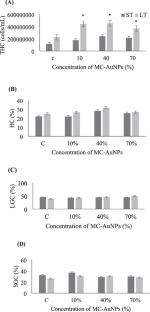
The green synthesis nanoparticles formulated in aquatic feed were commonly studied nowadays to improve aquatic product immunity and mitigate disease occurrence due to their effectiveness, safety, and lower cost. This study was assessed to investigate the effect of Melaleuca cajuputi-synthesized gold nanoparticles (MC-AuNPs) at various concentrations (i.e., 0%, 10%, 40%, and 70%) and feeding periods: short-term (4 days) and long-term (30 days) on immunity and histology of the whiteleg shrimp Litopenaeus vannamei. The selected concentrations used are based on our previous study on the antibacterial properties of MC-AuNP diets against Vibrio parahaemolyticus. Following feeding, shrimps were then challenged with Vibrio parahaemolyticus to assess their resistance and histological alterations. Results showed that the shrimp fed with 10% and 40% MC-AuNP diets for both short-term and long-term feeding periods increased the biochemical and hematological parameters of the shrimp. After the challenge with V. parahaemolyticus, abnormal lumens were seen, while the hepatopancreatic cells and tissue in the 10% and 40% MC-AuNP diets appeared normal. Improved survival rates were observed in all shrimp supplemented with MC-AuNP diets, particularly in 10% and 40%. The findings suggest that the inclusion of 10% and 40% MC-AuNP diets for short-term feeding periods was recommended to be further studied as shrimp immunostimulants due to their potential to improve shrimp immunity with minimal histopathological changes to the shrimp hepatopancreas.
期刊介绍:
Aquaculture International is an international journal publishing original research papers, short communications, technical notes and review papers on all aspects of aquaculture.
The Journal covers topics such as the biology, physiology, pathology and genetics of cultured fish, crustaceans, molluscs and plants, especially new species; water quality of supply systems, fluctuations in water quality within farms and the environmental impacts of aquacultural operations; nutrition, feeding and stocking practices, especially as they affect the health and growth rates of cultured species; sustainable production techniques; bioengineering studies on the design and management of offshore and land-based systems; the improvement of quality and marketing of farmed products; sociological and societal impacts of aquaculture, and more.
This is the official Journal of the European Aquaculture Society.




 京公网安备 11010802042870号
京ICP备2023020795号-1
京公网安备 11010802042870号
京ICP备2023020795号-1

 分享
分享
 求助内容:
求助内容: 应助结果提醒方式:
 扫码关注我们
