Bethel Alebel Bayrau, Esra Buyukcangaz, Sapna P Sadarangani, Bartholomew N Ondigo, Andrea Prinzi, A Desiree LaBeaud
{"title":"(非)可持续科学:本地和全球研究、临床微生物学和兽医实验室的绿化实践。","authors":"Bethel Alebel Bayrau, Esra Buyukcangaz, Sapna P Sadarangani, Bartholomew N Ondigo, Andrea Prinzi, A Desiree LaBeaud","doi":"10.1093/ofid/ofae677","DOIUrl":null,"url":null,"abstract":"<p><p>Health care, veterinary, and research facilities produce tremendous amounts of waste and account for a significant proportion of their institutions' energy and water use. The majority of municipal solid waste produced by these facilities gets unsustainably disposed of, including exportation to lower-income countries, and most of the plastic waste is nonrecyclable and nondegradable. The produced waste not only results in excessive carbon emissions harming planetary health but also poses direct harm to human health, broadens global inequities, and produces avoidable economic costs. Greening up laboratories by reducing waste production and water and energy use offers many benefits and does not have to be time or resource intensive. Sustainable practices to green up laboratories include reusing materials, decreasing energy use by choosing low-energy settings and shutting off equipment when not in use, installing low-flow faucets to decrease water use, proper sorting of waste, environmentally conscious purchases of supplies, and avoiding unnecessary medical and veterinary tests.</p>","PeriodicalId":19517,"journal":{"name":"Open Forum Infectious Diseases","volume":"12 2","pages":"ofae677"},"PeriodicalIF":3.8000,"publicationDate":"2025-01-10","publicationTypes":"Journal Article","fieldsOfStudy":null,"isOpenAccess":false,"openAccessPdf":"https://www.ncbi.nlm.nih.gov/pmc/articles/PMC11825989/pdf/","citationCount":"0","resultStr":"{\"title\":\"(Un)Sustainable Science: Greening Practices in Research, Clinical Microbiology, and Veterinary Laboratories Locally and Globally.\",\"authors\":\"Bethel Alebel Bayrau, Esra Buyukcangaz, Sapna P Sadarangani, Bartholomew N Ondigo, Andrea Prinzi, A Desiree LaBeaud\",\"doi\":\"10.1093/ofid/ofae677\",\"DOIUrl\":null,\"url\":null,\"abstract\":\"<p><p>Health care, veterinary, and research facilities produce tremendous amounts of waste and account for a significant proportion of their institutions' energy and water use. The majority of municipal solid waste produced by these facilities gets unsustainably disposed of, including exportation to lower-income countries, and most of the plastic waste is nonrecyclable and nondegradable. The produced waste not only results in excessive carbon emissions harming planetary health but also poses direct harm to human health, broadens global inequities, and produces avoidable economic costs. Greening up laboratories by reducing waste production and water and energy use offers many benefits and does not have to be time or resource intensive. Sustainable practices to green up laboratories include reusing materials, decreasing energy use by choosing low-energy settings and shutting off equipment when not in use, installing low-flow faucets to decrease water use, proper sorting of waste, environmentally conscious purchases of supplies, and avoiding unnecessary medical and veterinary tests.</p>\",\"PeriodicalId\":19517,\"journal\":{\"name\":\"Open Forum Infectious Diseases\",\"volume\":\"12 2\",\"pages\":\"ofae677\"},\"PeriodicalIF\":3.8000,\"publicationDate\":\"2025-01-10\",\"publicationTypes\":\"Journal Article\",\"fieldsOfStudy\":null,\"isOpenAccess\":false,\"openAccessPdf\":\"https://www.ncbi.nlm.nih.gov/pmc/articles/PMC11825989/pdf/\",\"citationCount\":\"0\",\"resultStr\":null,\"platform\":\"Semanticscholar\",\"paperid\":null,\"PeriodicalName\":\"Open Forum Infectious Diseases\",\"FirstCategoryId\":\"3\",\"ListUrlMain\":\"https://doi.org/10.1093/ofid/ofae677\",\"RegionNum\":4,\"RegionCategory\":\"医学\",\"ArticlePicture\":[],\"TitleCN\":null,\"AbstractTextCN\":null,\"PMCID\":null,\"EPubDate\":\"2025/2/1 0:00:00\",\"PubModel\":\"eCollection\",\"JCR\":\"Q2\",\"JCRName\":\"IMMUNOLOGY\",\"Score\":null,\"Total\":0}","platform":"Semanticscholar","paperid":null,"PeriodicalName":"Open Forum Infectious Diseases","FirstCategoryId":"3","ListUrlMain":"https://doi.org/10.1093/ofid/ofae677","RegionNum":4,"RegionCategory":"医学","ArticlePicture":[],"TitleCN":null,"AbstractTextCN":null,"PMCID":null,"EPubDate":"2025/2/1 0:00:00","PubModel":"eCollection","JCR":"Q2","JCRName":"IMMUNOLOGY","Score":null,"Total":0}
(Un)Sustainable Science: Greening Practices in Research, Clinical Microbiology, and Veterinary Laboratories Locally and Globally.
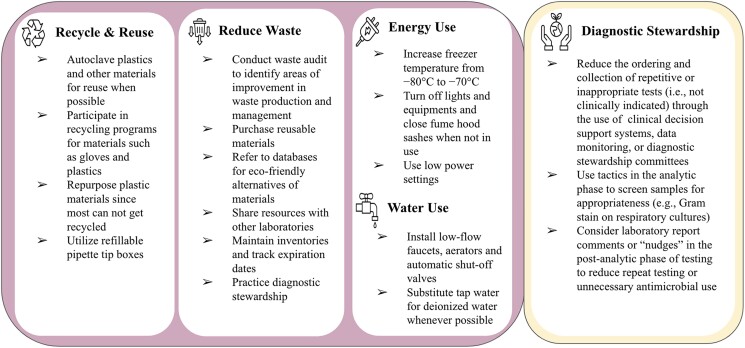
Health care, veterinary, and research facilities produce tremendous amounts of waste and account for a significant proportion of their institutions' energy and water use. The majority of municipal solid waste produced by these facilities gets unsustainably disposed of, including exportation to lower-income countries, and most of the plastic waste is nonrecyclable and nondegradable. The produced waste not only results in excessive carbon emissions harming planetary health but also poses direct harm to human health, broadens global inequities, and produces avoidable economic costs. Greening up laboratories by reducing waste production and water and energy use offers many benefits and does not have to be time or resource intensive. Sustainable practices to green up laboratories include reusing materials, decreasing energy use by choosing low-energy settings and shutting off equipment when not in use, installing low-flow faucets to decrease water use, proper sorting of waste, environmentally conscious purchases of supplies, and avoiding unnecessary medical and veterinary tests.
期刊介绍:
Open Forum Infectious Diseases provides a global forum for the publication of clinical, translational, and basic research findings in a fully open access, online journal environment. The journal reflects the broad diversity of the field of infectious diseases, and focuses on the intersection of biomedical science and clinical practice, with a particular emphasis on knowledge that holds the potential to improve patient care in populations around the world. Fully peer-reviewed, OFID supports the international community of infectious diseases experts by providing a venue for articles that further the understanding of all aspects of infectious diseases.





 京公网安备 11010802042870号
京ICP备2023020795号-1
京公网安备 11010802042870号
京ICP备2023020795号-1

 分享
分享
 求助内容:
求助内容: 应助结果提醒方式:
 扫码关注我们
