{"title":"评估沙特阿拉伯物理治疗师在线卒中培训计划,以提高他们对长期卒中护理的知识和信心:一项混合方法的试点研究。","authors":"Basema Temehy, Andrew Soundy, Sheeba Rosewilliam","doi":"10.1186/s12909-025-06837-0","DOIUrl":null,"url":null,"abstract":"<p><strong>Background: </strong>Stroke is currently the second leading cause of death in Saudi Arabia (SA), with an annual incidence rate of 29 per 100,000 people. There is a huge demand for rehabilitation services for people who have had a stroke living in the community; however, the services in SA do not meet this need due to a lack of community rehabilitation services. Additionally, rehabilitation staff have reported a lack of knowledge and skills to deliver rehabilitation services for people post-stroke in the community. A first step towards developing these services is to train professionals working in this area to deliver community-based rehabilitation for patients with stroke. This is the first study to evaluate an online stroke training programme (STP) for physiotherapists in SA to enhance stroke care and enable them to deliver long-term care following the discharge of stroke patients.</p><p><strong>Methods: </strong>A sequential mixed methods design was adopted with three measurements undertaken pre-training, post-training questionnaires and one-month follow-up interviews. Participants were eligible if they were physiotherapists of any gender who were currently providing therapy to stroke patients and working in SA. The STP consisted of four modules and was delivered via an online platform. Questionnaires developed for this study were key outcome measures used to measure the change in the participants' knowledge, confidence and attitude. Chi-Square test and Wilcoxon test were used to compare pre- and post-training results.</p><p><strong>Results: </strong>Twenty-six physiotherapists completed the STP. The results demonstrated a statistically significant increase (P < 0.05) in the participants' knowledge and confidence in providing long-term care for patients with stroke. Additionally, the STP had a positive impact on the participants' attitudes. Qualitative interviews post-training suggested that participants' experiences of STP were positive. However, the training had limitations such as the lack of practical content and a short duration.</p><p><strong>Conclusion: </strong>The STP was seen to be acceptable and found to improve participants' knowledge and confidence in delivering long-term care for patients with stroke in this study. Future research should focus on evaluating impact of training in improvements in service delivery by physiotherapists.</p>","PeriodicalId":51234,"journal":{"name":"BMC Medical Education","volume":"25 1","pages":"249"},"PeriodicalIF":3.2000,"publicationDate":"2025-02-17","publicationTypes":"Journal Article","fieldsOfStudy":null,"isOpenAccess":false,"openAccessPdf":"https://www.ncbi.nlm.nih.gov/pmc/articles/PMC11831763/pdf/","citationCount":"0","resultStr":"{\"title\":\"Evaluating an online stroke training programme for Saudi Arabian physiotherapists for improving their knowledge and confidence in long-term stroke care: a pilot mixed-methods study.\",\"authors\":\"Basema Temehy, Andrew Soundy, Sheeba Rosewilliam\",\"doi\":\"10.1186/s12909-025-06837-0\",\"DOIUrl\":null,\"url\":null,\"abstract\":\"<p><strong>Background: </strong>Stroke is currently the second leading cause of death in Saudi Arabia (SA), with an annual incidence rate of 29 per 100,000 people. There is a huge demand for rehabilitation services for people who have had a stroke living in the community; however, the services in SA do not meet this need due to a lack of community rehabilitation services. Additionally, rehabilitation staff have reported a lack of knowledge and skills to deliver rehabilitation services for people post-stroke in the community. A first step towards developing these services is to train professionals working in this area to deliver community-based rehabilitation for patients with stroke. This is the first study to evaluate an online stroke training programme (STP) for physiotherapists in SA to enhance stroke care and enable them to deliver long-term care following the discharge of stroke patients.</p><p><strong>Methods: </strong>A sequential mixed methods design was adopted with three measurements undertaken pre-training, post-training questionnaires and one-month follow-up interviews. Participants were eligible if they were physiotherapists of any gender who were currently providing therapy to stroke patients and working in SA. The STP consisted of four modules and was delivered via an online platform. Questionnaires developed for this study were key outcome measures used to measure the change in the participants' knowledge, confidence and attitude. Chi-Square test and Wilcoxon test were used to compare pre- and post-training results.</p><p><strong>Results: </strong>Twenty-six physiotherapists completed the STP. The results demonstrated a statistically significant increase (P < 0.05) in the participants' knowledge and confidence in providing long-term care for patients with stroke. Additionally, the STP had a positive impact on the participants' attitudes. Qualitative interviews post-training suggested that participants' experiences of STP were positive. However, the training had limitations such as the lack of practical content and a short duration.</p><p><strong>Conclusion: </strong>The STP was seen to be acceptable and found to improve participants' knowledge and confidence in delivering long-term care for patients with stroke in this study. Future research should focus on evaluating impact of training in improvements in service delivery by physiotherapists.</p>\",\"PeriodicalId\":51234,\"journal\":{\"name\":\"BMC Medical Education\",\"volume\":\"25 1\",\"pages\":\"249\"},\"PeriodicalIF\":3.2000,\"publicationDate\":\"2025-02-17\",\"publicationTypes\":\"Journal Article\",\"fieldsOfStudy\":null,\"isOpenAccess\":false,\"openAccessPdf\":\"https://www.ncbi.nlm.nih.gov/pmc/articles/PMC11831763/pdf/\",\"citationCount\":\"0\",\"resultStr\":null,\"platform\":\"Semanticscholar\",\"paperid\":null,\"PeriodicalName\":\"BMC Medical Education\",\"FirstCategoryId\":\"3\",\"ListUrlMain\":\"https://doi.org/10.1186/s12909-025-06837-0\",\"RegionNum\":2,\"RegionCategory\":\"医学\",\"ArticlePicture\":[],\"TitleCN\":null,\"AbstractTextCN\":null,\"PMCID\":null,\"EPubDate\":\"\",\"PubModel\":\"\",\"JCR\":\"Q1\",\"JCRName\":\"EDUCATION & EDUCATIONAL RESEARCH\",\"Score\":null,\"Total\":0}","platform":"Semanticscholar","paperid":null,"PeriodicalName":"BMC Medical Education","FirstCategoryId":"3","ListUrlMain":"https://doi.org/10.1186/s12909-025-06837-0","RegionNum":2,"RegionCategory":"医学","ArticlePicture":[],"TitleCN":null,"AbstractTextCN":null,"PMCID":null,"EPubDate":"","PubModel":"","JCR":"Q1","JCRName":"EDUCATION & EDUCATIONAL RESEARCH","Score":null,"Total":0}
Evaluating an online stroke training programme for Saudi Arabian physiotherapists for improving their knowledge and confidence in long-term stroke care: a pilot mixed-methods study.
Background: Stroke is currently the second leading cause of death in Saudi Arabia (SA), with an annual incidence rate of 29 per 100,000 people. There is a huge demand for rehabilitation services for people who have had a stroke living in the community; however, the services in SA do not meet this need due to a lack of community rehabilitation services. Additionally, rehabilitation staff have reported a lack of knowledge and skills to deliver rehabilitation services for people post-stroke in the community. A first step towards developing these services is to train professionals working in this area to deliver community-based rehabilitation for patients with stroke. This is the first study to evaluate an online stroke training programme (STP) for physiotherapists in SA to enhance stroke care and enable them to deliver long-term care following the discharge of stroke patients.
Methods: A sequential mixed methods design was adopted with three measurements undertaken pre-training, post-training questionnaires and one-month follow-up interviews. Participants were eligible if they were physiotherapists of any gender who were currently providing therapy to stroke patients and working in SA. The STP consisted of four modules and was delivered via an online platform. Questionnaires developed for this study were key outcome measures used to measure the change in the participants' knowledge, confidence and attitude. Chi-Square test and Wilcoxon test were used to compare pre- and post-training results.
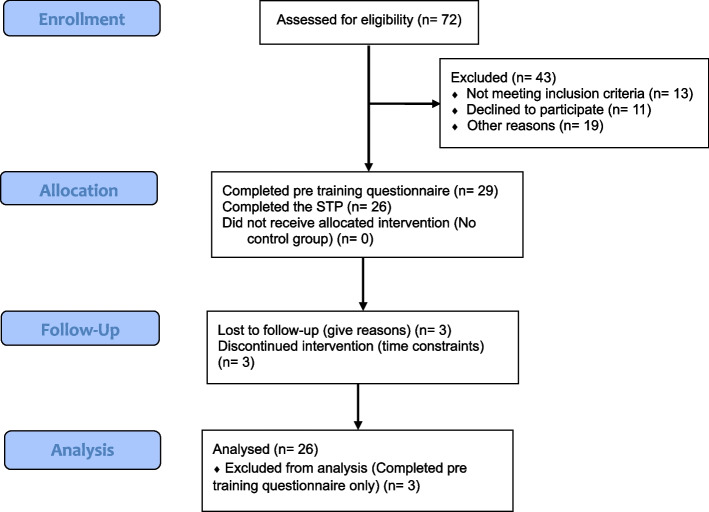
Results: Twenty-six physiotherapists completed the STP. The results demonstrated a statistically significant increase (P < 0.05) in the participants' knowledge and confidence in providing long-term care for patients with stroke. Additionally, the STP had a positive impact on the participants' attitudes. Qualitative interviews post-training suggested that participants' experiences of STP were positive. However, the training had limitations such as the lack of practical content and a short duration.
Conclusion: The STP was seen to be acceptable and found to improve participants' knowledge and confidence in delivering long-term care for patients with stroke in this study. Future research should focus on evaluating impact of training in improvements in service delivery by physiotherapists.
期刊介绍:
BMC Medical Education is an open access journal publishing original peer-reviewed research articles in relation to the training of healthcare professionals, including undergraduate, postgraduate, and continuing education. The journal has a special focus on curriculum development, evaluations of performance, assessment of training needs and evidence-based medicine.




 京公网安备 11010802042870号
京ICP备2023020795号-1
京公网安备 11010802042870号
京ICP备2023020795号-1

 分享
分享
 求助内容:
求助内容: 应助结果提醒方式:
 扫码关注我们
