Erin M. Phillips, Shauna L. Blois, Anthony C. G. Abrams-Ogg, R. Darren Wood, Gabrielle Monteith, Benoît Cuq
{"title":"利伐沙班治疗高凝狗的监测","authors":"Erin M. Phillips, Shauna L. Blois, Anthony C. G. Abrams-Ogg, R. Darren Wood, Gabrielle Monteith, Benoît Cuq","doi":"10.1111/jvim.70014","DOIUrl":null,"url":null,"abstract":"<div>\n \n \n <section>\n \n <h3> Background</h3>\n \n <p>Measurement of rivaroxaban efficacy using the rivaroxaban-specific anti-Xa assay (raXa) can be used for monitoring in veterinary medicine. Detection of rivaroxaban efficacy using other hemostatic tests would make monitoring timelier and more accessible.</p>\n </section>\n \n <section>\n \n <h3> Objectives</h3>\n \n <p>Compare results of raXa with prothrombin time (PT), activated partial thromboplastin time (aPTT), fibrinogen concentration, tissue factor (TF) and kaolin-activated thromboelastography (TEG), and thrombin generation (TG) in hypercoagulable dogs.</p>\n </section>\n \n <section>\n \n <h3> Animals</h3>\n \n <p>Twelve client-owned dogs, diagnosed with hypercoagulability or thromboembolic disease, and prescribed rivaroxaban, were recruited from a tertiary referral hospital from 2020 to 2022.</p>\n </section>\n \n <section>\n \n <h3> Methods</h3>\n \n <p>Prospective clinical trial. Jugular vein blood samples were collected before treatment, and 1 week and 1–3 months after initiation of rivaroxaban therapy. Hemostatic tests were performed at each visit (3 h after rivaroxaban dosing). TG curve parameters lag time, endogenous thrombin potential (ETP), peak, and time to peak (ttpeak) were assessed.</p>\n </section>\n \n <section>\n \n <h3> Results</h3>\n \n <p>There was a significant linear relationship between raXa and PT (<i>r</i><sup>2</sup> = 0.74, <i>p</i> < 0.001), ETP (<i>r</i><sup>2</sup> = 0.83, <i>p</i> < 0.001), lag time (<i>r</i><sup>2</sup> = 0.87, <i>p</i> < 0.001), peak (<i>r</i><sup>2</sup> = 0.86, <i>p</i> < 0.001), and ttpeak (<i>r</i><sup>2</sup> = 0.86, <i>p</i> < 0.001). There was a weak linear relationship between raXa and kaolin-activated TEG parameter reaction time (<i>R</i>) (<i>r</i><sup>2</sup> = 0.49, <i>p</i> = 0.026). There was no significant relationship between raXa and aPTT, fibrinogen concentration and the remainder of the TEG variables (<i>p</i> > 0.05).</p>\n </section>\n \n <section>\n \n <h3> Conclusion and Clinical Importance</h3>\n \n <p>PT and TG correlated with raXa. PT performed at a reference laboratory appeared to be a convenient method to monitor a small cohort of dogs receiving rivaroxaban therapy.</p>\n </section>\n </div>","PeriodicalId":49958,"journal":{"name":"Journal of Veterinary Internal Medicine","volume":"39 2","pages":""},"PeriodicalIF":2.4000,"publicationDate":"2025-02-19","publicationTypes":"Journal Article","fieldsOfStudy":null,"isOpenAccess":false,"openAccessPdf":"https://onlinelibrary.wiley.com/doi/epdf/10.1111/jvim.70014","citationCount":"0","resultStr":"{\"title\":\"Monitoring of Rivaroxaban Therapy in Hypercoagulable Dogs\",\"authors\":\"Erin M. Phillips, Shauna L. Blois, Anthony C. G. Abrams-Ogg, R. Darren Wood, Gabrielle Monteith, Benoît Cuq\",\"doi\":\"10.1111/jvim.70014\",\"DOIUrl\":null,\"url\":null,\"abstract\":\"<div>\\n \\n \\n <section>\\n \\n <h3> Background</h3>\\n \\n <p>Measurement of rivaroxaban efficacy using the rivaroxaban-specific anti-Xa assay (raXa) can be used for monitoring in veterinary medicine. Detection of rivaroxaban efficacy using other hemostatic tests would make monitoring timelier and more accessible.</p>\\n </section>\\n \\n <section>\\n \\n <h3> Objectives</h3>\\n \\n <p>Compare results of raXa with prothrombin time (PT), activated partial thromboplastin time (aPTT), fibrinogen concentration, tissue factor (TF) and kaolin-activated thromboelastography (TEG), and thrombin generation (TG) in hypercoagulable dogs.</p>\\n </section>\\n \\n <section>\\n \\n <h3> Animals</h3>\\n \\n <p>Twelve client-owned dogs, diagnosed with hypercoagulability or thromboembolic disease, and prescribed rivaroxaban, were recruited from a tertiary referral hospital from 2020 to 2022.</p>\\n </section>\\n \\n <section>\\n \\n <h3> Methods</h3>\\n \\n <p>Prospective clinical trial. Jugular vein blood samples were collected before treatment, and 1 week and 1–3 months after initiation of rivaroxaban therapy. Hemostatic tests were performed at each visit (3 h after rivaroxaban dosing). TG curve parameters lag time, endogenous thrombin potential (ETP), peak, and time to peak (ttpeak) were assessed.</p>\\n </section>\\n \\n <section>\\n \\n <h3> Results</h3>\\n \\n <p>There was a significant linear relationship between raXa and PT (<i>r</i><sup>2</sup> = 0.74, <i>p</i> < 0.001), ETP (<i>r</i><sup>2</sup> = 0.83, <i>p</i> < 0.001), lag time (<i>r</i><sup>2</sup> = 0.87, <i>p</i> < 0.001), peak (<i>r</i><sup>2</sup> = 0.86, <i>p</i> < 0.001), and ttpeak (<i>r</i><sup>2</sup> = 0.86, <i>p</i> < 0.001). There was a weak linear relationship between raXa and kaolin-activated TEG parameter reaction time (<i>R</i>) (<i>r</i><sup>2</sup> = 0.49, <i>p</i> = 0.026). There was no significant relationship between raXa and aPTT, fibrinogen concentration and the remainder of the TEG variables (<i>p</i> > 0.05).</p>\\n </section>\\n \\n <section>\\n \\n <h3> Conclusion and Clinical Importance</h3>\\n \\n <p>PT and TG correlated with raXa. PT performed at a reference laboratory appeared to be a convenient method to monitor a small cohort of dogs receiving rivaroxaban therapy.</p>\\n </section>\\n </div>\",\"PeriodicalId\":49958,\"journal\":{\"name\":\"Journal of Veterinary Internal Medicine\",\"volume\":\"39 2\",\"pages\":\"\"},\"PeriodicalIF\":2.4000,\"publicationDate\":\"2025-02-19\",\"publicationTypes\":\"Journal Article\",\"fieldsOfStudy\":null,\"isOpenAccess\":false,\"openAccessPdf\":\"https://onlinelibrary.wiley.com/doi/epdf/10.1111/jvim.70014\",\"citationCount\":\"0\",\"resultStr\":null,\"platform\":\"Semanticscholar\",\"paperid\":null,\"PeriodicalName\":\"Journal of Veterinary Internal Medicine\",\"FirstCategoryId\":\"97\",\"ListUrlMain\":\"https://onlinelibrary.wiley.com/doi/10.1111/jvim.70014\",\"RegionNum\":2,\"RegionCategory\":\"农林科学\",\"ArticlePicture\":[],\"TitleCN\":null,\"AbstractTextCN\":null,\"PMCID\":null,\"EPubDate\":\"\",\"PubModel\":\"\",\"JCR\":\"Q1\",\"JCRName\":\"VETERINARY SCIENCES\",\"Score\":null,\"Total\":0}","platform":"Semanticscholar","paperid":null,"PeriodicalName":"Journal of Veterinary Internal Medicine","FirstCategoryId":"97","ListUrlMain":"https://onlinelibrary.wiley.com/doi/10.1111/jvim.70014","RegionNum":2,"RegionCategory":"农林科学","ArticlePicture":[],"TitleCN":null,"AbstractTextCN":null,"PMCID":null,"EPubDate":"","PubModel":"","JCR":"Q1","JCRName":"VETERINARY SCIENCES","Score":null,"Total":0}
引用次数: 0
摘要
使用利伐沙班特异性抗xa测定法(raXa)测量利伐沙班疗效可用于兽药监测。使用其他止血试验检测利伐沙班的疗效将使监测更加及时和方便。目的比较raXa与高凝犬凝血酶原时间(PT)、活化的部分凝血酶时间(aPTT)、纤维蛋白原浓度、组织因子(TF)和高岭土活化的血栓弹性成像(TEG)以及凝血酶生成(TG)的结果。2020年至2022年,从一家三级转诊医院招募了12只诊断为高凝性或血栓栓塞性疾病的客户拥有的狗,并开了利伐沙班。方法前瞻性临床试验。分别于治疗前、利伐沙班治疗开始后1周和1 - 3个月采集颈静脉血样。每次就诊时(利伐沙班给药后3小时)进行止血试验。评估TG曲线参数滞后时间、内源性凝血酶电位(ETP)、峰值、至峰时间(ttpeak)。结果raXa与PT (r2 = 0.74, p < 0.001)、ETP (r2 = 0.83, p < 0.001)、滞后时间(r2 = 0.87, p < 0.001)、峰(r2 = 0.86, p < 0.001)、ttpeak (r2 = 0.86, p < 0.001)呈显著的线性关系。raXa与高岭土活化TEG参数反应时间(R)呈弱线性关系(r2 = 0.49, p = 0.026)。raXa与aPTT、纤维蛋白原浓度及其他TEG变量之间无显著相关性(p > 0.05)。结论:PT、TG与raXa有相关性。在参考实验室进行的PT似乎是一种方便的方法来监测一小群接受利伐沙班治疗的狗。
Monitoring of Rivaroxaban Therapy in Hypercoagulable Dogs
Background
Measurement of rivaroxaban efficacy using the rivaroxaban-specific anti-Xa assay (raXa) can be used for monitoring in veterinary medicine. Detection of rivaroxaban efficacy using other hemostatic tests would make monitoring timelier and more accessible.
Objectives
Compare results of raXa with prothrombin time (PT), activated partial thromboplastin time (aPTT), fibrinogen concentration, tissue factor (TF) and kaolin-activated thromboelastography (TEG), and thrombin generation (TG) in hypercoagulable dogs.
Animals
Twelve client-owned dogs, diagnosed with hypercoagulability or thromboembolic disease, and prescribed rivaroxaban, were recruited from a tertiary referral hospital from 2020 to 2022.
Methods
Prospective clinical trial. Jugular vein blood samples were collected before treatment, and 1 week and 1–3 months after initiation of rivaroxaban therapy. Hemostatic tests were performed at each visit (3 h after rivaroxaban dosing). TG curve parameters lag time, endogenous thrombin potential (ETP), peak, and time to peak (ttpeak) were assessed.
Results
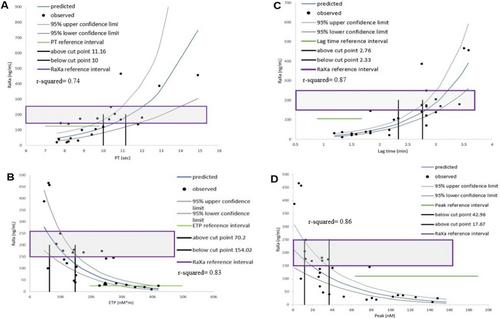
There was a significant linear relationship between raXa and PT (r2 = 0.74, p < 0.001), ETP (r2 = 0.83, p < 0.001), lag time (r2 = 0.87, p < 0.001), peak (r2 = 0.86, p < 0.001), and ttpeak (r2 = 0.86, p < 0.001). There was a weak linear relationship between raXa and kaolin-activated TEG parameter reaction time (R) (r2 = 0.49, p = 0.026). There was no significant relationship between raXa and aPTT, fibrinogen concentration and the remainder of the TEG variables (p > 0.05).
Conclusion and Clinical Importance
PT and TG correlated with raXa. PT performed at a reference laboratory appeared to be a convenient method to monitor a small cohort of dogs receiving rivaroxaban therapy.
期刊介绍:
The mission of the Journal of Veterinary Internal Medicine is to advance veterinary medical knowledge and improve the lives of animals by publication of authoritative scientific articles of animal diseases.




 京公网安备 11010802042870号
京ICP备2023020795号-1
京公网安备 11010802042870号
京ICP备2023020795号-1

 分享
分享
 求助内容:
求助内容: 应助结果提醒方式:
 扫码关注我们
