{"title":"肝硬化患者术后出血的预测与预防。","authors":"Alix Riescher-Tuczkiewicz, Pierre-Emmanuel Rautou","doi":"10.3350/cmh.2024.0928","DOIUrl":null,"url":null,"abstract":"<p><p>Although post-procedural bleedings are infrequent in patients with cirrhosis, they are associated with significant morbidity and mortality. Therefore, predicting and preventing such bleedings is important. Established predictors of post-procedural bleeding include high-bleeding risk procedure, severe cirrhosis and high body mass index; prognostic value of anemia, acute kidney injury and bacterial infection is more uncertain. While prothrombin time and international normalized ratio do not predict post-procedural bleeding, some evidence suggests that platelet count, whole blood thrombin generation assay and viscoelastic tests may be helpful in this context. Prevention of postprocedural bleeding involves careful management of antithrombotic drugs during the periprocedural period. Patients with cirrhosis present unique challenges due to altered pharmacokinetics and pharmacodynamics of antithrombotic drugs, but there is a lack of dedicated studies specifically focused on this patient population. Guidelines for periprocedural management of antithrombotic drugs developed for patients without liver disease are thus applied to those with cirrhosis. Some technical aspects may decrease the risk of post-procedural bleeding, namely ultrasoundguidance, opting for transjugular route rather than percutaneous route, and the level of expertise of the operator. The effectiveness of platelet transfusions or thrombopoietin-receptor agonists remains uncertain. Transfusion of fresh-frozen plasma, of fibrinogen, and administration of tranexamic acid are not recommended for reducing post-procedural bleeding in patients with cirrhosis. In conclusion, prediction of post-procedural requires a global approach taking into account the patients characteristics, the risk of the procedure, and the platelet count. There is little data to support prophylactic correction of hemostasis, and dedicated studies are needed.</p>","PeriodicalId":10275,"journal":{"name":"Clinical and Molecular Hepatology","volume":" ","pages":"S205-S227"},"PeriodicalIF":16.9000,"publicationDate":"2025-02-01","publicationTypes":"Journal Article","fieldsOfStudy":null,"isOpenAccess":false,"openAccessPdf":"https://www.ncbi.nlm.nih.gov/pmc/articles/PMC11925446/pdf/","citationCount":"0","resultStr":"{\"title\":\"Prediction and prevention of post-procedural bleedings in patients with cirrhosis.\",\"authors\":\"Alix Riescher-Tuczkiewicz, Pierre-Emmanuel Rautou\",\"doi\":\"10.3350/cmh.2024.0928\",\"DOIUrl\":null,\"url\":null,\"abstract\":\"<p><p>Although post-procedural bleedings are infrequent in patients with cirrhosis, they are associated with significant morbidity and mortality. Therefore, predicting and preventing such bleedings is important. Established predictors of post-procedural bleeding include high-bleeding risk procedure, severe cirrhosis and high body mass index; prognostic value of anemia, acute kidney injury and bacterial infection is more uncertain. While prothrombin time and international normalized ratio do not predict post-procedural bleeding, some evidence suggests that platelet count, whole blood thrombin generation assay and viscoelastic tests may be helpful in this context. Prevention of postprocedural bleeding involves careful management of antithrombotic drugs during the periprocedural period. Patients with cirrhosis present unique challenges due to altered pharmacokinetics and pharmacodynamics of antithrombotic drugs, but there is a lack of dedicated studies specifically focused on this patient population. Guidelines for periprocedural management of antithrombotic drugs developed for patients without liver disease are thus applied to those with cirrhosis. Some technical aspects may decrease the risk of post-procedural bleeding, namely ultrasoundguidance, opting for transjugular route rather than percutaneous route, and the level of expertise of the operator. The effectiveness of platelet transfusions or thrombopoietin-receptor agonists remains uncertain. Transfusion of fresh-frozen plasma, of fibrinogen, and administration of tranexamic acid are not recommended for reducing post-procedural bleeding in patients with cirrhosis. In conclusion, prediction of post-procedural requires a global approach taking into account the patients characteristics, the risk of the procedure, and the platelet count. There is little data to support prophylactic correction of hemostasis, and dedicated studies are needed.</p>\",\"PeriodicalId\":10275,\"journal\":{\"name\":\"Clinical and Molecular Hepatology\",\"volume\":\" \",\"pages\":\"S205-S227\"},\"PeriodicalIF\":16.9000,\"publicationDate\":\"2025-02-01\",\"publicationTypes\":\"Journal Article\",\"fieldsOfStudy\":null,\"isOpenAccess\":false,\"openAccessPdf\":\"https://www.ncbi.nlm.nih.gov/pmc/articles/PMC11925446/pdf/\",\"citationCount\":\"0\",\"resultStr\":null,\"platform\":\"Semanticscholar\",\"paperid\":null,\"PeriodicalName\":\"Clinical and Molecular Hepatology\",\"FirstCategoryId\":\"3\",\"ListUrlMain\":\"https://doi.org/10.3350/cmh.2024.0928\",\"RegionNum\":1,\"RegionCategory\":\"医学\",\"ArticlePicture\":[],\"TitleCN\":null,\"AbstractTextCN\":null,\"PMCID\":null,\"EPubDate\":\"2025/2/18 0:00:00\",\"PubModel\":\"Epub\",\"JCR\":\"Q1\",\"JCRName\":\"GASTROENTEROLOGY & HEPATOLOGY\",\"Score\":null,\"Total\":0}","platform":"Semanticscholar","paperid":null,"PeriodicalName":"Clinical and Molecular Hepatology","FirstCategoryId":"3","ListUrlMain":"https://doi.org/10.3350/cmh.2024.0928","RegionNum":1,"RegionCategory":"医学","ArticlePicture":[],"TitleCN":null,"AbstractTextCN":null,"PMCID":null,"EPubDate":"2025/2/18 0:00:00","PubModel":"Epub","JCR":"Q1","JCRName":"GASTROENTEROLOGY & HEPATOLOGY","Score":null,"Total":0}
Prediction and prevention of post-procedural bleedings in patients with cirrhosis.
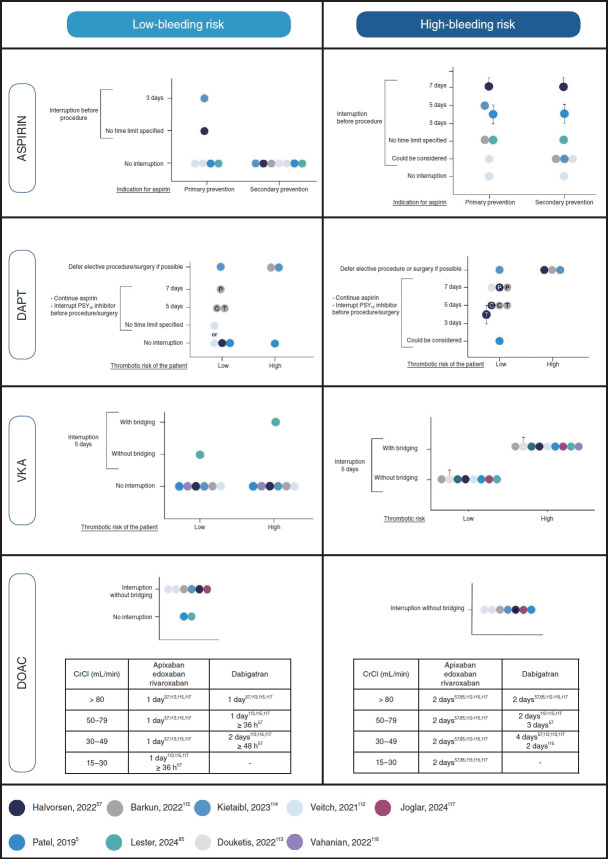
Although post-procedural bleedings are infrequent in patients with cirrhosis, they are associated with significant morbidity and mortality. Therefore, predicting and preventing such bleedings is important. Established predictors of post-procedural bleeding include high-bleeding risk procedure, severe cirrhosis and high body mass index; prognostic value of anemia, acute kidney injury and bacterial infection is more uncertain. While prothrombin time and international normalized ratio do not predict post-procedural bleeding, some evidence suggests that platelet count, whole blood thrombin generation assay and viscoelastic tests may be helpful in this context. Prevention of postprocedural bleeding involves careful management of antithrombotic drugs during the periprocedural period. Patients with cirrhosis present unique challenges due to altered pharmacokinetics and pharmacodynamics of antithrombotic drugs, but there is a lack of dedicated studies specifically focused on this patient population. Guidelines for periprocedural management of antithrombotic drugs developed for patients without liver disease are thus applied to those with cirrhosis. Some technical aspects may decrease the risk of post-procedural bleeding, namely ultrasoundguidance, opting for transjugular route rather than percutaneous route, and the level of expertise of the operator. The effectiveness of platelet transfusions or thrombopoietin-receptor agonists remains uncertain. Transfusion of fresh-frozen plasma, of fibrinogen, and administration of tranexamic acid are not recommended for reducing post-procedural bleeding in patients with cirrhosis. In conclusion, prediction of post-procedural requires a global approach taking into account the patients characteristics, the risk of the procedure, and the platelet count. There is little data to support prophylactic correction of hemostasis, and dedicated studies are needed.
期刊介绍:
Clinical and Molecular Hepatology is an internationally recognized, peer-reviewed, open-access journal published quarterly in English. Its mission is to disseminate cutting-edge knowledge, trends, and insights into hepatobiliary diseases, fostering an inclusive academic platform for robust debate and discussion among clinical practitioners, translational researchers, and basic scientists. With a multidisciplinary approach, the journal strives to enhance public health, particularly in the resource-limited Asia-Pacific region, which faces significant challenges such as high prevalence of B viral infection and hepatocellular carcinoma. Furthermore, Clinical and Molecular Hepatology prioritizes epidemiological studies of hepatobiliary diseases across diverse regions including East Asia, North Asia, Southeast Asia, Central Asia, South Asia, Southwest Asia, Pacific, Africa, Central Europe, Eastern Europe, Central America, and South America.
The journal publishes a wide range of content, including original research papers, meta-analyses, letters to the editor, case reports, reviews, guidelines, editorials, and liver images and pathology, encompassing all facets of hepatology.






 京公网安备 11010802042870号
京ICP备2023020795号-1
京公网安备 11010802042870号
京ICP备2023020795号-1

 分享
分享
 求助内容:
求助内容: 应助结果提醒方式:
 扫码关注我们
